0
0
 0
0
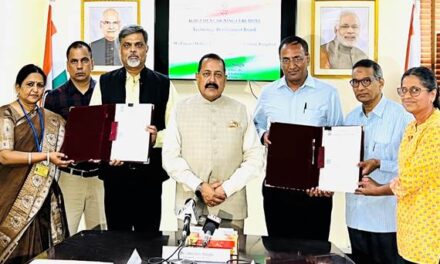
NEW DELHI — In a major step toward modernizing and globalizing traditional healthcare systems, the Ministry of Ayush, Government of India, concluded a high-level, two-day consultative meeting on May 26, 2026. The virtual summit brought together international health informatics experts and top medical scientists to review the development of the International Classification of Health Interventions (ICHI) and National Health Intervention Codes (NHIC) for Ayurveda, Siddha, and Unani (ASU) systems of medicine.
The initiative, born out of a landmark Memorandum of Understanding (MoU) and Donor Agreement between India’s Ministry of Ayush and the World Health Organization (WHO), aims to build a globally standardized, scientifically robust coding vocabulary for traditional clinical practices. By creating a unified digital language, the project seeks to enable seamless cross-border data exchange, strengthen clinical research, and pave the way for traditional medicine to be fully integrated into global health insurance systems.
Speaking the Same Digital Language
For decades, one of the steepest hurdles facing traditional medicine systems like Ayurveda has been the lack of uniform terminology. When a clinician in New Delhi documents a therapeutic treatment, a researcher in Boston or an insurance provider in Geneva often struggles to interpret the exact nature, scope, and methodology of that intervention.
The WHO-ICHI framework aims to eliminate this communication barrier. Much like the widely known International Classification of Diseases (ICD) codes used to standardize diagnoses globally, ICHI provides a structured, common language for diagnostic, medical, and surgical interventions.
Vaidya Rajesh Kotecha, Secretary of the Ministry of Ayush, chaired the meeting and emphasized the profound strategic weight of the initiative. According to Kotecha, aligning traditional therapies with international standards will fundamentally alter how these systems are viewed globally, strengthening clinical documentation and accelerating their integration into modern digital health ecosystems.
Inside the Blueprint: A Four-Level Coding Hierarchy
During the technical sessions, India’s premier research councils presented comprehensive, four-level hierarchical coding directories tailored to each specific medical system:
-
Ayurveda (NHICA): Led by Prof. Vaidya Rabinarayan Acharya, Director General of the Central Council for Research in Ayurvedic Sciences (CCRAS).
-
Siddha (NHICS): Led by Prof. Dr. N. J. Muthukumar, Director General of the Central Council for Research in Siddha (CCRS).
-
Unani (NHICUM): Led by Dr. N. Zaheer Ahmed, Director General of the Central Council for Research in Unani Medicine (CCRUM).
This structural framework maps out intricate clinical therapies—ranging from complex metabolic purification treatments to specialized topical therapies—into distinct alphanumeric codes.
Dr. Kavita Jain, Joint Secretary of the Ministry of Ayush, noted during her introductory remarks that standardizing this terminology is vital for building an evidence-based ecosystem around traditional medicine, shifting it from perceived historical anecdotes to verifiable science.
What This Means for Global Public Health and Consumers
For health-conscious consumers and healthcare providers alike, the practical implications of a standardized global coding system are immense:
1. Seamless Insurance and Reimbursement
Currently, many patients pay out-of-pocket for traditional therapies because insurance companies cannot easily verify or categorize the treatments. Standardized codes allow insurance adjusters to process claims using the exact same billing systems applied to conventional allopathic medicine.
2. Rigorous, Collaborative Clinical Research
With unified codes, researchers worldwide can aggregate large datasets. If a hospital in Germany and a research center in India use identical codes for a specific Ayurveda intervention, scientists can pool data to conduct large-scale, statistically powerful studies on efficacy and safety.
3. Patient Safety and Interoperability
As digital health records become standard, a patient’s medical history needs to be universally legible. If an individual receives a traditional intervention in India and later requires treatment abroad, their electronic health record will accurately communicate those interventions to international doctors, reducing the risk of treatment conflicts.
Perspectives and Rational Moderation
Public health experts not directly involved in the coding development view the initiative as a double-edged sword that requires careful execution.
“Standardization is an absolute necessity if traditional systems want a seat at the table of modern global health,” says Dr. Aris Latham, a global public health policy analyst based in London. “However, the primary challenge is maintaining the holistic integrity of these therapies. Traditional medicine is highly individualized, taking into account a person’s unique constitution, environment, and lifestyle. If you reduce a deeply nuanced, multi-layered treatment into a rigid, one-size-fits-all electronic code just to satisfy an insurance database, you risk losing the very essence of what makes the treatment effective.”
Furthermore, data informatics experts point out that creating the codes is only half the battle. Training thousands of traditional medicine practitioners to accurately use a complex, four-level hierarchical coding system in their daily practice will require massive educational infrastructure and time.
Looking Ahead
The technical data vetted during this two-day summit by roughly 30 senior scientists and faculty members from elite national institutions—including the Institute of Teaching and Research in Ayurveda (ITRA) and the All India Institute of Ayurveda (AIIA)—is not yet final.
The framework established during these sessions will serve as the baseline data for the upcoming WHO-ICHI ASU Alpha Draft editorial workshop scheduled for July 2026. At that stage, international informatics experts will further refine the language to ensure it integrates smoothly into global digital health architectures.
By building a bridge between ancient therapeutic wisdom and modern digital informatics, this partnership marks a critical shift toward a more comprehensive, dual-system approach to global healthcare.
References
https://www.pib.gov.in/PressReleasePage.aspx?PRID=2265743®=3&lang=1
Medical Disclaimer: This article is for informational purposes only and should not be considered medical advice. Always consult with qualified healthcare professionals before making any health-related decisions or changes to your treatment plan. The information presented here is based on current research and expert opinions, which may evolve as new evidence emerges.