 0
0
 0
0
March 22, 2026
STOCKHOLM — In a discovery that challenges decades of “one-size-fits-all” dietary guidelines, a major longitudinal study has found that higher meat consumption may actually protect against cognitive decline and dementia—but only for individuals carrying specific genetic risk factors for Alzheimer’s disease. The research, published March 19, 2026, in JAMA Network Open, suggests that for the estimated 25% to 30% of the population carrying the APOE ε4 allele, a diet richer in meat could be a key to maintaining brain health in old age.
While high red meat consumption has long been associated with cardiovascular risks and certain cancers, researchers at the Karolinska Institutet found that for those with the APOE ε3/ε4 or ε4/ε4 genotypes, the script is flipped. These individuals, who face a significantly higher baseline risk for Alzheimer’s, saw a 55% reduction in dementia risk when meat intake was high, marking a potential shift toward “precision nutrition” in neurology.
The Genetic “Lock and Key”
To understand the significance of these findings, one must look at the apolipoprotein E (APOE) gene. This gene acts as a primary instructor for how the body and brain transport cholesterol and fats. It exists in three variants: ε2 (protective), ε3 (neutral), and ε4 (high risk).
For carriers of the ε4 variant, the risk of developing Alzheimer’s is three to four times higher than average; for those with two copies (ε4/ε4), that risk can skyrocket to 15 times the norm.
“This study tested the hypothesis that people with APOE 3/4 and 4/4 would have a reduced risk of cognitive decline and dementia with higher meat intake,” said lead author Jakob Norgren, PhD, of the Karolinska Institutet’s Department of Neurobiology, Care Sciences and Society.
The hypothesis is rooted in evolutionary biology. Some scientists believe the ε4 variant is an “ancestral” gene that evolved when human ancestors relied heavily on hunter-gatherer diets rich in animal protein and fats. In the modern era of high-carbohydrate, processed-food diets, this gene may struggle to function, leading to the brain inflammation and plaque buildup characteristic of dementia.
Tracking 15 Years of Brain Health
The researchers analyzed data from the Swedish National Study on Aging and Care in Kungsholmen (SNAC-K), a robust cohort of 2,100 dementia-free participants aged 60 and older. Over a 15-year follow-up period, the team meticulously tracked dietary habits, genetic profiles, and cognitive performance.
The results revealed a stark contrast between genetic groups:
-
Low Meat Intake: Carriers of the ε4 variant who ate little meat had more than double the dementia risk of non-carriers and experienced significantly faster cognitive decline.
-
High Meat Intake: Carriers in the highest quintile of meat consumption—averaging approximately 870 grams per week (standardized to a 2,000-calorie diet)—showed markedly better cognitive trajectories.
-
The Result: High meat intake was associated with a 55% lower risk of dementia specifically in the ε3/ε4 and ε4/ε4 groups.
“Those who ate more meat overall had significantly slower cognitive decline and a lower risk of dementia, but only if they had the APOE 3/4 or 4/4 gene variants,” Norgren emphasized.
Quality Matters: Processed vs. Unprocessed
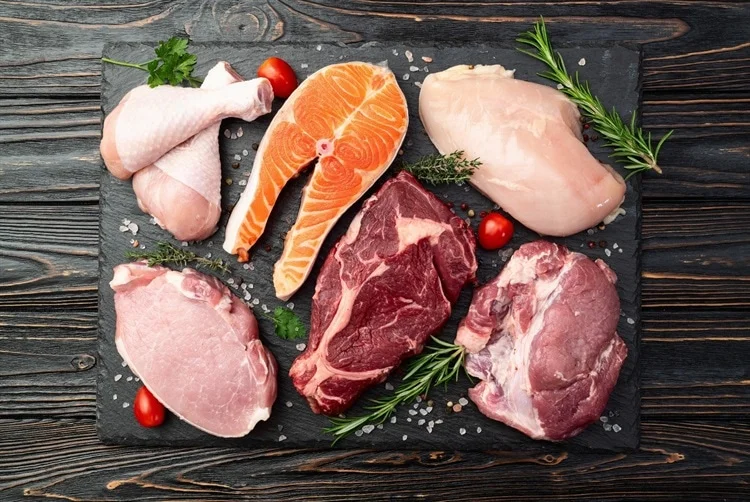
The study was careful to distinguish between different types of meat. While total meat intake benefited the high-risk genetic group, the benefits were most pronounced with unprocessed meats, such as beef, lamb, and poultry.
Interestingly, the researchers found that a lower proportion of processed meat (like sausages, bacon, and deli meats) within the total meat intake was associated with lower dementia risk across all participants, regardless of their genetics. This suggests that while the “meat” itself may be protective for some, the nitrates and sodium found in processed varieties remain a universal concern for brain health.
Expert Perspectives and Counter-Arguments
The medical community has reacted to the study with a mix of intrigue and traditional scientific skepticism.
Dr. Walter Kukull, ScD, director of the National Alzheimer’s Coordinating Center at the University of Washington, noted the novelty of the gene-diet interaction. “This suggests dietary needs may differ by genotype, potentially explaining mixed prior results on meat and cognition,” he observed. If confirmed, this could explain why some studies find meat harmful while others find it neutral or beneficial.
However, other experts warn against immediate changes to public health policy. The late Dr. Martha Clare Morris, ScD, a pioneer in nutritional epidemiology at Rush University, often cautioned that observational studies like this one cannot prove causation. Factors such as physical activity levels or other “unmeasured confounders” could influence the results. For instance, people who can afford or choose to eat high-quality unprocessed meat may have other lifestyle advantages that protect their brains.
Furthermore, a 2025 Harvard study of over 133,000 adults found that higher red meat intake generally increased dementia risk by 13%. The Karolinska study suggests these broad population findings might be masking the unique needs of the APOE ε4 subgroup.
What This Means for Consumers
For the millions of people who have used commercial genetic testing services like 23andMe or AncestryDNA to discover they are APOE ε4 carriers, this study offers a rare piece of actionable, positive news.
Practical Takeaways:
-
Know Your Status: While not a requirement, knowing your APOE status can help tailor your diet. Genetic testing typically costs between $100 and $200.
-
Focus on Quality: If increasing meat intake, prioritize unprocessed sources. Aiming for roughly 120 grams of quality animal protein daily appeared beneficial for the high-risk group in the study.
-
Avoid the “Health Halo”: This is not a license to eat unlimited processed meats. Sausages and highly preserved meats were still linked to poorer outcomes.
The Future of Precision Nutrition
The study authors are calling for large-scale clinical trials to confirm these findings. “Clinical trials are now needed to develop dietary recommendations tailored to APOE genotype,” Norgren stated.
Until those trials are complete, the findings serve as a powerful reminder that “healthy eating” is not a monolith. For some, the path to a sharp mind in old age might involve a plant-heavy Mediterranean diet, but for those with the “hunter-gatherer” gene, a steak might just be the best medicine.
References
https://scitechdaily.com/eating-meat-linked-to-lower-dementia-risk-in-key-genetic-group/
Medical Disclaimer: This article is for informational purposes only and should not be considered medical advice. Always consult with qualified healthcare professionals before making any health-related decisions or changes to your treatment plan. The information presented here is based on current research and expert opinions, which may evolve as new evidence emerges.