 0
0
 0
0
Read Time:5 Minute, 33 Second
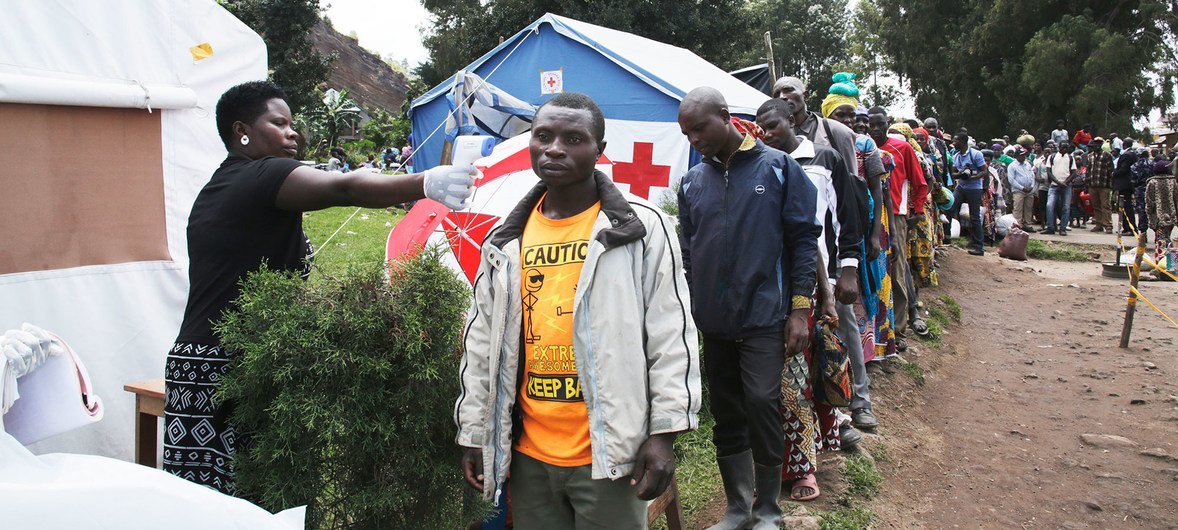
BUNIA, Democratic Republic of the Congo — A critical breakdown in labor, security, and medical countermeasures has pushed the Democratic Republic of the Congo (DRC) to the precipice of a severe public health crisis. Dozens of frontline health workers at the epicenter of the outbreak have walked off the job to protest months of unpaid salaries, halting vital containment efforts just as official tallies confirm the epidemic has become the second-largest Ebola outbreak in recorded history.
The labor strike comes at a catastrophic juncture. The World Health Organization (WHO) has declared the outbreak a Public Health Emergency of International Concern (PHEIC), citing an unprecedented transmission rate compounded by the total absence of licensed vaccines or targeted medical treatments for the specific strain involved.
Escalating Transmission and Mounting Casualties
According to data released by the WHO and the DRC’s Ministry of Public Health, the epidemic—first officially declared on May 15, 2026—has surged across five northeastern provinces: Ituri, North Kivu, South Kivu, Tshopo, and Haut Uele.
As of early August 2026, epidemiological tracking reports:
-
Total Confirmed and Probable Cases: Over 3,600
-
Total Recorded Deaths: Exceeding 1,800
-
Crude Case Fatality Ratio (CFR): Approximately 44% to 50%
-
Geographic Epicenter: Ituri Province, which accounts for nearly 90% of all reported infections.
Epidemiologists note that the epidemic is expanding at an alarming pace. During the final week of July alone, surveillance teams registered 567 new cases and 296 deaths—the highest weekly count since the onset of the outbreak.
To put the current situation into clinical perspective, this outbreak has now surpassed the 2014–2016 West African outbreak in speed of local spread and total case count within a single nation, second only to the massive 2018–2020 Kivu outbreak in eastern Congo.
Frontline Strike Halts Containment Work
On August 6, 2026, demonstration teams composed of nurses, epidemiologists, contact tracers, laboratory technicians, drivers, and safe-burial personnel demonstrated outside the provincial governor’s office in Bunia. Protesters reported that compensation, including hazard bonuses, has been withheld for nearly three consecutive months.
+-----------------------------------------------------------------------+
|                    Ebola Response Containment Loop                    |
+-----------------------------------------------------------------------+
                                   |
         +-------------------------+-------------------------+
         |                                                   |
         v                                                   v
+------------------+                               +------------------+
| Contact Tracing  |                               | Safe Burials     |
| & Surveillance   |                               | & Decontamination|
+------------------+                               +------------------+
         |                                                   |
         +-------------------------+-------------------------+
                                   |
                                   v
             +-------------------------------------------+
             | Frontline Healthcare Workers & Responders |
             +-------------------------------------------+
                                   |
                  [ Disruptions: Unpaid Wages & ]
                  [ Community Violence Resistance ]
                                   |
                                   v
             +-------------------------------------------+
             | Systemic Failure: Unmonitored Infection   |
             | Chains & Higher Transmission              |
             +-------------------------------------------+
Without compensation, many workers cannot afford transportation to rural surveillance sites or purchase personal protective equipment (PPE). The resulting strike has led to the temporary operational closure of several Ebola Treatment Centers (ETCs). It has also suspended contact-tracing activities, leaving hundreds of potentially exposed individuals unmonitored in dense urban settings.
“With this way of managing things, Ebola will not end in this province,” said Edouige Makosi, a frontline healthcare worker involved in the Bunia demonstrations. “We ask the authorities to get involved at all levels so that a solution is found quickly.”
Government representatives have cited complex international banking logistics and bureaucratic oversight as the reasons for the delayed funds. However, humanitarian organizations warn that administrative delays directly jeopardize global biological security.
Security Vacuum and Community Resistance
The financial crisis among staff is further complicated by severe security threats. Frontline medical personnel operate in conflict-affected regions long destabilized by local armed groups and civil unrest.
Misinformation surrounding transmission pathways has sparked widespread community distrust. Over a dozen targeted attacks on health facilities and response personnel have been documented since May.
-
Facility Invasions: In mid-July, an armed mob attacked an ETC in Bunia, forcing medical staff to evacuate patients overnight under gunfire.
-
Burial Team Ambushes: Safe-burial teams, who handle highly infectious bodies under strict infection control protocols, have faced physical assaults. In South Kivu, an attack forced responders to abandon a deceased patient, exposing the local community to severe viral loads.
-
Frontline Worker Mortality: The health worker population itself has suffered heavy losses. The WHO reports at least 151 confirmed infections among healthcare workers, resulting in 44 fatalities—a case fatality rate of 29% within the medical cohort.
“When healthcare workers are forced to flee due to violence or strike due to lack of pay, the virus gains the upper hand,” stated Dr. Pierre Akilimali, Incident Manager for the Ebola response at the DRC’s National Public Health Institute. “Every day lost in contact tracing translates directly to exponentiated transmission.”
The Biological Threat: Bundibugyo Virus Strain
A significant technical factor compounding this crisis is the causative pathogen itself: the Bundibugyo virus (Bundibugyo ebolavirus).
Public perception of Ebola often relies on interventions deployed during recent epidemics, such as the Ervebo vaccine or monoclonal antibody treatments (REGN-EB3 and mAb114). However, those medical countermeasures were formulated specifically for the Zaire ebolavirus strain.
| Feature / Trait | Zaire ebolavirus Strain | Bundibugyo ebolavirus Strain |
| Licensed Vaccines | Ervebo (rVSV-ZEBOV) | None available |
| Targeted Therapeutics | REGN-EB3, mAb114 (Inmazeb, Ebanga) | None approved |
| Historical Fatality Rate | 60% – 90% | 40% – 50% |
| Primary Countermeasures | Vaccination + Antivirals + Barrier Care | Basic Supportive Care + Strict Quarantine |
Because the Bundibugyo strain lacks approved vaccines or targeted antivirals, clinical management is strictly limited to aggressive supportive therapy—fluid resuscitation, electrolyte correction, and symptom management—alongside classic public health interventions: rapid isolation, contact tracing, and safe, dignified burials. When labor strikes interrupt these basic practices, no pharmacological safety net remains to stop transmission.
Regional and International Implications
The combination of high population mobility, ongoing civil conflict, and suspended public health operations poses a clear risk of regional spillover. Confirmed secondary cases linked to the Congolese outbreak have already been recorded in neighboring Uganda, and international surveillance systems are on high alert.
In early August, health authorities near Kinshasa quarantined nearly 200 boat passengers along the Congo River following the death of a traveler exhibiting hemorrhagic fever symptoms. The incident highlights how rapidly the virus could reach densely populated urban centers with international transport hubs if rural containment fails.
Independent public health experts stress that resolving the epidemic requires two immediate non-negotiable actions:
-
Immediate Financial Disbursement: Reestablishing payroll and hazard allowances to return health workers to the field.
-
Community-Centered Engagement: Replacing top-down enforcement with local partnerships to demystify medical practices and halt attacks on responders.
Without these foundational measures, the world risks watching a contained regional outbreak evolve into a protracted global crisis.
Medical Disclaimer: This article is for informational purposes only and should not be considered medical advice. Always consult with qualified healthcare professionals before making any health-related decisions or changes to your treatment plan. The information presented here is based on current research and expert opinions, which may evolve as new evidence emerges.
References
- https://health.economictimes.indiatimes.com/news/industry/congo-ebola-health-workers-protest-unpaid-wages-disrupting-response-as-deaths-top-1800/133006172?utm_source=latest_news&utm_medium=homepage


Happy
0 %

Sad
0 %

Excited
0 %

Sleepy
0 %

Angry
0 %

Surprise
0 %