 0
0
 0
0
Read Time:5 Minute, 4 Second
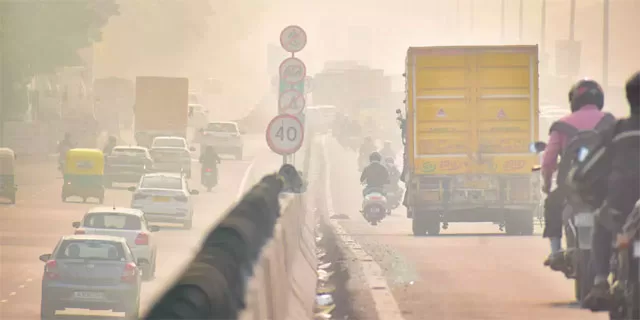
NEW DELHI — Breathing dirty air isn’t just harming lungs; it is actively lowering the odds of survival for individuals fighting tuberculosis (TB). In the largest epidemiological investigation of its kind, researchers have established a direct, dose-dependent link between short-term exposure to toxic fine particulate matter (PM2.5) and an increased risk of mortality among adult TB patients undergoing active treatment in India’s capital region.
The landmark study, led by scientists from the All India Institute of Medical Sciences (AIIMS) in New Delhi and the Central Tuberculosis Division, alongside researchers from Boston University and Cornell University, analyzed data from 61,925 adults enrolled in India’s national TB reporting platform, Nikshay, between September 2022 and August 2023. Published in Clinical Infectious Diseases, the investigation provides compelling evidence that environmental air pollution represents an underrecognized factor influencing TB treatment outcomes.
Escalating Odds: How Fine Particulates Impact Survival
To quantify exposure, researchers matched patient residential records with satellite-derived $\text{PM}_{2.5}$ concentration estimates recorded during the 30 days prior to treatment initiation. $\text{PM}_{2.5}$ refers to microscopic airborne particles measuring 2.5 micrometers or smaller in diameter—roughly 30 times thinner than a single strand of human hair. These tiny pollutants penetrate deep into the pulmonary alveoli and can pass directly into the bloodstream.
The median pre-treatment exposure in the study cohort stood at $97.5\ \mu\text{g/m}^3$—nearly 20 times the World Health Organization’s (WHO) recommended annual safety threshold of $5\ \mu\text{g/m}^3$. Crucially, this strong association between pollution exposure and death persisted even after statistical adjustments for clinical confounding variables, including patient age, sex, HIV status, underlying diabetes, body mass index, smoking history, alcohol use, and whether the infection was pulmonary or extrapulmonary.
“This is the first study of its kind in India and, to our knowledge, the largest anywhere in the world to examine the link between air pollution and tuberculosis deaths,” noted Dr. Pranay Sinha, an assistant professor of medicine at Boston University Chobanian & Avedisian School of Medicine and co-lead author of the paper. “In simple terms, patients exposed to the highest pollution levels before starting treatment were markedly more likely to die than those who breathed cleaner air.”
Biological Mechanisms: Biological Interplay of Inhaled Toxins and Infection
The biological plausibility connecting air pollution to compromised infectious disease defense lies in immunology. When inhaled, fine particulate matter triggers chronic inflammation within airway tissues and damages alveolar macrophages—the primary immune cells responsible for engulfing and destroying Mycobacterium tuberculosis bacteria.
Dr. S. Bhargava, a pulmonologist not affiliated with the primary cohort study, emphasized that inhaled particulate toxins systematically disarm localized pulmonary defenses. “Particulates disable the mucociliary escalator—the lungs’ natural self-cleaning system—while impairing cellular immune signaling. This creates an environment where Mycobacterium tuberculosis can replicate unchecked, increasing disease severity and weakening systemic resilience even when first-line antimicrobials are administered.”
Air Pollution Exposure (PM2.5)
         │
         ▼
Infiltration of Fine Particulates into Deep Lungs
         │
         ▼
Impaired Alveolar Macrophage & Mucociliary Defense
         │
         ▼
Reduced Immune Clearance of M. tuberculosis
         │
         ▼
Elevated Disease Severity & Adverse Treatment Outcomes
India’s Dual Burden: Public Health Context
India carries two heavy public health challenges simultaneously:
-
Global TB Burden: India accounts for approximately 27% of all global tuberculosis cases.
-
Severe Air Quality Challenges: Urban hubs in Northern India consistently rank among the most polluted areas in the world during autumn and winter months.
While previous global systematic reviews—including a comprehensive 2021 meta-analysis published in Chemosphere—have linked ambient air pollution with increased overall incidence of active TB, this new research directly addresses mortality during active therapy.
India’s National Tuberculosis Elimination Program has set targets to eliminate TB morbidity and mortality ahead of global goals. However, as noted in a policy brief by the Observer Research Foundation, unaddressed environmental factors like severe ambient air pollution risk capping the real-world success rates of drug regimens.
Study Limitations and Methodological Nuances
While the study’s large sample size ($N = 61,925$) provides strong statistical power, the authors highlighted several methodological limitations:
-
Observational Design: The study establishes a strong statistical association, but cannot definitively prove a direct cause-and-effect link.
-
Exposure Estimation: Environmental exposure relied on high-resolution satellite models rather than individual, personal-monitoring sensors. This means specific micro-environmental factors (such as occupational exposures or indoor biomass burning) could not be captured individually.
-
Geographic Scope: Findings focused specifically on urban and peri-urban Delhi. While findings likely apply to other high-density, highly polluted cities in South Asia, differences in localized aerosol chemical composition, climate, and underlying strain genetics warrant further regional study.
Actionable Guidance for Patients, Clinicians, and Policymakers
The findings highlight air quality management as an important consideration for respiratory infection care.
Practical Strategies for TB Patients
-
Monitor Air Quality Alerts: Track daily Air Quality Index (AQI) forecasts and limit outdoor activity on hazardous air days.
-
High-Efficiency Indoor Air Filtration: Utilize HEPA-based indoor air purifiers when accessible, especially inside sleeping areas.
-
Personal Protective Equipment: Wear well-fitted N95 or equivalent respirators when outdoors in severe ambient pollution to reduce total particulate inhalation.
-
Maintain Strict Treatment Adherence: Continue anti-tubercular medication as prescribed by healthcare providers without interruption, regardless of environmental conditions.
Policy and Institutional Interventions
For public health officials, incorporating air pollution mitigation into infectious disease control frameworks represents a vital policy lever. Interventions focused on strict vehicular emission limits, dust suppression at industrial and construction sites, and improved residential clean-energy access could directly improve survival rates for thousands of individuals currently undergoing TB treatment.
Medical Disclaimer: This article is for informational purposes only and should not be considered medical advice. Always consult with qualified healthcare professionals before making any health-related decisions or changes to your treatment plan. The information presented here is based on current research and expert opinions, which may evolve as new evidence emerges.
References
- https://health.economictimes.indiatimes.com/news/industry/the-air-delhis-tb-patients-breathe-may-be-shaping-their-chances-of-survival-study-shows/133004404?utm_source=latest_news&utm_medium=homepage


Happy
0 %

Sad
0 %

Excited
0 %

Sleepy
0 %

Angry
0 %

Surprise
0 %