 0
0
 0
0
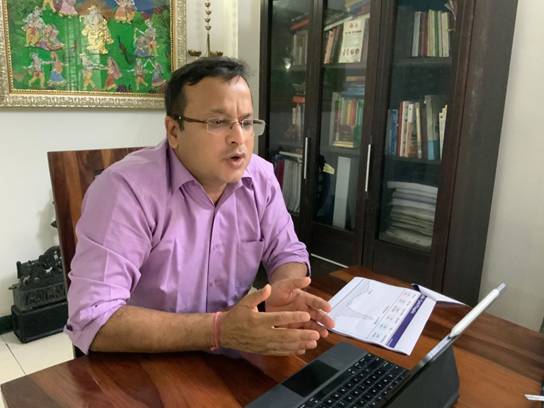
NEW DELHI – In a move that signals a digital frontier for Indian medical education, the All India Institute of Medical Sciences (AIIMS) New Delhi officially inaugurated its Virtual Reality (VR) Training Centre on April 6, 2026. The facility, established at the institute’s Skill Enhancement and Telemedicine (SET) Facility in collaboration with MediSim VR, aims to provide medical and nursing students with an immersive, high-tech environment to master clinical skills before they ever touch a real patient.
The launch marks a significant shift for the nation’s premier medical institution, transitioning from traditional classroom-and-ward models to a hybrid approach that prioritizes “safe failure.” By allowing trainees to rehearse complex surgeries and emergency protocols in a risk-free digital space, AIIMS leaders hope to bridge the gap between theoretical knowledge and the high-stakes reality of the operating theater.
A New Dimension of Clinical Practice
The new centre is designed to simulate medical scenarios that are often too rare, expensive, or dangerous to recreate for every student. Through VR headsets and haptic feedback tools, learners can navigate 3D anatomical models or manage a simulated patient experiencing a cardiac arrest.
At the inauguration, Dr. M. Srinivas, Director of AIIMS New Delhi, emphasized that the institution’s commitment to innovation must extend beyond patient care into the very way doctors are taught. “Medical innovation should be a cornerstone of training,” Dr. Srinivas stated, noting that the technology is intended to bolster student confidence and technical competence.
Professor Ambuj Roy of AIIMS added that the precision offered by VR could set new benchmarks for training standards. “This isn’t just about the technology; it’s about the standardization of skills,” he explained. The collaboration also includes a rigorous research component to evaluate how AI-enabled VR environments influence the speed and quality of skill development compared to traditional methods.
The Science of Immersive Learning
While the technology feels futuristic, it is supported by a growing, albeit nuanced, body of evidence.
-
Knowledge Retention: A 2023 review published in Frontiers in Medicine found that immersive VR can significantly enhance knowledge retention and the acquisition of technical skills.
-
Student Satisfaction: A 2023 study indexed in PubMed reported high levels of learner satisfaction and improved procedural accuracy among students using VR-based curricula.
-
Safety Standards: The Agency for Healthcare Research and Quality (AHRQ) has long maintained that simulation training improves team behaviors and procedural competence, creating a stronger foundation for patient safety.
However, the medical community remains cautiously optimistic. A comprehensive 2024 umbrella review in Frontiers in Digital Health examined 28 studies and found that while most reported positive educational effects, the pooled statistical data did not yet show a definitive “superiority” over conventional teaching. This suggests that while VR is a powerful tool, it is most effective when used as a supplement to—not a replacement for—bedside teaching and practice with real-human interaction.
Impact on Public Health and Patient Safety
For the average patient, the opening of this centre is more than an academic milestone; it is a safety initiative. In a busy hospital environment, the “see one, do one, teach one” model of the past is being replaced by “practice many, do one.”
By practicing “low-frequency, high-risk” events—such as rare airway complications or specialized neonatal resuscitations—trainees arrive at a patient’s bedside with “muscle memory” already established. This reduces the likelihood of “never events” (medical errors that should never occur) and ensures that the learning curve happens in a lab, not on a person.
Furthermore, the World Health Organization (WHO) has recommended high-fidelity simulation methods, particularly in nursing education, to ensure clinical competence. As AIIMS trains a vast portion of India’s future healthcare workforce, the standardization provided by this VR centre could eventually harmonize the quality of care across various regions of the country.
Challenges and the Path Forward
Despite the enthusiasm, implementing VR on a national scale faces hurdles. The primary concerns include:
-
Cost and Infrastructure: High-quality VR hardware and software remain expensive.
-
Faculty Integration: Educators must be trained to integrate these modules into existing curricula effectively.
-
Human Elements: Critics point out that VR cannot yet perfectly replicate the “soft skills” of medicine—such as interpreting a patient’s subtle emotional cues or managing the physical weight of surgical instruments.
“The real value of this centre will depend on its integration,” notes the AHRQ in its assessment of simulation-based strategies. A student who excels in a VR module still requires supervised exposure to real patients, where the complexity of human biology and team dynamics cannot be fully distilled into an algorithm.
A Model for the Future
As AIIMS New Delhi begins collecting data from its first cohort of VR-trained students, the medical world will be watching. If the program demonstrates measurable gains in consistency and safety, it may serve as the blueprint for medical colleges across India and other emerging economies.
For now, the message to the public and the medical community is clear: the future of healthcare is increasingly digital, but its goal remains deeply human—ensuring that every doctor is as prepared as possible before they take their first step into the ward.
References
-
AIIMS New Delhi. (2026, April 6). Inauguration of Virtual Reality Training Centre at SET Facility. Official Press Release/Medical Dialogues.
Medical Disclaimer: This article is for informational purposes only and should not be considered medical advice. Always consult with qualified healthcare professionals before making any health-related decisions or changes to your treatment plan. The information presented here is based on current research and expert opinions, which may evolve as new evidence emerges.