 0
0
 0
0
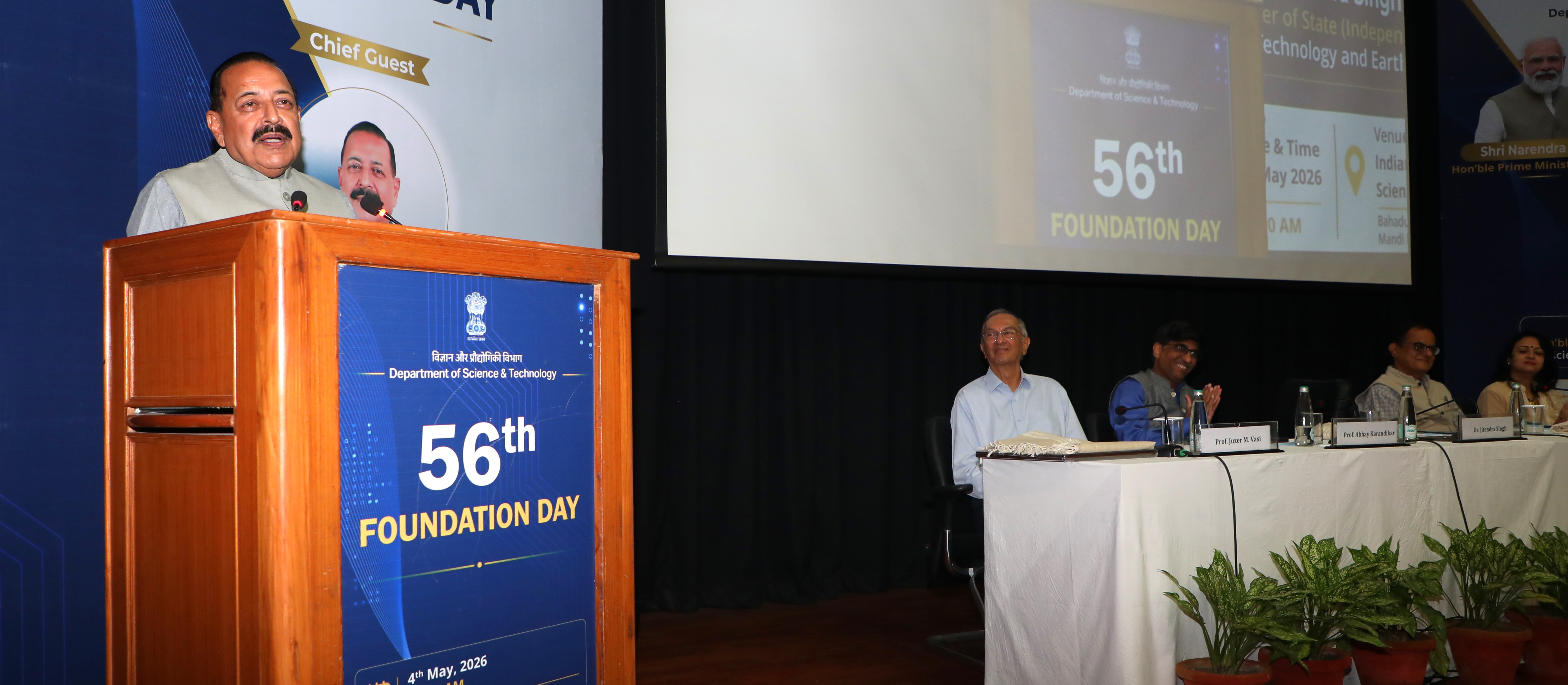
NEW DELHI — In a landmark address marking the 56th Foundation Day of the Department of Science and Technology (DST) on May 4, 2026, Union Minister Dr. Jitendra Singh declared that India is undergoing a “technological renaissance.” Speaking at the Indian National Science Academy (INSA), Dr. Singh detailed a decade-long transformation in the nation’s scientific ecosystem—one that is pivotally shifting from theoretical research in isolated laboratories to market-ready innovations that directly impact the health and economic well-being of nearly 1.4 billion people.
The Minister emphasized that the integration of the private sector, academia, and government is no longer just a policy goal but a realized engine for national growth. For the average citizen, this “renaissance” isn’t just about satellites and data; it represents a fundamental shift in how medical treatments, clean energy, and life-saving technologies reach the public.
A Decade of Transformation: By the Numbers
The scale of India’s innovation surge is reflected in the explosive growth of its startup ecosystem. A decade ago, the country was home to only a few hundred startups; today, that number has surpassed 200,000.
According to Dr. Singh, this growth is a direct result of policy decisions that opened previously “locked” sectors—such as space and nuclear energy—to private participation. This shift has created a ripple effect, particularly in the Biotechnology and Pharmaceutical sectors, which are now leveraging high-performance computing and indigenous research to lower the cost of care.
Key Pillars of the Scientific Shift:
-
The National Quantum Mission: Aimed at revolutionizing secure communications and drug discovery.
-
Anusandhan National Research Foundation (ANRF): A centralized body designed to bridge the gap between academic research and industrial application.
-
Deep Tech Integration: Moving beyond software to hardware-based solutions in medical diagnostics and environmental monitoring.
Bridging the “Lab-to-Market” Gap
“Science must now move from laboratories to markets and from ideas to impact,” Dr. Singh told the assembly of leading scientists and academicians.
Historically, scientific breakthroughs in India often struggled to cross the “valley of death”—the gap between a successful lab experiment and a commercially viable product. By fostering collaborations between the government and private industry, the DST is ensuring that research in areas like genomics, vaccine development, and medical devices reaches hospitals and clinics faster.
Prof. Abhay Karandikar, Secretary of the DST, highlighted the RDI (Research, Development, and Innovation) Fund as a critical tool in this transition. This fund incentivizes private companies to invest in high-risk, high-reward scientific research, which is essential for developing indigenous medical technologies that reduce India’s dependence on expensive imports.
Impact on Public Health: The Pharmaceutical Frontier
One of the most significant takeaways for health-conscious consumers is India’s increasing focus on indigenous pharmaceutical research. Dr. Singh noted that India is increasingly developing its own technologies in critical areas, including complex drug formulations and biologicals.
Why This Matters to You:
-
Affordability: Indigenous manufacturing of medical equipment and drugs typically leads to lower out-of-pocket costs for patients.
-
Precision Medicine: With the growth of the biotech startup scene, India is moving closer to personalized healthcare, where treatments are tailored to the genetic profile of the Indian population.
-
Rapid Response: As seen during the COVID-19 pandemic, a robust domestic science ecosystem allows for the rapid scaling of vaccines and diagnostic kits during public health emergencies.
Expert Perspectives: A Balanced View
While the government’s optimism is high, independent experts suggest that the “renaissance” requires sustained effort to ensure equitable access.
“The shift toward private participation is a double-edged sword,” says Dr. Aranya Sen, a public health policy researcher (not affiliated with the DST). “While it accelerates innovation, the government must ensure that these technologies remain accessible to the rural and underserved populations. Market-driven science must be balanced with public-good mandates.”
Furthermore, Prof. Ajay Kumar Sood, Principal Scientific Adviser to the Government of India, noted during the event that while technology development is crucial, it must be aligned with commercialization strategies to be truly sustainable. The challenge lies in maintaining high scientific standards while meeting the fast-paced demands of the private market.
The Road Ahead: Quantum Leaps and Human Capital
The Minister also addressed the need for administrative reforms and a merit-based ecosystem to guide young talent. He stressed that scientific institutions must become better communicators. For the public to trust and adopt new technologies—be it AI-driven diagnostics or new vaccine platforms—the scientific community must engage in transparent outreach.
As India targets a “Viksit Bharat” (Developed India) by 2047, the Department of Science and Technology is positioning itself as the backbone of this evolution. The message from the 56th Foundation Day was clear: the next decade of Indian science will be defined by its ability to solve real-world problems, improve life expectancy, and drive the economy through the power of the “Made in India” intellect.
Medical Disclaimer
This article is for informational purposes only and should not be considered medical advice. Always consult with qualified healthcare professionals before making any health-related decisions or changes to your treatment plan. The information presented here is based on current research and expert opinions, which may evolve as new evidence emerges.
References and Sources
Official Announcements:
-
Press Information Bureau (PIB). “Technology-driven innovation is the key to India’s economic renaissance: Dr Jitendra Singh.” Posted May 4, 2026. [PIB Delhi].