 0
0
 0
0
May 30, 2026
WASHINGTON, D.C. — The U.S. Department of Agriculture (USDA) confirmed Friday that the flesh-eating New World screwworm has been detected within 31 miles of the U.S.-Mexico border. The discovery marks the northernmost active case recorded during the ongoing outbreak, igniting urgent surveillance and containment operations by biosecurity, agricultural, and public health agencies determined to keep the devastating parasite from breaching U.S. soil.
Key Findings: An Invasive Threat Moves North
The latest positive detection occurred in Mexico’s northern state of Nuevo León, placing the infestation just miles from the Texas border. While federal authorities emphasize that the New World screwworm (Cochliomyia hominivorax) is not currently established within the United States, its steady northward advance from Central America represents a critical tipping point for North American biosecurity.
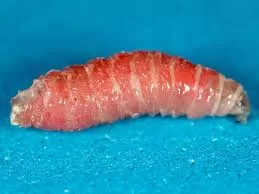
Unlike typical blowflies, which feed exclusively on dead or decaying tissue, the New World screwworm is an obligate parasite. This means its larvae, or maggots, aggressively invade and consume the living flesh of warm-blooded animals. If an infestation—scientifically termed myiasis—is left untreated, it causes severe, destructive tissue damage and can kill a full-grown host animal in less than a week.
The scale of the current outbreak is substantial. Originally flaring up in Panama and Costa Rica in 2023, the parasite has systematically resurged across every Central American nation and deep into Mexico, undoing decades of successful regional eradication programs.
The Border Outbreak by the Numbers
The current multi-country outbreak has rapidly expanded over the last three years, as tracked by international health coalitions and federal agencies:
| Metric | Total Impact Reported | Primary Sources |
| Animal Infestations | 171,700+ confirmed cases | Centers for Disease Control and Prevention (CDC) |
| Human Cases | 1,960+ confirmed infections | CDC / Regional Health Ministries |
| U.S. Domestic Flights | 0 wild flies detected to date | USDA Animal and Plant Health Inspection Service (APHIS) |
| Suppression Efforts | 100 million sterile flies released weekly | USDA APHIS Buffer Program |
The First U.S. Case as a Sentinel Event
Public health interest spiked significantly following a singular, travel-associated human case identified in August 2025. A Maryland resident who had recently returned from El Salvador presented to a clinic with painful, parasitic larvae embedded in living tissue.
The patient was successfully treated using precise surgical debridement (the physical removal of the larvae) combined with standard antiparasitic pharmaceuticals, resulting in a full recovery. An immediate epidemiological and entomological investigation deployed 121 specialized traps within a 20-mile radius across Maryland, Virginia, and Washington, D.C. No wild screwworm flies were captured, confirming that local transmission did not occur.
“This marks the first travel-related human case of New World screwworm myiasis identified in the U.S. stemming from a country experiencing the current outbreak,” noted Health and Human Services (HHS) spokesperson Andrew Nixon in an official statement following the event, emphasizing that the case highlighted the reality of global mobility bypassing geographical barriers.
Expert Commentary: High Agricultural Stakes, Low Immediate Human Risk
Medical and veterinary professionals view the border detection through a dual lens of low immediate threat to human life but immense peril to the American economy.
“While the public health risk in the United States remains low, the agricultural stakes are substantial,” explains Dr. Kirubel T. Hailu, a public health researcher at University College Cork and the lead author of a comprehensive narrative review on the screwworm published in Cureus.
The CDC maintains that there is “no immediate risk of infestation to people” inside the United States because wild fly populations have not crossed the border. However, the economic exposure for livestock is staggering. According to historical models and USDA scenario analyses adjusted for modern inflation, a sustained domestic screwworm breach into the cattle, sheep, and swine industries could threaten upwards of $100 billion in economic activity, inflicting billions of dollars in annual losses for producers.
“Eradication success is historically fragile due to persistent regional endemicity and global mobility,” Dr. Hailu noted in his analysis. He stressed that the current proximity to the border serves as a stark reminder of the need for an integrated “One Health” framework—a strategy that links human, veterinary, and environmental surveillance to capture emerging threats before they take root.
How Screwworm Infestation Occurs
The biology of Cochliomyia hominivorax explains why the parasite is incredibly destructive yet uniquely vulnerable to specific biological controls.
-
The Attack Vector: A gravid (pregnant) female fly is drawn to the scent of open wounds, sores, or natural body orifices of a warm-blooded animal. She deposits a batch of 100 to 300 eggs at the wound margin.
-
Rapid Feeding Cycle: The eggs hatch in a mere 12 to 24 hours. The tiny, first-instar larvae immediately use sharp mouth-hooks and proteolytic (protein-dissorving) enzymes to burrow deep into healthy, living tissue. They feed aggressively for 4 to 7 days, expanding the wound into a cavernous pocket.
-
The Reproductive Flaw: After reaching maturity, the larvae drop to the ground to pupate in the soil, emerging as adult flies weeks later. Crucially, female screwworm flies are monogamous—they mate only once in their lifetime.
This reproductive trait forms the cornerstone of the Sterile Insect Technique (SIT). The USDA, in partnership with Mexican authorities, breeds hundreds of millions of male flies, sterilizes them via low-dose radiation, and releases them via aircraft over the border states. When wild, single-mating females breed with these sterile males, they produce infertile eggs that fail to hatch, collapsing the local population line.
Protecting Households, Livestock, and Travelers
For health-conscious consumers and individuals traveling to Central America or rural Mexico, the CDC advises strict wound hygiene and personal protection:
-
Wound Care: Keep all open cuts, scratches, or surgical incisions thoroughly clean and covered with bandages, regardless of how minor they seem.
-
Personal Barriers: Wear loose-fitting, long-sleeved clothing, long pants, and hats when visiting rural or agricultural zones to minimize exposed skin.
-
Vector Repellents: Utilize EPA-registered insect repellents containing active ingredients like DEET or Picaridin, and consider treating outdoor gear with 0.5% permethrin.
Symptoms of human or animal myiasis include unexplained, intensely painful wounds that fail to heal, localized swelling accompanied by a foul-smelling discharge or bleeding, and visible movement of larvae within the skin cavity.
Public health departments urge anyone who suspects an infestation to seek immediate professional medical care. Do not attempt to pull or squeeze the larvae out independently, as partial extraction can worsen secondary bacterial infections. Healthcare providers and veterinarians are required to report any suspected cases immediately to local health departments or state animal health officials.
Climate Change and System Hurdles
The northward march of the screwworm highlights complex ecological shifts. Researchers warn that climate change poses an ongoing wild card: rising average temperatures and shifting winter baselines mean that the southern and southwestern United States may increasingly offer favorable, frost-free ecological niches where the fly could overwinter if it ever breaches the border buffer.
Furthermore, running an expansive SIT barrier is an incredibly resource-intensive endeavor. It demands absolute logistical reliability, continuous funding, and steady production lines. Recognizing this vulnerability, federal efforts are underway to establish an emergency backup sterile-fly production facility within Texas to ensure technical redundancy should regional facilities experience disruptions.
For now, the detection 31 miles south of the border proves that defensive trapping networks and joint operations between the USDA and Mexico’s National Service of Health, Food Safety, and Quality (SENASICA) are successfully locating cases early. While there is no reason for public panic, federal agencies are calling for sustained vigilance from livestock owners and physicians alike to keep the perimeter secure.
Medical Disclaimer
This article is for informational purposes only and should not be considered medical advice. Always consult with qualified healthcare professionals before making any health-related decisions or changes to your treatment plan. The information presented here is based on current research and expert opinions, which may evolve as new evidence emerges.
References
- https://www.reuters.com/business/healthcare-pharmaceuticals/flesh-eating-screwworm-found-within-31-miles-us-border-says-usda-2026-05-29/