 0
0
 0
0
Health and Medical News Journalist
BUNIA, Democratic Republic of the Congo — Five patients have fully recovered from Ebola caused by the rare Bundibugyo virus variant in the eastern Democratic Republic of the Congo (DRC). This development offers a crucial beacon of hope as international health authorities work rapidly to contain the country’s 17th Ebola outbreak. The milestone comes just weeks after the World Health Organization (WHO) declared the situation a Public Health Emergency of International Concern (PHEIC), drawing global attention to an escalating crisis in a highly volatile region.
Key Findings: Recoveries Highlight the Power of Early Care
On Sunday, four nurses who contracted the virus while working on the frontlines were discharged from a specialized Ebola treatment center in Bunia, the capital of Ituri Province, after testing negative for the virus twice. A laboratory worker had been cleared and discharged the previous Thursday, bringing the total number of documented recoveries to five.
According to a WHO update, these successful outcomes underscore a foundational rule of viral hemorrhagic fever management: early diagnosis drastically improves a patient’s chance of survival.
WHO Director-General Dr. Tedros Adhanom Ghebreyesus, who traveled to Bunia for the inauguration of a new, state-of-the-art Ebola treatment center, spoke directly to affected communities to combat fear and stigma.
“Ebola caused by the Bundibugyo virus can be survived with good medical care, and some people here in Ituri have already recovered,” Dr. Tedros emphasized. “Seeking care early makes a real difference… It is not without hope.”
The Numbers: A Complex and Growing Outbreak
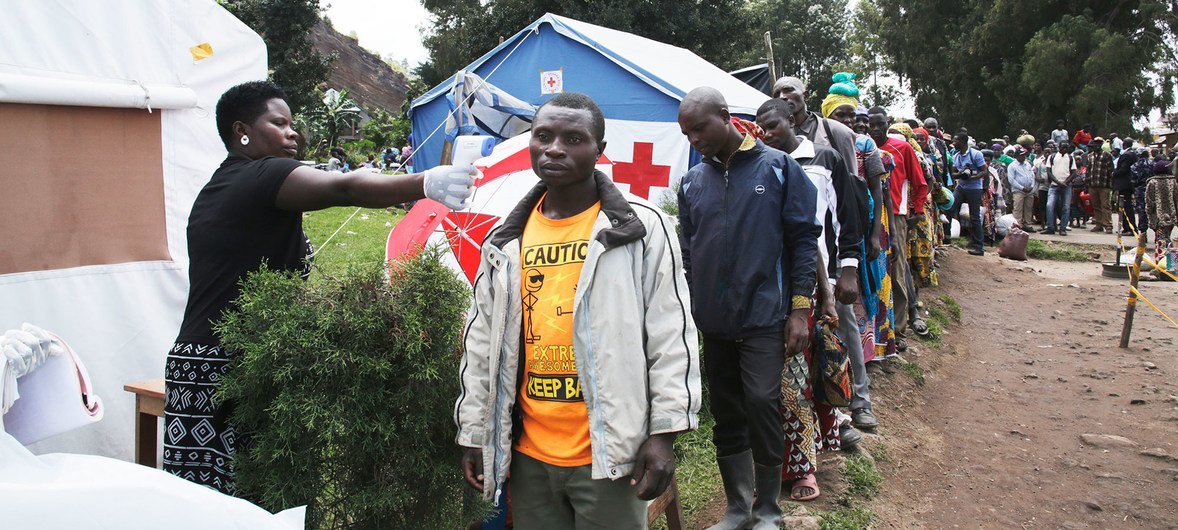
Despite the encouraging recoveries, epidemiological data highlights a deeply challenging situation on the ground. The outbreak is unfolding across heavily populated and structurally vulnerable areas.
Regional Breakdown of Confirmed Cases (as of May 29, 2026)
| Jurisdiction | Confirmed Cases | Confirmed Deaths |
| Ituri Province (DRC) | 264 | Not specified by zone |
| North Kivu Province (DRC) | 15 | Not specified by zone |
| South Kivu Province (DRC) | 3 | Not specified by zone |
| Uganda | 9 | 1 |
| Total Cross-Border Cases | 282 | 42 |
The current case fatality rate among confirmed cases stands at approximately 15%. While any loss of life is tragic, this percentage is notably lower than the historical 30% to 50% mortality rate traditionally associated with the Bundibugyo virus. Experts credit this shift to enhanced surveillance networks and rapid medical admission.
However, containment remains an uphill battle. Nearly 350 suspected cases are currently under investigation, and the WHO has documented a total of 906 suspected cases alongside 223 suspected deaths across the region. Furthermore, 16 health workers have contracted the virus, underscoring the immense risks borne by frontline medical personnel operating without adequate initial protection.
The Therapeutic Deficit: No Licensed Vaccines or Treatments
A primary challenge in managing this specific outbreak is the lack of a medical safety net. The highly effective Ervebo® vaccine, which revolutionized the response to the more common Zaire Ebola strain in recent years, does not provide verified cross-protection against the Bundibugyo variant. Consequently, health authorities cannot deploy it outside of strict research protocols.
To bridge this gap, WHO expert advisory groups have fast-tracked the evaluation of experimental countermeasures, identifying several candidates for immediate clinical trials:
Priority Experimental Therapeutics
-
MBP134: A monoclonal antibody cocktail developed by Mapp Biopharmaceutical.
-
Maftivimab: A monoclonal antibody developed by Regeneron Pharmaceuticals.
-
Remdesivir: An antiviral drug from Gilead Sciences.
-
Obeldesivir: An experimental oral antiviral by Gilead Sciences, prioritized as a post-exposure prophylactic for high-risk contacts.
Priority Candidate Vaccines
-
ChAdOx1 Bundibugyo (Oxford University / Serum Institute of India): A viral vector vaccine that could be ready for field clinical trials within two to three months, pending final animal model safety data.
-
rVSV Bundibugyo (International AIDS Vaccine Initiative): Assessed as highly promising but estimated to be seven to nine months away from deployment.
Expert Perspectives: Re-Centering on Supportive Care
Because targeted drugs are not yet available, clinical teams are relying on rigorous supportive therapies to save lives.
Pierre Akilimali, Incident Manager at Congo’s National Institute of Public Health, explained during the Bunia treatment center launch that aggressive symptomatic management is the true driver behind the recent recoveries. This approach includes continuous intravenous fluid replacement, electrolyte stabilization, blood pressure maintenance, and targeted oxygen support.
Anais Legand, a member of the High Threat Pathogens Team within the WHO Health Emergencies Programme, noted that comparing historical data to current outcomes validates this clinical focus.
“The rate of people who died among those confirmed to have the infection ranges from 30% to 50% [historically],” Legand stated. The lower current percentage demonstrates that standardizing early supportive interventions directly changes patient outcomes.
Public Health Implications: What This Means Globally
The realities of the DRC outbreak provide crucial lessons for both medical professionals and the broader global community.
For Healthcare Professionals
-
High Index of Suspicion: Clinicians must remain vigilant for hemorrhagic symptoms or unexplained fevers in patients with recent travel history to East or Central Africa.
-
Rigorous IPC Protocols: Ebola remains “a disease you get when you care for someone,” meaning strict Infection Prevention and Control (IPC) measures are non-negotiable to protect staff.
For Consumers and Travelers
-
International Vigilance: While the risk to the general public outside East Africa remains low, international screening protocols are working. Health authorities in Italy and Brazil recently triggered isolation protocols for travelers returning from the DRC. In Brazil, two suspected cases eventually tested positive for meningitis and malaria, demonstrating that surveillance networks are functioning with high sensitivity.
-
Community Trust: Outbreak resolution depends entirely on community cooperation. Suspected cases must be reported early, and safe, dignified burial practices must be maintained to halt transmission chains.
Context, Limitations, and the Road Ahead
The current response is severely complicated by a long-standing humanitarian crisis in the eastern DRC. The region is marked by geographic isolation, dense populations, ongoing civil insecurity, and highly fluid border-crossing trade with Uganda. Furthermore, a backlog of more than 1,100 pending laboratory tests suggests that the true epidemiological footprint of the virus may be larger than current data reflects.
Because this is only the third time the Bundibugyo strain has caused a documented outbreak since its discovery, the ongoing response represents a steep learning curve for international medicine. The data gathered from the current supportive care protocols and upcoming clinical trials will likely dictate how the international community manages this rare variant for decades to come.
Medical Disclaimer
This article is for informational purposes only and should not be considered medical advice. Always consult with qualified healthcare professionals before making any health-related decisions or changes to your treatment plan. The information presented here is based on current research and expert opinions, which may evolve as new evidence emerges.
References
-
United Nations News. “DR Congo Ebola outbreak: Nurses discharged after full recovery.” May 31, 2026.