 0
0
 0
0
NEW DELHI — In a landmark move that signals a new era for medical diplomacy in Southeast Asia, India and Vietnam have finalized a series of agreements to interlink their digital payment ecosystems. By connecting India’s Unified Payments Interface (UPI) with Vietnam’s national payment rails, the two nations aim to dismantle the financial friction that has long hindered cross-border medical tourism, pharmaceutical trade, and digital health innovation.
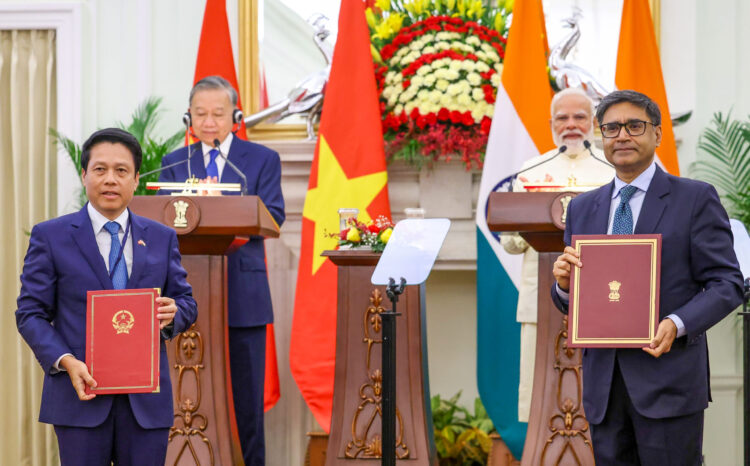
The agreement, formalized during Vietnamese President To Lam’s state visit to New Delhi on May 6, 2026, marks a strategic pivot toward “Digital Public Infrastructure” (DPI) as a tool for public health. Beyond simple currency exchange, the partnership seeks to create a seamless “digital health wallet” experience, potentially lowering costs for millions of patients and streamlining the flow of life-saving medicines between the two “pharmacies of the world.”
The “Scan-and-Pay” Hospital Experience
At the heart of this cooperation is a Memorandum of Understanding (MoU) between the Reserve Bank of India (RBI) and the State Bank of Vietnam. The goal is QR-code interoperability, managed by NPCI International Payments Limited (NIPL) and Vietnam’s National Payment Corporation (NAPAS).
For a patient, the implications are practical and immediate. Under this framework, a Vietnamese citizen traveling to an Indian tertiary care center for specialized surgery could pay for consultations, diagnostic imaging, and post-operative medications by scanning a local UPI QR code using their domestic Vietnamese bank app.
“This is about building a thin, secure layer of payment rails that can sit under health-insurance settlements and hospital billing,” says Dr. Anand Krishnan, a public health physician and fellow at the Public Health Foundation of India. “Removing the need for physical currency or expensive wire transfers reduces risks and administrative delays for families already dealing with the stress of medical treatment.”
Boosting Pharmaceutical Access
The collaboration extends deep into the supply chain. Starting in 2027, a new agreement between India’s Central Drugs Standard Control Organization (CDSCO) and Vietnam’s Drug Administration will allow Indian pharmaceutical firms to participate directly in procurement for Vietnamese public hospitals.
-
Cost Reduction: Increased competition and direct procurement are expected to lower drug prices for the Vietnamese public sector.
-
Regulatory Alignment: Joint monitoring of adverse drug reactions and shared standards for medical devices aim to ensure patient safety across borders.
-
Generic Excellence: The pact leverages India’s status as a global leader in generic drugs and biologics to stabilize Vietnam’s medicine supply.
AI and Traditional Medicine: A Hybrid Future
The roadmap also embraces high-tech diagnostics and ancient wisdom. The two nations are exploring AI-driven tools for telemedicine and hospital management, aiming to link India’s National Digital Health Mission (NDHM) architecture with Vietnam’s emerging e-health platforms.
Simultaneously, a push for an Academic Chair in Ayurveda in Vietnam reflects a shared interest in scientifically validating traditional medicine. Dr. Deepak Shukla, a historian of Asian medical traditions at Jawaharlal Nehru University, notes that this collaboration could “standardize quality control for herbal products and clinical research protocols,” integrating traditional care into modern primary health frameworks.
Challenges: The Digital Divide and Privacy
Despite the optimism, experts urge caution regarding the “digital divide.” While 95% of Vietnamese healthcare facilities now accept some form of cashless payment, a significant portion of the rural population in both countries remains “under-banked” or lacks smartphone access.
Dr. Rohit Saha, a researcher at the Institute of Public Health, Bengaluru, emphasizes the importance of data ethics. “Digital payment integration is only as useful as the record-keeping that backs it,” Dr. Saha explains. “We must ensure robust privacy safeguards so that payment data does not become a backdoor for unauthorized mining of sensitive health information.”
Furthermore, as these systems become more interconnected, the “attack surface” for cybercriminals grows. Both governments will need to invest heavily in cybersecurity to protect patient financial and medical records from cross-border breaches.
Public Health Outlook
If successful, this digital bridge could serve as a blueprint for “South-South cooperation” in healthcare. By reducing the “hidden costs” of care—such as exchange rate markups, billing errors, and manual reconciliation—India and Vietnam are betting that financial technology can be just as vital to patient outcomes as clinical technology.
For the everyday patient, the future of healthcare may look less like a mountain of paperwork and more like the familiar scan of a QR code.
Medical Disclaimer
Medical Disclaimer: This article is for informational purposes only and should not be considered medical advice. Always consult with qualified healthcare professionals before making any health-related decisions or changes to your treatment plan. The information presented here is based on current research and expert opinions, which may evolve as new evidence emerges.
References
Journalistic & News Sources:
-
Lokmat Times/IANS: “India, Vietnam reaffirm cooperation in digital payments, to bolster health sector” (May 6, 2026).
-
DD News: “India, Vietnam sign 13 agreements during Vietnamese President To Lam’s visit” (May 6, 2026).