 0
0
 0
0
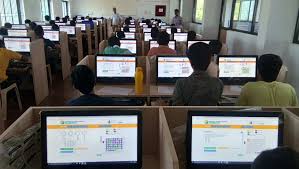
New Delhi, May 31, 2026 — In a sweeping move to salvage the integrity of India’s medical pipeline, the National Testing Agency (NTA) has officially committed to transitioning the National Eligibility cum Entrance Test-Undergraduate (NEET-UG) from paper to a Computer-Based Testing (CBT) format starting in 2027. The announcement, delivered via an NTA affidavit to the Supreme Court on May 29, comes as a direct response to a massive paper leak scandal that disrupted the futures of over 2.28 million aspiring doctors and forced the cancellation of the May 3, 2026 examination.
Restructuring the Gateway to Indian Healthcare
The decision marks the most significant structural overhaul of India’s medical entrance framework since its inception. The NTA’s legal cell confirmed that a seven-member High-Level Committee of Experts (HLCE), led by former Indian Space Research Organisation (ISRO) chairman Dr. K. Radhakrishnan, formally recommended the change to eliminate the vulnerabilities of physical paper handling.
The proposed reform goes beyond simply replacing pencils with keyboards. The expert panel has mandated a shift toward multi-session and multi-stage testing. This format mirrors successful international testing models and India’s engineering entrance exam, the Joint Entrance Examination (JEE) Main.
By spreading the massive candidate pool across multiple testing dates, authorities aim to dissolve the logistical nightmare of securing physical test papers for over two million students on a single afternoon.
Anatomy of a Security Failure
The urgency of the transition is underscored by the scale of the security breach that neutralized the 2026 exam cycle. Investigations conducted by Rajasthan’s Special Operations Group (SOG) and subsequently taken over by the Central Bureau of Investigation (CBI) exposed a sophisticated criminal operation spanning six states, including Bihar, Maharashtra, and Haryana.
According to investigative findings, a “guess paper” packed with roughly 410 highly specific questions had been leaked to select candidates weeks prior to the test. Most alarmingly, nearly 120 questions in the Chemistry section matched the actual exam paper word-for-word. Investigators estimate that questions accounting for nearly 600 out of the total 720 marks were compromised.
The ensuing CBI First Information Report (FIR) has triggered more than 45 arrests, netting a syndicate of coaching center counselors, professional paper-solvers, and even complicit senior medical students.
How Digital Formats Close the Security Gap
For years, testing experts have pointed out that paper-and-pencil testing (PPT) leaves an extensive physical paper trail—from printing presses and transport trucks to bank vaults and local school examination halls—creating multiple points of vulnerability.
“Moving the question bank to a secure, cloud-based environment reduces physical exposure to near zero,” notes Manish Mohta, an examination security analyst and founder of the digital assessment provider Learning Spiral. “Sensitive exam content can be encrypted and deployed directly to local testing terminals, decrypted only minutes before the timer starts.”
The digital architecture shifts the security dynamic from physical locks to algorithmic defenses.
| Security Feature | Traditional Pen-and-Paper (PPT) | Computer-Based Testing (CBT) |
| Data Encryption | No — Physical sheets are readable by anyone during transport. | Yes — Files remain encrypted until the exam begins. |
| Question Randomization | Limited — Fixed static booklets with shuffled question numbers. | Full — Dynamic shuffling where adjacent peers receive unique sequences. |
| Transit Vulnerabilities | High — Risk of intercept during multi-day transit to remote hubs. | Eliminated — Distributed digitally hours before launch. |
| Environmental Control | Variable — High dependence on local invigilators. | Strict — Standardized software locks out browsers and detects local signals. |
Balancing Innovation Against Equity
While the tech-forward approach offers clear security benefits, the transition introduces distinct equity and logistical hurdles for India’s deeply divided socioeconomic landscape.
The Digital Divide in Rural Preparation
The primary concern shared by health advocates and education policy analysts is student adaptation. A significant percentage of NEET-UG aspirants come from rural or socioeconomically disadvantaged backgrounds. These students may have mastered their biology textbooks but have limited day-to-day exposure to computer interfaces.
Infrastructure Constraints
Executing a synchronized, high-stakes digital exam across India’s 28 states and 8 union territories requires vast, uninterrupted computing infrastructure. Skeptics question whether tier-3 cities and rural centers can guarantee thousands of reliable terminals backed by stable internet connections and robust backup power systems to prevent mid-test server crashes.
The Aggressive One-Year Timeline
The NTA’s 12-month window to implement this system has drawn scrutiny. “The technical framework exists, but scaling it fairly is the true test,” argues Dr. Vivek Aggarwal, a senior education policy analyst at Delhi University who is independent of the committee.
“India’s management entrance exam (CAT) and engineering’s JEE Main navigated this transition successfully, but their candidate pools are smaller. The NTA must build out an ironclad network of mock testing centers so that a student’s computer literacy never overshadows their medical aptitude.”
Reassuring Aspirants: What Stays the Same
In a bid to minimize panic among students heading into the 2027 cycle, Union Education Minister Dharmendra Pradhan confirmed that the shift modifies only the delivery system of the exam, not its academic soul.
-
No Syllabus Alterations: The academic curriculum remains strictly bound to NCERT Class 11 and Class 12 blueprints covering Physics, Chemistry, and Biology.
-
Preserved Exam Architecture: The balance of core subjects and standard scoring principles will remain intact.
-
Designated Centers Only: Students will not take this exam from home; it will occur under strict monitoring at verified, secure digital testing facilities.
The Broader Impact on India’s Medical Pipeline
The administrative friction of the NEET exam reaches far beyond student stress—it directly impacts the stability of India’s public health infrastructure.
Because NEET-UG serves as the singular bottleneck gateway for admissions to all MBBS, BDS, and AYUSH programs nationwide, exam disruptions immediately freeze the recruitment cycle for the next generation of healthcare professionals.
Extended legal battles and re-tests trigger a domino effect: they delay medical school enrollment, disrupt hospital residency schedules, and worsen existing shortages in India’s rural medical workforce. Furthermore, the psychological toll on young aspirants has sparked nationwide anxiety, threatening to turn promising minds away from the medical profession entirely.
The Supreme Court continues to review multiple active petitions demanding systemic restructuring of the NTA. As India moves toward this digital horizon, the success of the 2027 CBT rollout will be measured not just by its tech infrastructure, but by its ability to restore public trust in the fairness of the system that selects the nation’s future doctors.
References
- https://health.economictimes.indiatimes.com/news/education/neet-ug-to-shift-to-cbt-mode-from-2027-nta-to-sc/131402560?utm_source=top_story&utm_medium=homepage
Medical Disclaimer
Medical Disclaimer: This article is for informational purposes only and should not be considered medical or professional advice. Always consult with qualified healthcare professionals, educational authorities, or official institutional bodies before making any health-related decisions, career changes, or alterations to medical training pathways. The information presented here is based on current research, developing legal investigations, and expert opinions, which may evolve as new evidence emerges.