 0
0
 0
0
Dhaka, Bangladesh — A catastrophic convergence of flagging immunization coverage and childhood malnutrition has plunged Bangladesh into its most severe public health crisis in recent history. According to the latest data from the Directorate General of Health Services (DGHS), a devastating measles outbreak has claimed the lives of 605 people, predominantly young children. The crisis intensified rapidly this week as four children succumbed to the virus within a single 24-hour period. Since March 15, health authorities have confirmed 91 deaths among lab-tested measles patients, alongside 514 deaths among suspected cases. With more than 82,000 children infected nationwide, the outbreak has exposed stark vulnerabilities in the country’s routine healthcare delivery systems following years of pandemic-related disruptions and shifting political priorities.
The Scale of the Crisis: Epidemiology of an Outbreak
The epidemiological numbers mapping this outbreak reveal a tragedy unfolding at an unprecedented scale. As of June 2, 2026, the DGHS has documented 73,362 suspected and 9,136 lab-confirmed measles cases, forcing the hospitalization of 59,106 patients. The current overall case fatality rate (CFR) hovers at 0.83%. However, among strictly confirmed cases, the mortality rate reaches 1.00%, illustrating the high virulence of the infection in vulnerable hosts.
Total Suspected Cases:  73,362
Total Confirmed Cases:   9,136
Total Hospitalized:     59,106
Total Fatalities:          605
The burden of this epidemic is carried almost entirely by the pediatric population. Approximately 82% of all recorded infections are occurring in children under five years of age. Most concerning to epidemiologists is the remarkably high incidence among infants under nine months old. Because standard immunization schedules do not administer the first dose of the measles vaccine until a child reaches nine months, these infants are entirely dependent on herd immunity—a protective barrier that has effectively collapsed. Geographically, the crisis is widespread but highly concentrated; Dhaka Division has recorded the highest overall volume with 34,497 suspected cases, while Rajshahi Division has registered the highest mortality, accounting for 85 deaths.
The Secondary Killers: Pneumonia and Malnutrition
In measles outbreaks, the virus itself rarely acts as the direct cause of death; instead, it decimates the host’s immune system, leaving the body entirely unprotected against secondary invaders. Hospital audits underscore this biological reality. A recent clinical analysis of 66 fatal cases at major pediatric institutions in Dhaka revealed that post-measles pneumonia and severe acute malnutrition were responsible for nearly 90% of the child deaths.
Beyond respiratory failure, the virus opened the door to other lethal complications: 33% of the analyzed fatalities involved meningoencephalitis (severe inflammation of the brain), and 22% secondary septicaemia (systemic blood poisoning).
“Measles is increasingly followed by severe pneumonia and rapid respiratory distress, which complicates treatment at under-resourced district-level facilities,” explains Dr. F.A. Asma Khan, an infectious diseases specialist at the Infectious Diseases Hospital in Dhaka, who is not involved in the primary government data collection. “Statistically, one in every 20 children who contracts measles will develop severe pneumonia. It remains our leading cause of mortality in these wards.”
This viral path is accelerated by childhood malnutrition. Data published in peer-reviewed literature shows that malnourished pediatric patients experience a starkly elevated mortality rate of 39.6 per 1,000 hospital admissions, compared to just 7.4 per 1,000 for well-nourished children.
The clinical decline in these patients is unforgivingly swift. Hospital records show that one in three children died within 24 hours of being admitted to a medical facility, and 40% died within 72 hours. This rapid timeline indicates that families are seeking tertiary hospital care only after a child has reached a critical, often irreversible stage of respiratory or metabolic collapse.
Tracing the Breakdown in Routine Immunization
The current crisis stands in sharp contrast to Bangladesh’s historical success in infectious disease control. Between 2014 and 2015, massive, well-coordinated measles-rubella vaccination campaigns successfully inoculated more than 50 million children. By the mid-2010s, Bangladesh boasted a stable 92% coverage rate for the first dose of the measles vaccine (MCV1) and an 80% coverage rate for the second dose (MCV2).
The erosion of this safety net occurred gradually, driven by global and domestic disruptions:
-
The COVID-19 Pandemic: Beginning in 2020, routine childhood immunization services were severely disrupted as personnel, supply chains, and cold-storage infrastructure were diverted to manage the pandemic. The World Health Organization (WHO) previously warned that pandemic-related suspensions of measles campaigns left over 117 million children globally vulnerable to the disease.
-
Shifting Political Priorities: As measles case numbers dropped temporarily during periods of pandemic isolation, subsequent interim governance structures scaled back active funding and oversight for routine surveillance, mistakenly assuming the threat had subsided.
-
The Immunity Gap: This multi-year decline created a critical mass of unvaccinated children across recent birth cohorts, providing the perfect conditions for a highly contagious virus to trigger a explosive outbreak.
Emergency Mobilization: The Public Health Response
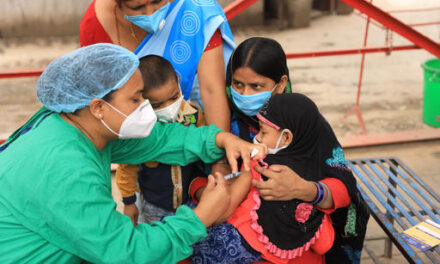
In response to the rising death toll, the Ministry of Health and Family Welfare has initiated an emergency response. Pinpointing 30 high-risk “hotspots” spanning 20 districts, the government launched a massive, localized measles-rubella vaccination campaign.
Emergency Campaign Target: 1.2 Million Children (Aged 6–59 months)
Initial Focal Zones:       Dhaka North, Dhaka South, Mymensingh, Barisal
Current Footprint:         Expanded nationwide to all 58 affected districts
The initial phase focused heavily on high-density urban sectors, successfully inoculating 1.49 million children across the first 30 designated sub-districts (upazilas) and four primary city corporations. To ensure sufficient staffing for the expanded nationwide rollout, Health Minister Sardar Shakhawat Hossain Bokul announced the cancellation of all scheduled leaves for essential medical personnel. Government officials have publicly committed to bringing the outbreak under complete control before the conclusion of 2026.
A Warning Shot for Global Public Health
The tragedy unfolding in Bangladesh is not an isolated event; it reflects a broader, highly troubling global resurgence of preventable infectious diseases. Joint assessments by the WHO and the U.S. Centers for Disease Control and Prevention (CDC) note that global measles cases jumped 18% recently, with worldwide deaths climbing by 43% as routine immunization systems faltered globally. Bangladesh currently ranks among the top ten nations experiencing active, large-scale measles outbreaks.
Public health officials emphasize that the extreme transmissibility of the measles virus makes partial success impossible. To achieve true herd immunity and halt active transmission, an absolute minimum of 95% of the population must be fully vaccinated with a two-dose regimen. Current field data indicates that many districts in Bangladesh have fallen significantly below this critical threshold.
Furthermore, social factors have accelerated viral transmission. Public health experts point out that a major national holiday period in March triggered mass migration across districts, allowing the virus to travel rapidly from dense urban centers into remote rural communities with low healthcare infrastructure.
The Path Forward: Safeguarding Daily Health
For families and health-conscious communities worldwide, the crisis in Bangladesh offers clear, evidence-based lessons for daily health decisions:
-
The Complete Two-Dose Protocol is Essential: A single dose of the measles vaccine offers partial protection, but completing the full two-dose schedule provides 97% long-term effectiveness against infection.
-
Community Immunity Protects the Vulnerable: Because infants under nine months cannot safely receive the standard vaccine, they are entirely dependent on those around them being fully immunized to prevent the virus from entering their environment.
-
Nutritional Status is a Critical Co-Factor: Maintaining adequate childhood nutrition—specifically preventing Vitamin A deficiencies—is a proven clinical intervention that substantially reduces the severity of post-measles complications like blindness and pneumonia.
To permanently suppress this outbreak, global health experts agree that Bangladesh must look beyond short-term emergency campaigns. Long-term biosecurity requires rebuilding public trust in routine immunization, fixing structural vulnerabilities in the medical supply chain, providing aggressive nutritional support to at-risk children, and ensuring that healthcare funding remains completely insulated from political volatility.
Medical Disclaimer
This article is for informational purposes only and should not be considered medical advice. Always consult with qualified healthcare professionals before making any health-related decisions or changes to your treatment plan. The information presented here is based on current research and expert opinions, which may evolve as new evidence emerges.
References
- https://www.dhakatribune.com/bangladesh/health/411728/measles-outbreak-death-toll-605-as-four-children