 0
0
 0
0
New Delhi, April 4, 2026 — A highly mutated SARS-CoV-2 subvariant nicknamed “Cicada,” officially designated by scientists as BA.3.2, has emerged as a focal point for global health surveillance this spring. Currently detected in 29 U.S. states and 23 countries worldwide, the variant is showing signs of a seasonal resurgence in Europe, reminiscent of its namesake insect’s periodic emergence. While the World Health Organization (WHO) currently classifies BA.3.2 as a “Variant Under Monitoring” (VUM) with a low overall global risk, its genetic profile—boasting upwards of 70 mutations—has prompted a closer look at the durability of our current vaccine arsenal.
A “Dormant” Lineage Reawakens
The BA.3.2 subvariant is a genealogical surprise. It belongs to the Omicron family but specifically traces back to the BA.3 lineage, which was a minor player during the original Omicron wave in early 2022. After nearly three years of relative dormancy, this lineage re-emerged with significant evolutionary updates.
First identified by genomic sequencers in South Africa in November 2024, the variant traveled silently across borders. By June 2025, it was identified in a U.S. traveler. However, it wasn’t until February 2026 that wastewater surveillance—a “canary in the coal mine” for modern epidemiology—showed a notable uptick in 25 U.S. states. As of this week, that number has grown to 29.
In Europe, the trend is more pronounced. During the 2025-2026 winter season, BA.3.2 has accounted for approximately 30% of cases in Germany, Denmark, and the Netherlands. Despite this growth, the Centers for Disease Control and Prevention (CDC) notes that it has not yet reached “dominant” status globally, remaining a minority strain in the broader context of circulating JN.1 and LP.8.1 descendants.
The Mutation Paradox: 70 Reasons for Caution
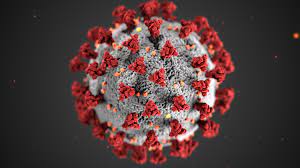
The primary concern for virologists lies in the variant’s spike protein—the “key” the virus uses to enter human cells. BA.3.2 carries 70 to 75 mutations in this region alone. To put that in perspective, the original Omicron variant, which caused massive global disruption in 2021, carried roughly 30.
This high level of mutation suggests a heightened ability for immune evasion. Preliminary lab data indicates that BA.3.2 can more easily bypass the antibodies generated by prior infections or the 2025-2026 vaccine formulations, which were designed to target the JN.1 and LP.8.1 lineages.
“The WHO anticipates a significant reduction in neutralization,” says the latest technical briefing. Early indicators suggest this evasion may be comparable to, or even exceed, that of the BA.2.86 (Pirola) or JN.1 variants that challenged public health systems in previous years.
Clinical Reality: Mild Symptoms Persist
Despite the intimidating genetic profile, the clinical picture remains reassuringly familiar. To date, there is no evidence that BA.3.2 causes more severe disease or higher rates of hospitalization than its predecessors.
Dr. Avi Kumar, Senior Consultant Pulmonologist at Fortis Escorts Heart Institute, Okhla, has been tracking the variant’s clinical presentation. “As a pulmonologist, I’ve been closely observing the Covid-19 BA.3.2 ‘Cicada’ variant,” Dr. Kumar noted. “It appears to cause only mild symptoms such as cold, cough, and fever, especially in children, without any significant rise in severe cases or hospitalizations.”
For most patients, the symptoms mirror a typical upper respiratory infection. This stability in severity is largely attributed to “hybrid immunity”—the combination of previous vaccinations and past infections that has built a robust cellular defense (T-cell response) in the global population, which is less susceptible to spike protein mutations than antibodies are.
Vaccine Effectiveness: A Glass Half-Full
The emergence of BA.3.2 raises a critical question for the public: Is the current vaccine still worth it? Experts say the answer is a resounding “yes,” though with managed expectations regarding infection prevention.
While the 2025-2026 shots may offer only partial protection against contracting the virus (the “sniffles”), they remain the most effective tool for preventing the worst outcomes.
“Vaccines may not work well against ‘Cicada’ infection, but it will still probably protect against severe illness,” says Dr. Donald Milton, a respiratory expert at the University of Maryland. “That still makes them worth taking.”
Dr. William Schaffner, an infectious disease expert at Vanderbilt University Medical Center, emphasizes that for the majority of the population, the annual fall vaccination strategy remains sufficient. However, he suggests that high-risk groups—the elderly and those with significant comorbidities—should remain vigilant and consider additional boosters if dual surges of COVID-19 and influenza occur in their regions.
Surveillance and Practical Advice
One silver lining in the BA.3.2 emergence is that our diagnostic tools remain sharp. Both the WHO and CDC have affirmed that current at-home rapid antigen tests reliably detect the Cicada variant. These tests target more stable parts of the virus, such as the nucleocapsid protein, which have not undergone the radical changes seen in the spike protein.
For the general public, the emergence of BA.3.2 underscores a shift in how we manage COVID-19. It is becoming increasingly similar to the seasonal flu—a virus that requires regular monitoring and updated vaccinations, but no longer necessitates the widespread “panic” seen in 2020.
Dr. Robert H. Hopkins, Medical Director for the National Foundation for Infectious Diseases, urges a balanced view. He classifies BA.3.2 as a “minority strain” and advises the public to remain vigilant without alarm.
Looking Ahead: The “Cicada” Legacy
As we move further into 2026, healthcare professionals will continue to monitor BA.3.2 for any shifts in dominance. This data will be instrumental in informing the 2026-2027 vaccine formulations. For now, the public health recommendation remains consistent:
-
Stay Up-to-Date: Prioritize the latest vaccine formulations, especially if you are in a high-risk category.
-
Practice Basic Hygiene: Handwashing and improving ventilation in crowded spaces remain effective against all variants.
-
Test Early: Use at-home tests if symptoms appear to prevent spreading the virus to more vulnerable individuals.
The “Cicada” variant serves as a reminder that SARS-CoV-2 is still evolving, finding new ways to navigate human immunity. However, with high levels of population immunity and sophisticated surveillance, the world is better prepared for these periodic “emergences” than ever before.
Medical Disclaimer: This article is for informational purposes only and should not be considered medical advice. Always consult with qualified healthcare professionals before making any health-related decisions or changes to your treatment plan. The information presented here is based on current research and expert opinions, which may evolve as new evidence emerges.
References
- https://www.ndtv.com/health/covid-19-cicada-variant-can-current-vaccines-protect-against-ba-3-2-subvariant-11306606