 0
0
 0
0
MAKURDI, Nigeria — When a 90-day freeze on U.S. foreign aid went into effect in early 2025, the impact was felt almost instantly in the clinics of Benue State. For the 200,000 residents living with HIV in this high-prevalence region, the political shift in Washington, D.C., translated into a life-threatening reality: shuttered health centers, dwindling drug supplies, and a sudden, terrifying silence in the healthcare system.
However, where international funding stalled, local heroism stepped in. Led by the Afrocab network, a grassroots army of “HIV champions” launched a door-to-door campaign to locate thousands of patients who had fallen out of care. This community-led intervention, paired with a rapid mobilization of domestic funding by the Nigerian government, successfully returned over 3,000 patients to life-saving treatment by the end of 2025, providing a blueprint for health sovereignty in an era of unpredictable global aid.
A System Under Strain: The 90-Day Freeze
On January 20, 2025, the U.S. administration enacted a comprehensive pause on foreign aid. This move hit the President’s Emergency Plan for AIDS Relief (PEPFAR) particularly hard. In Nigeria—home to approximately 2 million people living with HIV—PEPFAR historically funds nearly 90% of all treatment costs and supports the vast majority of specialized health workers.
The consequences were immediate:
-
Clinic Closures: In Makurdi, the capital of Benue State, all 10 primary treatment centers closed their doors for an entire month.
-
Supply Disruptions: Patients accustomed to receiving a six-month “multi-month dispensing” supply of antiretroviral therapy (ART) were suddenly rationed to one or two weeks of medication.
-
Loss of Care: Initial data from a UNAIDS tracker suggested that as many as 200,000 Nigerians dropped off the treatment radar during the first quarter of the year.
The stakes of such an interruption are high. “Interruptions in antiretroviral therapy allow the virus to rebound quickly,” explains Dr. Adeola Adebayo, an infectious disease specialist at Lagos University Teaching Hospital (not involved in the field efforts). “When viral loads rise, the risk of opportunistic infections increases for the individual, and the risk of transmission to others rises for the community.”
The “Champions” Who Refused to Wait
While diplomats negotiated in Abuja and Washington, volunteers like 40-year-old Josephine Angev took to the streets. Angev, a self-described HIV “champion,” spent her days navigating the neighborhoods of Benue State to find those who had stopped showing up for their meds.
Her work was as much about education as it was about logistics. In the vacuum of formal care, misinformation flourished, with some patients being told that prayer alone could cure the virus. Angev’s intervention was critical for a 65-year-old woman who had fallen ill after stopping her medication; through persistent home visits, Angev convinced her to resume the regimen.
“If we couldn’t reach someone by phone, we went to their house,” says Dinah Adaga, who coordinated the Afrocab volunteers. Between June and December 2025, this network successfully re-engaged 3,356 people in care. This included:
-
1,095 youth under the age of 24.
-
95 children under the age of five.
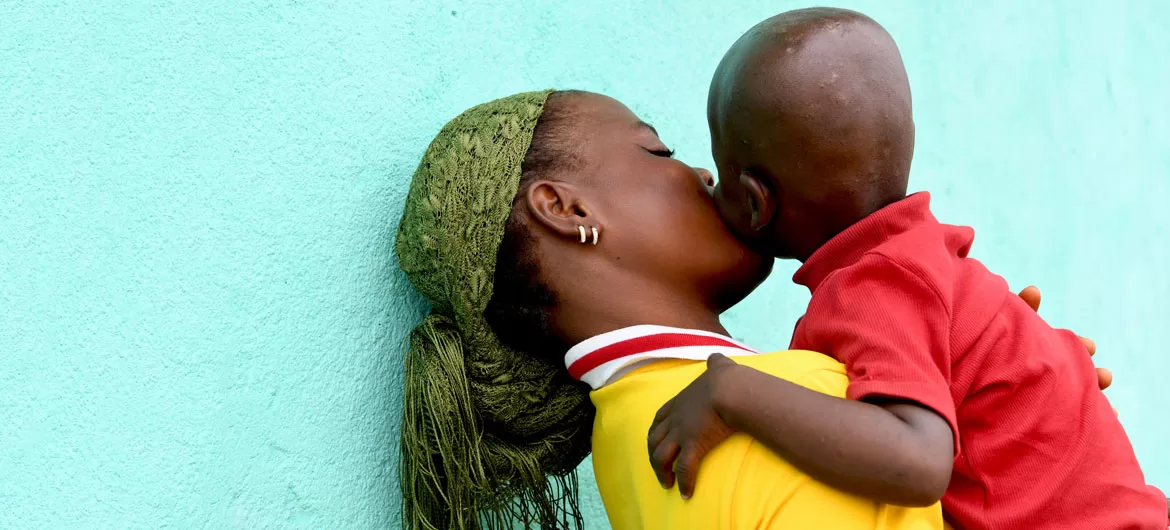
For a 41-year-old mother of three, the volunteers were a lifeline. “My future depends on these drugs,” she shared. “I have three daughters, all negative. I need to stay healthy for them.”
Government Intervention and the 95-95-95 Goal
The Nigerian government responded to the crisis by launching a $200 million emergency health package within six weeks of the U.S. freeze. Though the U.S. issued a waiver for life-saving antiretrovirals in February 2025, bureaucratic delays meant the domestic funding was the primary stabilizer for months.
By the end of 2025, the numbers told a story of resilience. Total patients on treatment rose to 1.7 million, up from 1.6 million in 2024. These figures align closely with the UNAIDS “95-95-95” targets—a global benchmark where 95% of people know their status, 95% of those diagnosed are on treatment, and 95% of those on treatment are virally suppressed.
According to Krittayawan Boonto, UNAIDS Nigeria Director, the efforts were successful in preventing the worst-case scenario. “We have seen no reports of ART-related deaths directly linked to the pause, which is a remarkable sign of the system’s ability to pivot,” Boonto noted.
The New U.S.-Nigeria Health Agreement
The crisis served as a wake-up call regarding aid dependency. In December 2025, a landmark five-year agreement (2026-2030) was signed between the U.S. and Nigeria. The deal commits:
-
$2.1 billion from the U.S.
-
$3.0 billion from Nigeria (a significant increase in domestic responsibility).
-
A 5-year transition plan to move toward full domestic funding of the HIV response.
The “Shadow” Crisis: Prevention and Testing
Despite the success in maintaining treatment numbers, experts warn that other pillars of HIV control suffered. Dr. Oluwafunke Odunlade, head of the WHO Nigeria HIV unit, highlighted a staggering drop in prevention services during the 2025 disruption:
| Service Category | Peak 2024 (Monthly Avg) | Low 2025 (Monthly Avg) | Change |
| PrEP Users | 43,000 | < 6,000 | -86% |
| Condom Distribution | Baseline | -55% | -55% |
| HIV Testing | Baseline | -1 Million (Annual) | Significant Drop |
“While we kept people alive who were already on drugs, we missed the chance to stop new infections,” warns Bright Oniovokukor of the Civil Society for HIV/AIDS in Nigeria. This is reflected in early 2026 data, which shows 20,838 new cases recorded in the first quarter, with Lagos and Benue leading the statistics.
Limitations and Counterarguments
The U.S. State Department has challenged the narrative of a “widespread loss” of care, with spokespeople noting that year-end treatment numbers remained stable compared to 2024. They argue that the waivers ensured the most critical supplies never fully ran out.
However, local critics point out that while the drugs may have been available, the people to administer them were not. PEPFAR funding covers the salaries of thousands of clinic staff; when those funds were frozen, clinics simply could not operate, regardless of whether there were pills on the shelves. Furthermore, the new funding deal’s emphasis on faith-based providers has raised concerns among some advocates who fear that marginalized “key populations” may face increased stigma in religious settings.
The Path Toward 2030
The Nigerian experience of 2025 serves as a microcosm of the challenges facing Sub-Saharan Africa, which accounts for 67% of the world’s HIV burden. As global political climates shift, the reliance on external aid becomes a strategic vulnerability.
Dr. Temitope Ilori, Director General of the National Agency for the Control of AIDS (NACA), remains optimistic that Nigeria can end AIDS as a public health threat by 2030. The key, she suggests, is domestic mobilization.
For the volunteers in Benue, the victory is measured one house at a time. “It can be exhausting,” says Josephine Angev. “But when you see someone who was bedridden walking again, living a better life—that is when you feel happy.”
References
Medical Disclaimer: This article is for informational purposes only and should not be considered medical advice. Always consult with qualified healthcare professionals before making any health-related decisions or changes to your treatment plan. The information presented here is based on current research and expert opinions, which may evolve as new evidence emerges.