 0
0
 0
0
NEW DELHI — In a landmark decision aimed at ensuring a leak-free examination, the Union government announced that the Indian Air Force (IAF) will be deployed to securely transport question papers for the upcoming National Eligibility cum Entrance Test Undergraduate (NEET-UG) 2026 re-examination scheduled for June 21. Union Education Minister Dharmendra Pradhan confirmed the unprecedented move, which highlights the government’s aggressive stance on reviving the sanctity of India’s most competitive medical entrance gateway.
The extraordinary military intervention comes in the wake of the absolute cancellation of the original May 3 national examination. The initial test was scrapped on May 12 after the Central Bureau of Investigation (CBI) unearthed conclusive evidence of a widespread digital paper leak, a crisis that directly disrupted the futures of approximately 22.79 lakh medical aspirants across the country.
Logistical Shielding and a “Whole-of-Government” Strategy
Speaking on the strategic overhaul, Education Minister Dharmendra Pradhan clarified that the Air Force’s mandate is explicitly limited to highly secured, time-bound logistics. The armed forces will play no operational role inside the examination halls.
“In view of logistical and security considerations, particularly weather conditions in June, it has been decided to involve the Indian Air Force in the secure transportation of question papers,” Pradhan stated. “The work earlier done by the postal department will now also be supported by the Indian Air Force so that question papers reach their destinations safely and on time.”
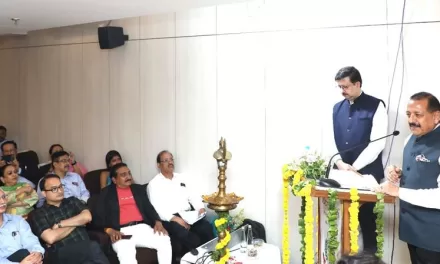
The decision was finalized during a high-level meeting between Defence Minister Rajnath Singh, Education Minister Pradhan, and Communications Minister Jyotiraditya Scindia. Given that June marks the onset of the monsoon season in India—often triggering severe regional flooding and unpredictable transport delays—the Centre opted for an airborne logistical strategy. Officials from the Ministry of Education indicated that the IAF will ferry question papers directly from secure printing facilities to central distribution hubs nationwide, mitigating the risks of ground-level interceptions or weather bottlenecks.
Technical Ironclad: NTA Details Multi-Layered Overhaul
The deployment of military aircraft forms the outer shell of a sweeping structural restructuring submitted by the National Testing Agency (NTA) via a comprehensive affidavit to the Supreme Court. Desperate to replace public skepticism with institutional trust, the agency is transforming the exam day workflow into a high-tech digital lockdown.
| Security Measure | Implementation Details & Operational Mechanism |
| Encrypted Question Papers | Transitioning away from vulnerable, long-term physical storage, papers will use fully digital formats with dynamic coded access systems, transferred via protected channels immediately prior to the test. |
| GPS Tracking | Real-time telemetry monitoring of all localized question paper movements from transit hubs directly to individual examination centres. |
| 5G Signal Jammers | Deployment of high-grade tactical jammers across all designated centres to completely suppress mobile networks, Bluetooth, and wireless rogue communications. |
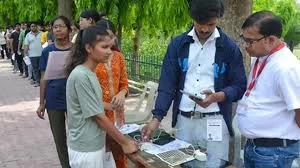
| Biometric Authentication | Mandatory Aadhaar-linked digital fingerprinting and facial recognition at entry gates to eliminate candidate impersonation. |
| AI-Powered Surveillance | Continuous AI-enabled CCTV feeds monitoring test halls in real-time, built with automated anomaly detection to flag suspicious behavioral patterns instantly. |
| Footage Preservation | Compulsory preservation of all examination centre video records for a minimum of 90 days to support subsequent forensic and administrative analysis. |
Beyond immediate digital armor, the NTA is undergoes an internal governance shakeup. The agency announced the creation of 16 new senior structural positions, including highly specialized Director and Joint Director-level posts, tasked entirely with monitoring compliance and exam security analytics.
The Anatomy of a National Leak: CBI Scrutiny Deepens
The intense security measures reflect the gravity of the systemic vulnerabilities exposed by the CBI’s ongoing investigation. The original May 3 exam—which spanned 551 domestic cities and 14 international locations—was compromised through an organized, multi-state illicit network.
According to federal investigators, a highly sensitive PDF document containing roughly 410 suspected questions was illegally leaked onto mobile devices days before the exam. Forensic analysis confirmed that nearly 140 of these questions, including an estimated 120 from the Chemistry section alone, matched the finalized exam paper verbatim.
The investigative trail spans Rajasthan, Maharashtra, Haryana, Bihar, and Kerala, leading back to a compromised printing agency in Jaipur. The CBI has arrested 13 individuals. Among those taken into custody are Dr. Manoj Shirure, a prominent Latur-based pediatrician, and Tejas Harshadkumar Shah, a physics instructor and chief operating officer at a Pune-based medical coaching academy. Investigators allege that Shah was connected via encrypted WhatsApp communications to the primary source of the leak, with his number saved under the alias “God.”
Evidence reveals that the syndicate organized isolated coaching sessions for children of influential families, charging between ₹2 lakh and ₹10 lakh per candidate to memorize the leaked material.
Political Backlash and Systemic Criticism
Despite the government’s robust defense of these extreme protocols, the inclusion of the military has drawn sharp criticism from opposition parties and policy analysts, who argue that the move addresses the symptoms rather than the disease.
Sanjay Raut, a Rajya Sabha MP representing the Shiv Sena (UBT), openly condemned the deployment, labeling it a glaring admission of administrative bankruptcy.
“Deploying the Indian Air Force to transport exam papers highlights an absolute collapse of internal institutional mechanics,” Raut argued. “Turning examination papers into defense assets does not fix the corruption inside the NTA and the Education Ministry. It merely papers over a broken system with a military bandage.”
Other opposition figures lambasted the move, asking sarcastically if the Centre would next request the deployment of ISRO or NASA to oversee mundane educational logistics. Independent education experts have also expressed concern, noting that while securing transport channels is necessary, the ultimate test of the June 21 re-exam relies entirely on flawless execution by human proctors and local administrative staff across thousands of scattered individual halls.
Essential Guidance for the 22.79 Lakh Aspirants
For the millions of students navigating this intense period of academic anxiety, the NTA has issued clear operational directives to minimize further disruption:
-
No Additional Fees or Re-registration: All 22.79 lakh originally registered candidates are automatically enrolled for the June 21 re-test. No fresh payments or applications are required.
-
Centre and City Adjustments: To accommodate students who may have relocated, the NTA briefly opened a correction window for updated city preferences. Advance City Intimation Slips are scheduled for release by May 31, allowing students to map out logistics ahead of time.
-
Admit Cards: Brand new, mandatory Admit Cards featuring the updated test centre addresses and exact reporting times will be downloadable via the official NTA portal (
neet.nta.nic.in) on June 14. -
Extended Test Timing: The NTA has explicitly added an extra 15 minutes to the overall examination duration (revising timings to 2:00 PM to 5:15 PM). Officials state this window is dedicated strictly to accommodating the newly mandated Aadhaar biometric verification and security protocols without cutting into students’ core writing time.
As India’s medical entrance apparatus prepares for its most scrutinized logistical operation in history, the incoming weeks will test whether military-grade transport and artificial intelligence can successfully restore the foundational integrity of the national education system.