 0
0
 0
0
April 10, 2026
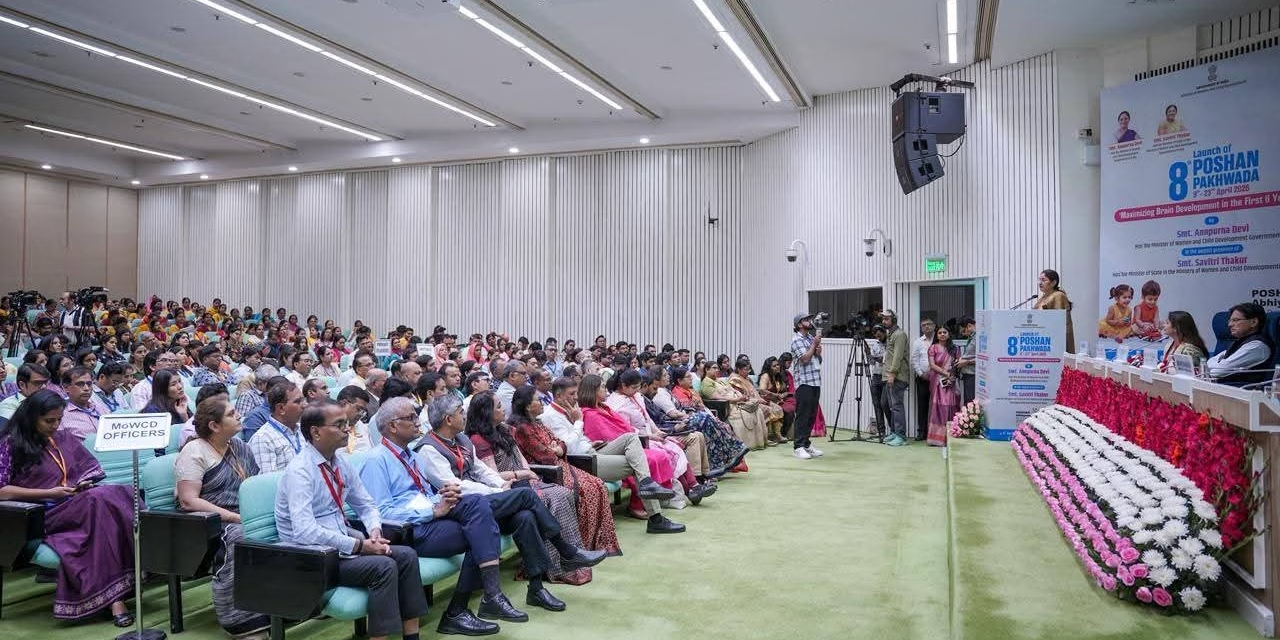
NEW DELHI — The Ministry of Women and Child Development (MWCD) officially launched the eighth edition of Poshan Pakhwada yesterday, April 9, 2026, centering this year’s national nutrition fortnight on a sophisticated neurological milestone: maximizing brain development within the first six years of life.
The campaign, which runs through April 23, 2026, was inaugurated at Vigyan Bhawan by Union Minister Smt. Annpurna Devi. The initiative signals a strategic shift in India’s public health policy, moving beyond caloric intake to address the “First 1,000 Days”—a critical window where nutrition, environment, and stimulation converge to wire the human brain for life. With over 14 lakh Anganwadi centers mobilized, the government aims to reach nearly 8.9 crore beneficiaries, including pregnant women, lactating mothers, and young children.
The Science of the First 1,000 Days
The central theme of Poshan Pakhwada 2026—“Maximizing Brain Development in the First Six Years of Life”—is rooted in a biological reality often overlooked in general health discourse. According to the World Health Organization (WHO) and neurodevelopmental research, approximately 85% to 90% of a child’s brain development is completed by age six.
“Our children are the future of the nation,” Smt. Annpurna Devi stated during the launch. “Ensuring they receive better nutrition is a responsibility we must all take forward together as a Jan Andolan (People’s Movement).”
The “First 1,000 Days”—the period from conception to a child’s second birthday—is considered a unique window of opportunity. During this time, the brain forms neural connections at a staggering rate of more than one million every second. These connections are the foundation upon which all future learning, behavior, and health are built.
Key Pillars of the 2026 Campaign
The 8th Poshan Pakhwada focuses on five strategic areas designed to support this neurological growth:
-
Maternal and Child Nutrition: Emphasis on iron and folic acid during pregnancy and exclusive breastfeeding for the first six months.
-
Early Stimulation (0–3 Years): Training caregivers in “responsive caregiving”—the back-and-forth interaction between parent and child that “shapes” brain architecture.
-
Play-Based Education (3–6 Years): Moving away from rote learning toward cognitive engagement.
-
Minimizing Screen Time: Encouraging active play to prevent developmental delays associated with excessive digital exposure.
-
Community Participation: Strengthening Anganwadi infrastructure through local involvement.
Beyond the Plate: Responsive Caregiving
While the word Poshan translates to “nutrition,” health experts emphasize that the brain requires more than just vitamins. “Nutrition provides the building blocks, but stimulation provides the blueprint,” says Dr. Aranya Sen, a developmental pediatrician not involved in the government launch. “A child can have the best diet, but without responsive interaction—talking, singing, and playing—the neural pathways for language and social-emotional health may not reach their full potential.”
Minister of State Smt. Savitri Thakur echoed this sentiment, noting that the government’s commitment has evolved through eight Poshan Maahs (Nutrition Months) and seven Poshan Pakhwadas since 2018. The current focus acknowledges that “holistic development” requires a synergy of food, safety, and early learning.
Public Health Implications and Challenges
The scale of the Poshan Abhiyaan is unprecedented. Since its inception, the initiative has recorded over 150 crore sensitization activities. However, the transition from “awareness” to “behavioral change” remains the primary challenge.
Secretary of MWCD, Shri Anil Malik, highlighted the necessity of informed dietary practices, referencing Prime Minister Narendra Modi’s frequent calls for reducing oil consumption and focusing on nutrient-dense local foods.
Addressing the “Triple Burden”
India continues to face a “triple burden” of malnutrition: the coexistence of undernutrition (stunting and wasting), micronutrient deficiencies, and the rising tide of childhood obesity.
-
Stunting: Chronic undernutrition in the first 1,000 days can lead to irreversible physical and cognitive stunting.
-
Micronutrients: Deficiencies in iodine, iron, and Vitamin A directly impact IQ and immune function.
-
Screen Time: A modern hurdle, excessive screen time in toddlers has been linked to shorter attention spans and reduced “serve-and-return” interactions with parents.
Critiques and Considerations
While the campaign is ambitious, some public health advocates suggest that infrastructure must keep pace with awareness. Critics often point to the heavy workload of Anganwadi Workers (AWWs) and ASHA Didis, who are the backbone of this movement.
“The campaign is scientifically sound,” says Rajesh Kumar, a public health policy researcher. “The challenge lies in ensuring that the 14 lakh Anganwadi centers have the consistent supply of high-quality fortified foods and the pedagogical tools needed for play-based learning in remote areas.”
Furthermore, socio-economic factors like access to clean water and sanitation (WASH) are intrinsic to nutrition. Even the best diet cannot be absorbed if a child suffers from frequent enteric infections due to poor sanitation.
What This Means for Families
For the average household, Poshan Pakhwada 2026 offers a roadmap for child-rearing that prioritizes long-term success over immediate growth metrics.
-
For Expectant Mothers: It is a reminder that brain development begins in the womb; maternal mental health and nutrition are the first steps.
-
For Parents of Toddlers: The focus on “responsive caregiving” means that 15 minutes of dedicated play is as vital as a healthy meal.
-
For the Community: It is a call to view the local Anganwadi center not just as a food distribution point, but as a “brain-building” hub for the nation’s future.
As Smt. Annpurna Devi concluded, these efforts are the foundation for a Viksit Bharat (Developed India). By investing in the neural synapses of a three-year-old today, the nation is effectively investing in its economic and social stability thirty years from now.
References
- https://www.pib.gov.in/PressReleasePage.aspx?PRID=2250637®=3&lang=1
Medical Disclaimer: This article is for informational purposes only and should not be considered medical advice. Always consult with qualified healthcare professionals before making any health-related decisions or changes to your treatment plan. The information presented here is based on current research and expert opinions, which may evolve as new evidence emerges.