 0
0
 0
0
NEW DELHI — In a major move to transition traditional medicine into the era of modern, data-driven healthcare, India’s premier Ayurvedic research body has launched a trio of national initiatives aimed at upgrading medical education, scientific transparency, and research methodologies.
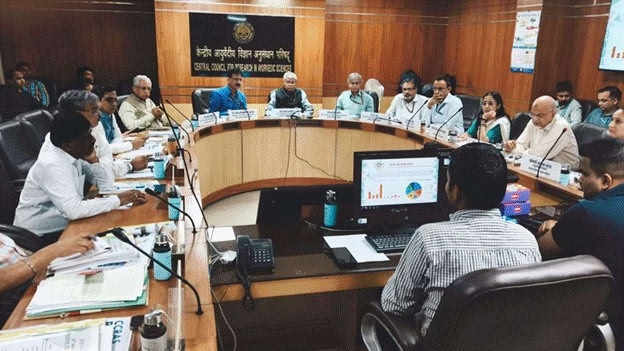
The Central Council for Research in Ayurvedic Sciences (CCRAS), functioning under the Ministry of Ayush, officially unveiled these programs during its 5th Executive Committee meeting on July 3, 2026. Chaired by Vaidya Rajesh Kotecha, Secretary of the Ministry of Ayush, the high-level meeting established a new roadmap for integrating rigorous, evidence-based science into the study and practice of Ayurveda.
The strategy focuses heavily on training the next generation of clinicians and researchers to meet modern international medical standards.
The Three Cornerstones of the New Research Push
To systematically address historical gaps in standardized scientific reporting within the alternative medicine sector, the Executive Committee approved three interconnected projects:
1. Standardized Research Methodology Textbook
The council introduced a comprehensive, specialized textbook on research methodology under the Ayurved_Prabodhini_Granthamala series. Compiled by a collaborative panel of 50 research scientists and medical faculty members, the book aligns with the Outcome-Based Dynamic Curriculum set by the National Commission for Indian System of Medicine (NCISM). It is designed as a mandatory foundation for postgraduate (MD/MS) and doctoral (Ph.D.) scholars to ensure that future clinical trials involving Ayurvedic formulations adhere to rigorous scientific protocols.
2. CCRAS PRAYATNA 2026–27
Recognizing that valuable clinical insights often go unpublished due to a lack of academic writing skills, CCRAS launched the Expression of Interest (EoI) for its flagship initiative, PRAYATNA. This national program will fund and organize structured, institution-based workshops across India. The objective is to train young scholars in scientific communication, statistical reporting, and the peer-review submission process.
3. The CCRAS Digital Ecosystem Dashboard
In an effort to improve institutional transparency, the council launched an integrated public portal available at dashboard.ccras.org.in. This centralized platform provides open access to web-based institutional resources, past clinical trials, and active research outputs. The goal is to allow global scientists and the public to review the data supporting Ayurvedic claims.
Shifting From Anecdote to Evidence
For decades, traditional systems of medicine like Ayurveda have relied heavily on historical texts and observational case studies. However, global health authorities, including the World Health Organization (WHO), maintain that safety and efficacy must be validated through modern scientific methods before integrating traditional therapies into mainstream primary healthcare.
“CCRAS remains committed to building a globally respected, evidence-based Ayurveda research ecosystem,” stated Prof. (Vaidya) Rabinarayan Acharya, Director General of CCRAS, during the presentation of the council’s roadmap.
Officials highlighted several milestones indicating this structural shift, notably that CCRAS institutes have secured 21 National Accreditation Board for Hospitals & Healthcare Providers (NABH) and National Accreditation Board for Testing and Calibration Laboratories (NABL) accreditations. These certifications indicate that the facilities meet national quality standards for clinical care and laboratory testing.
Additionally, the council pointed to its recent large-scale clinical study assessing the management of anemia among adolescent girls as an example of its expanding research framework.
Independent Medical Experts Call for Stringent Peer Review
While the initiatives have been well-received within India’s medical infrastructure, independent healthcare experts emphasize that the ultimate success of these programs depends on how they are implemented.
“Providing students with research methodology textbooks and writing workshops is an important step forward,” said Dr. Aranya Sen, an independent public health researcher and epidemiologist not involved with the council. “However, the true test of ‘evidence-based’ medicine lies in the peer-review process. Ayurvedic clinical trials must be held to the exact same double-blind, randomized, placebo-controlled standards as conventional pharmaceuticals. Data transparency on the new digital dashboard will be vital for external scientists to verify these findings.”
Other medical specialists note that introducing standardization helps protect public safety. “Many consumers incorrectly assume that ‘natural’ automatically means ‘completely safe,'” explained Dr. Meera Balasubramaniam, a clinical pharmacologist. “By teaching young researchers to properly document herb-drug interactions, heavy metal toxicities, and strict dosage parameters, the medical community can better identify both the genuine therapeutic benefits and the limitations of these treatments.”
What This Means for Consumers and Patients
For health-conscious consumers, this institutional shift marks a transition toward safer, more predictable options in integrative health.
-
Verified Formulations: As research methodologies become standardized, commercially available Ayurvedic supplements will increasingly be backed by standardized data rather than anecdotal claims.
-
Data Transparency: Patients and healthcare providers can use platforms like the new digital dashboard to review the clinical evidence behind specific remedies before incorporating them into a wellness plan.
-
Informed Integration: With better data on how traditional herbs interact with conventional prescription medications, primary care physicians can more safely manage patients who utilize both systems.
Public health officials emphasize that while alternative therapies can complement lifestyle adjustments and chronic disease management, they should not replace proven conventional treatments for acute, life-threatening, or severe infectious conditions.
References
Institutional & Statistical Sources
-
Central Council for Research in Ayurvedic Sciences (CCRAS): Executive Committee Proceedings and Institutional Data (July 3, 2026).
- Medical Disclaimer: This article is for informational purposes only and should not be considered medical advice. Always consult with qualified healthcare professionals before making any health-related decisions or changes to your treatment plan. The information presented here is based on current research and expert opinions, which may evolve as new evidence emerges.