 0
0
 0
0
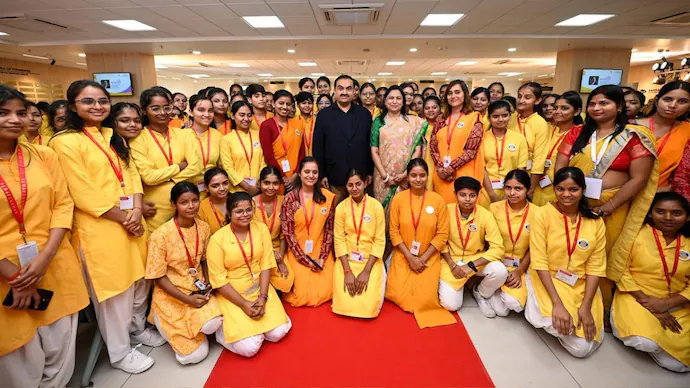
MASTICHAK, BIHAR — In a major expansion of India’s rural healthcare infrastructure, Adani Group Chairman Gautam Adani performed the groundbreaking ceremony for a landmark ₹150-crore vision care initiative on May 17, 2026, in Bihar’s Saran district. Located in Mastichak village, roughly 70 kilometers from Patna, the project aims to establish one of the world’s largest rural health ecosystems dedicated entirely to ophthalmic care. The initiative is designed to address a critical public health gap by creating the capacity to perform 330,000 eye surgeries annually and training 1,000 new eye care professionals each year, offering a scalable model to combat preventable blindness in underserved populations.
Two Integrated Facilities to Transform Rural Vision Care
The initiative is structured around two interconnected facilities attached to the existing Akhand Jyoti Eye Hospital in Mastichak. This collaborative venture pairs the Adani Foundation—the corporate social responsibility (CSR) arm of the Adani Group—with the Akhand Jyoti Foundation, an established leader in rural eye care delivery.
| Facility Name | Core Purpose | Annual Capacity Target |
| Adani Centre for Eye (ACE) | Advanced, affordable treatment for complex eye diseases | Part of the overarching 330,000 surgeries/year ecosystem |
| Adani Training in Ophthalmic Medicine (ATOM) | Specialized training for allied eye health professionals | 1,000 certified professionals trained annually |
During the groundbreaking ceremony, Gautam Adani announced an additional personal commitment of ₹500 crore to the non-profit Akhand Jyoti Foundation to support long-term humanitarian and community healthcare missions across India. Furthermore, he revealed plans for a new 200-bed general hospital in Pirpainti, located in Bihar’s Bhagalpur district, adjacent to the group’s upcoming thermal power facility.
Expert Commentary: Addressing a Critical Healthcare Backlog
Cataract remains the leading cause of blindness globally and across India. In rural sectors, essential treatment is frequently delayed due to geographical isolation, a lack of clinical awareness, and severe financial constraints. Public health data indicates that women and elderly demographics are disproportionately vulnerable to prolonged vision loss due to these systemic barriers.
The scale of the Mastichak project targets a pronounced deficit: Bihar faces an annual requirement of more than 1 million eye surgeries, yet less than one-third of these patients currently receive timely surgical intervention.
Recent clinical research provides encouraging evidence that high-quality surgical outcomes are fully achievable in low-resource settings. A comprehensive study published in the Indian Journal of Ophthalmology analyzed 123,685 cataract surgeries performed between 2016 and 2020 across 20 rural secondary eye care centers in four Indian states. The peer-reviewed data revealed that more than 91% of patients successfully regained good vision following their procedures.
Dr. Rohit Khanna, network director for the public health unit at the L V Prasad Eye Institute (LVPEI) and a co-author of the study, emphasized the public health value of decentralized infrastructure:
“Setting up permanent eye care centers in rural areas improves access, quality, and follow-up care, aligning directly with national and global eye health goals. It shifts the paradigm from temporary camp-based interventions to sustainable, high-standard localized care.”
Background: The Economics and Accessibility of Eye Health
India is home to an estimated 270 million people experiencing varying degrees of vision impairment, including approximately 680,000 children classified as blind—nearly one-third of whom suffer from uncorrected refractive errors.
Since its inception in 1976, the Indian Government’s National Programme for Control of Blindness and Visual Impairment (NPCB&VI) has worked to reduce these numbers. National survey data highlights significant progress, showing a 47.1% reduction in overall blindness prevalence (dropping from 0.68% to 0.36%) and a 51.9% reduction in general visual impairment.
Despite these macro-level improvements, localized epidemiological studies consistently identify several key obstacles preventing rural populations from utilizing available ophthalmic services:
-
Geographical Distance: Residing more than 3 kilometers away from a clinical center significantly reduces patient attendance.
-
Monetary Constraints: Direct medical expenses and indirect costs, such as lost daily wages and transportation fees, present high barriers.
-
Fear and Misconceptions: Anxiety regarding surgical outcomes or potential permanent eye damage often delays treatment.
-
Socio-Cultural Dynamics: Family caregiving responsibilities and fatalistic attitudes toward age-related vision decline frequently cause individuals to deprioritize their own health.
By integrating localized, subsidized treatment with active community outreach, the Mastichak facility aims to counter these socioeconomic obstacles directly at the grassroots level.
Public Health Implications and Workforce Development
The dual-facility model addresses both immediate clinical needs and long-term systemic shortages. By training 1,000 ophthalmic professionals annually through the ATOM facility, the project targets a severe deficit in allied ophthalmic personnel in rural regions. This initiative parallels broader state efforts; the Bihar government recently announced plans to appoint 1,080 eye and ENT specialists at block-level Community Health Centres to address these exact workforce gaps.
The underlying model has already demonstrated clinical reach. Through preceding outreach campaigns across 11 states, the collaborative framework conducted approximately 193,000 eye screenings and distributed prescription eyeglasses to roughly 59,000 beneficiaries.
In a statement detailing the vision behind the expansion, Gautam Adani noted:
“Restoring sight is not merely a medical intervention. It is about returning hope, confidence, and dignity to a human life.” He added that the newly formed Adani Akhand Jyoti Foundation seeks to replicate this community-driven healthcare model across other underserved regions of India.
Limitations and Systemic Considerations
While the financial and structural scale of the initiative is substantial, independent public health experts point out several challenges inherent to rural healthcare delivery:
-
The Follow-Up Challenge: Peer-reviewed data indicates that nearly 20% of rural cataract surgery patients fail to return for mandatory post-operative follow-up appointments. Elderly patients, women, and individuals receiving fully subsidized care show the highest rates of attrition. Ensuring long-term visual acuity requires robust tracking mechanisms.
-
The Capacity Gap: While an annual capacity of 330,000 surgeries represents a major milestone, it addresses roughly one-third of Bihar’s estimated backlog of 1 million annual surgeries. Continued expansion from both public and private sectors remains essential.
-
Workforce Retention: Training 1,000 professionals annually is a major step forward, but retaining skilled ophthalmologists, optometrists, and technicians within rural ecosystems rather than urban centers remains a persistent challenge across the healthcare sector.
What This Means for Readers and Consumers
For residents, families, and health-conscious individuals living in rural and semi-urban regions, this development points to several practical shifts in healthcare access:
-
Localized Care: Advanced ophthalmic screenings and surgical options will be available without the necessity of long-distance travel to major urban hubs, lowering indirect costs.
-
Comparable Outcomes: Clinical data confirms that cataract surgeries performed within properly equipped rural secondary care models achieve success rates fully on par with urban private hospitals.
-
Early Intervention: Expanded school and village screening programs mean conditions like refractive errors in children and degenerative retinal diseases in older adults can be detected before causing irreversible impairment.
-
Educational Opportunities: The establishment of the ATOM training facility introduces viable, localized career paths in allied health sciences for youth within the region.
For the medical community, the Mastichak project serves as an active case study in whether large-scale, corporate-backed philanthropy can successfully integrate with established non-profit infrastructure to create self-sustaining public health models.
References
- https://www.indiatoday.in/business/story/gautam-adani-performs-groundbreaking-ceremony-of-rs-150-crore-rural-eye-care-initiative-in-bihar-saran-mastichak-2913089-2026-05-17
Medical Disclaimer: This article is for informational purposes only and should not be considered medical advice. Always consult with qualified healthcare professionals before making any health-related decisions or changes to your treatment plan. The information presented here is based on current research and expert opinions, which may evolve as new evidence emerges.