 0
0
 0
0
WASHINGTON, D.C. — In a decisive bid to overhaul how the Western Hemisphere defends against infectious threats, leading health, agricultural, and environmental institutions in the Americas signed a sweeping joint declaration on July 6, 2026. The accord formally binds nations across the region to a “One Health” framework—a strategy that fuses human medicine, veterinary science, and environmental monitoring into a single, collaborative defensive shield. Spearheaded by the Pan American Health Organization (PAHO), the push arrives as the region grapples with escalating climate-driven health hazards, persistent vector-borne crises, and a critical need for rapid cross-border data exchange.
For the general public and healthcare professionals alike, this declaration signals a fundamental paradigm shift: the next major human pandemic will not be prevented by looking at humans alone.
The Core Strategy: Dismantling Institutional Silos
Historically, public health departments, veterinary agencies, and environmental protection ministries operated independently. A wildlife biologist tracking a die-off in migratory birds rarely shared real-time data with a hospital ICU director down the road.
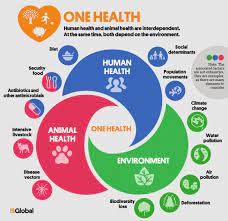
The new declaration aims to permanently dissolve these boundaries. PAHO defines One Health as a holistic, integrated framework addressing health risks occurring specifically at the animal-human-environment interface. By standardizing communication protocols across ministries, the strategy mirrors the global One Health Joint Plan of Action developed by the “Quadripartite”—a coalition comprising the World Health Organization (WHO), the UN Environment Programme (UNEP), the Food and Agriculture Organization (FAO), and the World Organisation for Animal Health (WOAH).
“We are moving past reactive medicine,” says Dr. Elena Vance, an epidemiologist specializing in emerging tropical diseases at the Global Health Security Council, who was not involved in drafting the declaration. “If we wait until an infected individual walks into an emergency room in Miami, Bogota, or Sao Paulo, we have already lost the initial battle. One Health forces us to monitor the environment and animal vectors weeks or months before a pathogen adapts to humans.”
Why the Americas? A High-Stakes Frontier for Zoonoses
The geographical and ecological realities of the Americas make it an urgent testing ground for this unified framework. Zoonotic diseases—illnesses that jump from animals to humans—account for roughly 60% of known infectious diseases in humans and up to 75% of new or emerging infectious threats globally.
In recent months, PAHO has intensified its deployment of regional surveillance networks specifically to track hantaviruses and viral hemorrhagic fevers—pathogens heavily tied to fluctuating rodent populations and environmental shifts. Furthermore, deep within the Amazon basin, cross-border cooperation has become vital to monitor the spillover risks of emerging pathogens as human expansion encroaches further into dense, biodiverse ecosystems.
The region, however, has a robust legacy of cooperative success to build upon. The Americas was the first region in the world to successfully eliminate wild poliovirus in 1994, utilizing centralized vaccine procurement networks and synchronized cross-border immunization campaigns. PAHO aims to leverage that same collaborative infrastructure to implement the One Health model.
       Global Infectious Disease Profile (WHO Data)
┌────────────────────────────────────────────────────────┐
│ [██████████████████████████████░░░░░░░░░░] 60% Zoonotic │
│                                                        │
│ [███████████████████████████████████░░░░░] 75% Emerging │
└────────────────────────────────────────────────────────┘
Data-Driven Validation: What the Science Shows
This policy shift is supported by robust, peer-reviewed data. A seminal Lancet Series on One Health and Global Health Security rigorously analyzed the economic and clinical impacts of cross-sector tracking. The research concluded that integrated One Health systems demonstrate superior outcomes in:
-
Early identification of novel viral variants in wild and domestic animal populations.
-
Mitigating antimicrobial resistance (AMR) by tracking antibiotic usage in livestock.
-
Securing regional food supply chains against toxic biological hazards.
By intervening at the animal or environmental stage, nations can prevent localized spillovers from morphing into national lockdowns.
“Science is our most powerful tool to improve health, well-being, and our economies simultaneously,” noted PAHO Director Dr. Jarbas Barbosa in a recent address, emphasizing that safeguarding regional stability requires advancing collaborative science and strengthening systemic trust across borders.
Operational Hurdles: The Limits of Declarations
Despite unanimous praise from the scientific community, seasoned public health experts warn that diplomatic signatures do not automatically translate to on-the-ground protection. The One Health model faces steep logistical and systemic limitations:
-
Funding Asymmetry: Public health ministries typically command significantly higher budgets than environmental or veterinary agencies, creating structural imbalances during joint operations.
-
Data Barriers: Integrating completely separate electronic reporting systems across different ministries—and across international borders—remains an immense technical and legal hurdle.
-
Political Inertia: The real test of the July 6 declaration will be whether member states actively allocate national budgets toward joint laboratory networks and rapid reporting chains, or let the framework lapse into passive bureaucracy.
Everyday Implications for Public Health
What does this macro-level policy change mean for the individual citizen? It shifts the understanding of health protection from the clinic to the community.
Outbreak prevention relies heavily on daily, localized interventions. Safe, hygienic food handling directly addresses agricultural zoonoses. Robust residential mosquito and rodent control programs limit vector pathways. Adhering to local water sanitation protocols protects against environmental contamination. For clinicians, it means taking more comprehensive travel and environmental histories from patients presenting with unexplained fevers.
Ultimately, the PAHO declaration acknowledges that human health is not an isolated phenomenon. By actively monitoring the health of the ecosystems and animals surrounding us, the Americas is constructing a modernized defense system designed to catch the next pandemic before it even begins.
References
-
Pan American Health Organization (PAHO): Joint Declaration on the One Health Approach in the Americas, Washington, D.C., Published July 6, 2026.
Medical Disclaimer: This article is for informational purposes only and should not be considered medical advice. Always consult with qualified healthcare professionals before making any health-related decisions or changes to your treatment plan. The information presented here is based on current research and expert opinions, which may evolve as new evidence emerges.