 0
0
 0
0
April 18, 2026
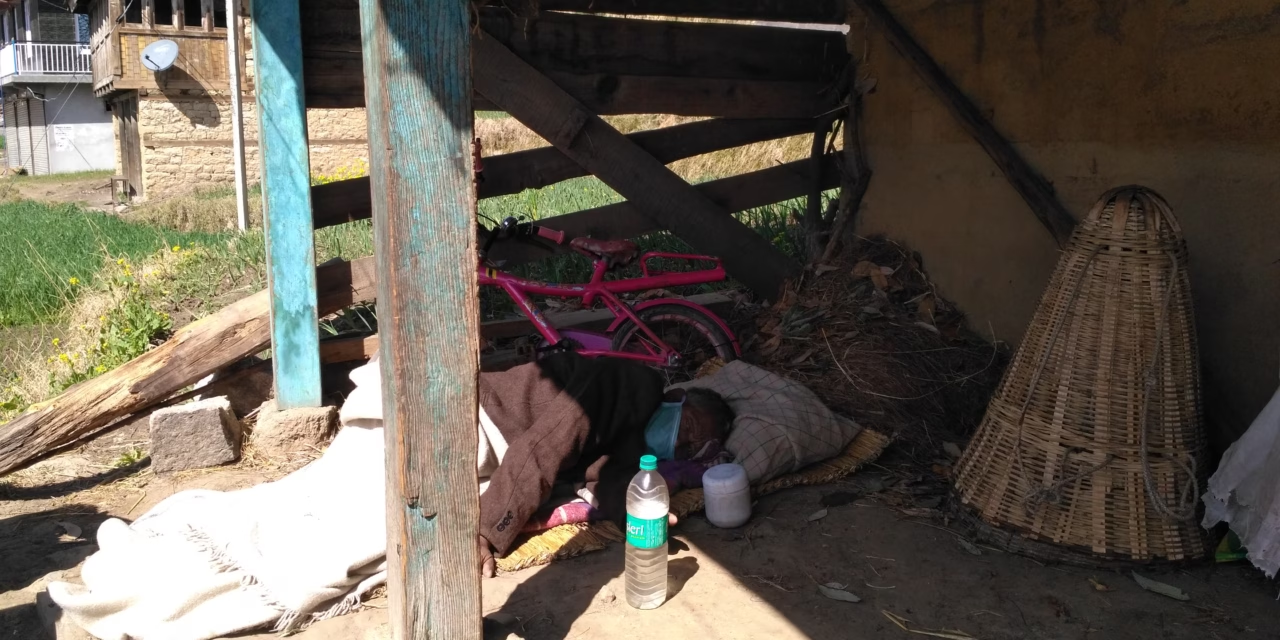
NEW DELHI — In a landmark decision for public health equity, the Central Government has authorized a policy shift allowing homeless and destitute tuberculosis (TB) patients in Delhi to receive nutritional support in the form of cooked meals and dry rations. This directive, issued following a sharp inquiry from the Delhi High Court, ensures that life-saving nutritional aid is no longer contingent upon possessing an Aadhaar card or a functional bank account. The move addresses a critical gap in the Nikshay Poshan Yojana scheme, which previously relied almost exclusively on digital cash transfers—a system that inadvertently sidelined the city’s most vulnerable residents.
A Direct Response to Documentation Barriers
For years, the intersection of homelessness and tuberculosis has created a “documentation trap.” While the Indian government expanded the Nikshay Poshan Yojana in 2024 to provide ₹1,000 per month to every notified TB patient, the requirement for Aadhaar-linked bank accounts meant that those living on pavements and in temporary shelters were often left empty-handed.
The policy reversal followed a Public Interest Litigation (PIL) filed by the NGO Social Jurist. On April 8, 2026, the Delhi High Court sought an urgent explanation from the Centre regarding 35 homeless TB patients who were denied support due to a lack of identity documents.
Under the new arrangement, the government acknowledges that Direct Benefit Transfers (DBT) are ineffective for the “unbanked” homeless population. Eligible patients can now access nutritional support through:
-
NGO-led distribution networks
-
Government-run shelter homes
-
Community kitchen groups
-
Direct dry ration kits
Why Nutrition is Not “Optional” in TB Care
Tuberculosis is a disease of poverty, and its relationship with undernutrition is bidirectional. TB leads to weight loss and wasting, while undernutrition weakens the immune system, increasing the likelihood that a latent TB infection will progress to active disease.
According to the World Health Organization (WHO), malnourished TB patients are approximately twice as likely to die compared to those with adequate nutrition. In India, undernutrition remains the single largest risk factor for the TB burden, contributing to a significantly higher portion of cases than even tobacco use or diabetes.
“Nutrition is a biological necessity for TB recovery, not a social luxury,” says Dr. Ananya Sharma, a public health researcher (not involved in the litigation). “When a patient is starving, their body cannot effectively process the potent antibiotics required to kill the bacteria. This policy shift acknowledges that treating the patient requires feeding the patient.”
The Public Health Impact: Beyond the Individual
The implications of this policy extend far beyond the 35 individuals mentioned in the court notice. Public health experts argue that removing barriers to nutrition improves treatment adherence. When patients feel stronger and have a reliable food source, they are less likely to default on their long-term medication regimens.
The economic and epidemiological stakes are high:
-
Reduced Transmission: Patients who complete treatment successfully stop spreading the bacteria sooner.
-
Prevention of Drug Resistance: Inconsistent treatment—often caused by the inability to tolerate medication on an empty stomach—is a primary driver of Multi-Drug Resistant TB (MDR-TB).
-
Lower Healthcare Costs: Preventing relapses and complications reduces the long-term financial burden on the public health system.
A 2025 roadmap published in The Lancet and cited by PubMed identified undernutrition as the leading global risk factor for TB, calling for routine nutritional assessments as a standard of care. By providing in-kind aid, Delhi is moving toward a more “person-first” model that prioritizes clinical outcomes over administrative hurdles.
Limitations and Implementation Challenges
While the shift is being hailed as a victory for human rights, experts warn of significant logistical hurdles. Moving from a digital cash transfer to a physical food distribution system requires robust infrastructure.
-
Coordination: Government agencies must now coordinate with a patchwork of NGOs and shelters to ensure food quality and consistency.
-
Monitoring: Unlike a bank transfer, which leaves a digital trail, physical distribution requires rigorous oversight to prevent leakage and ensure the food reaches the intended patients.
-
Urban-Rural Divide: While Delhi has a dense network of NGOs, implementing similar “in-kind” support in rural districts—where homeless populations are less visible—remains a major question mark for the National TB Elimination Program.
Furthermore, while food is essential, it is not a panacea. The WHO maintains that nutritional support must be an adjunct to, not a replacement for, timely diagnosis, high-quality drugs, and social counseling.
What This Means for the Public
For health-conscious consumers and the general public, this development serves as a reminder that community health is only as strong as its most vulnerable link.
Practical Advice for Caregivers and Volunteers:
-
Inquire Locally: If you are assisting a person with TB who lacks documentation, contact the local District TB Centre (DTC) to ask about “in-kind” nutritional support options.
-
Advocate for Assessment: Ensure that every TB patient undergoes a nutritional assessment (including BMI monitoring) at the start of their treatment.
-
Support Systems: Patients without bank accounts should be linked to community-based organizations that are now authorized to facilitate food delivery.
As India continues its ambitious goal to eliminate TB, the move in Delhi highlights a crucial lesson: health policies must be flexible enough to reach those who live outside the digital net. In the fight against tuberculosis, a hot meal may be just as vital as the pills in the blister pack.
References
-
Ashok Agarwal, Counsel for Social Jurist, Delhi High Court Proceedings (April 2026).
-
Delhi High Court Notice, Social Jurist vs. Union of India & Ors., W.P.(C) 4820/2026.
Medical Disclaimer: This article is for informational purposes only and should not be considered medical advice. Always consult with qualified healthcare professionals before making any health-related decisions or changes to your treatment plan. The information presented here is based on current research and expert opinions, which may evolve as new evidence emerges.