 0
0
 0
0
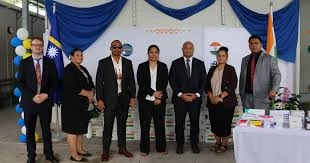
CANBERRA — In a major step toward addressing health inequities in the Pacific region, the Government of India has officially delivered 18 pallets of generic medicines and critical medical supplies to the Republic of Nauru. The shipment, coordinated through the High Commission of India in Canberra and formally handed over on July 2, 2026, marks an expansion of India’s flagship affordable healthcare initiative, the Pradhan Mantri Bhartiya Janaushadhi Pariyojana (PMBJP), into international health diplomacy.
This bilateral contribution, executed under the Forum for India-Pacific Island Cooperation (FIPIC) framework, seeks to establish a steady bridge for quality-assured, low-cost essential drugs to reach remote island nations. For Nauru—a geographically isolated Micronesian nation with a compact population of roughly 13,000 residents—accessing predictable, affordable pharmaceutical pipelines has historically been an uphill logistical and financial battle.
The Supply Chain Challenge in the Pacific
Pacific Island nations frequently suffer from volatile medicine supplies. Due to small domestic markets and extreme geographic isolation, these countries lack the purchasing power to negotiate favorable rates with major pharmaceutical corporations. Consequently, they often pay disproportionately high prices for basic treatments or experience severe out-of-stock crises for vital medications.
+-------------------------------------------------------------+
|               PACIFIC SUPPLY CHAIN BARRIERS                 |
+-------------------------------------------------------------+
|  [Small Market Sizes]  --> Insufficient Purchasing Power   |
|  [Geographic Isolation] --> High Freight & Shipping Costs    |
|  [Fragile Infrastructure]--> Vulnerable Cold-Chain Logistics |
+-------------------------------------------------------------+
By providing 18 pallets of generic treatments, India is leveraging its position as the “pharmacy of the world” to mitigate these structural vulnerabilities.
“This contribution reflects our enduring partnership and friendship with Nauru,” stated the High Commission of India in Canberra during the official handover announcement. “It emphasizes India’s steadfast commitment to the Global South, delivering affordable, quality public healthcare and advancing shared development through trusted, mutually beneficial partnerships.”
This pharmaceutical delivery follows a series of recent FIPIC-backed healthcare investments in the region, including the provision of specialized dialysis equipment, sea ambulances for emergency maritime evacuations, and community wellness programs like the “Cycling for a stronger Nauru” health initiative launched last year.
Unpacking the Jan Aushadhi Model: Affordability Meets Quality
At the core of India’s healthcare export is the Jan Aushadhi scheme (Public Medicine Project). Domestically administered by the Department of Pharmaceuticals under the Ministry of Chemicals and Fertilizers, the initiative operates over 18,000 dedicated pharmacies (Jan Aushadhi Kendras) across India, with targets to expand to 25,000 by 2027.
The primary public health objective of the program is to curb out-of-pocket health expenditures by pricing high-quality generic equivalents 50% to 90% lower than their branded counterparts.
TYPICAL PHARMACEUTICAL PRICE REDUCTIONS UNDER JAN AUSHADHI
==========================================================
[##########] Branded Medication Cost (100%)
[##]         Jan Aushadhi Generic Cost (10% to 50%)
==========================================================
*Savings range between 50% and 90% depending on therapeutic category.
However, in international aid and local prescriptions alike, price reductions mean little without ironclad quality guarantees. To combat the pervasive global misconception that generic drugs are therapeutically inferior, the Indian government enforces a multi-tiered quality assurance protocol:
-
Certified Sourcing: All pharmaceutical batches are exclusively procured from manufacturers holding valid World Health Organization Good Manufacturing Practices (WHO-GMP) certification.
-
Independent Testing: Prior to distribution or shipping, every drug batch undergoes secondary testing at independent laboratories accredited by the National Accreditation Board for Testing and Calibration Laboratories (NABL).
The Global Medicine Deficit
The logistical realities faced by Nauru reflect a broader global access crisis. A comprehensive World Health Organization (WHO) and Health Action International analysis published in early 2025 highlighted a stark reality: the average availability of generic medicines in public health sectors across monitored low- and middle-income regions ranged from just 37.8% to 68.3%. This falls significantly short of the WHO’s universal target of 80% availability for essential treatments.
The report also detailed that patients in many developing health systems pay many times the international reference prices for standard therapies, rendering long-term care for conditions like diabetes, hypertension, and infectious diseases financially ruinous.
“When generic procurement systems fail or are absent, vulnerable communities pay the ultimate price through rationed doses or entirely skipped treatments,” explains Dr. Evelyn Vance, an independent global health policy analyst based in Sydney, who was not involved in the FIPIC initiative. “For an isolated country like Nauru, public health resilience relies heavily on maintaining a buffer stock of reliable treatments.”
Public Health Implications and Systemic Limitations
For health-conscious consumers and medical professionals alike, the public health takeaway is clear: expanding access to low-cost generics directly translates to improved patient compliance. When patients are unburdened by the choice between buying groceries or paying for prescriptions, they are significantly more likely to adhere to lifelong chronic care regimens, dramatically lowering long-term hospitalization rates.
However, international health experts emphasize that donation diplomacy, while highly valuable as an immediate safety net, comes with critical caveats:
-
The Dependency Trap: Emergency bulk donations are short-term interventions. They cannot replace the structural necessity of building robust, self-sustaining national procurement systems.
-
Logistical Synchronization: Shipped medications must perfectly align with the recipient nation’s specific disease burden, regional climate constraints (such as the need for refrigerated cold-chain storage), and local prescribing protocols. Mismatched stock risks expiring in warehouses, converting a medical asset into a logistical liability.
-
Regulatory Oversight: True pharmaceutical security relies heavily on the receiving nation’s internal capacity to regulate, track, and manage inventory seamlessly from the tarmac to the clinic shelf.
As international health cooperation between India and Pacific Island nations expands, the long-term success of these programs will ultimately depend on transforming transactional drug shipments into permanent, structurally sound supply chains.
References
-
Jan Aushadhi Scheme & PMBJP Guidelines: Department of Pharmaceuticals, Ministry of Chemicals and Fertilizers, Government of India. Pradhan Mantri Bhartiya Janaushadhi Pariyojana Overview and Quality Protocols. [pib.gov.in]
- Medical Disclaimer: This article is for informational purposes only and should not be considered medical advice. Always consult with qualified healthcare professionals before making any health-related decisions or changes to your treatment plan. The information presented here is based on current research and expert opinions, which may evolve as new evidence emerges.