 0
0
 0
0
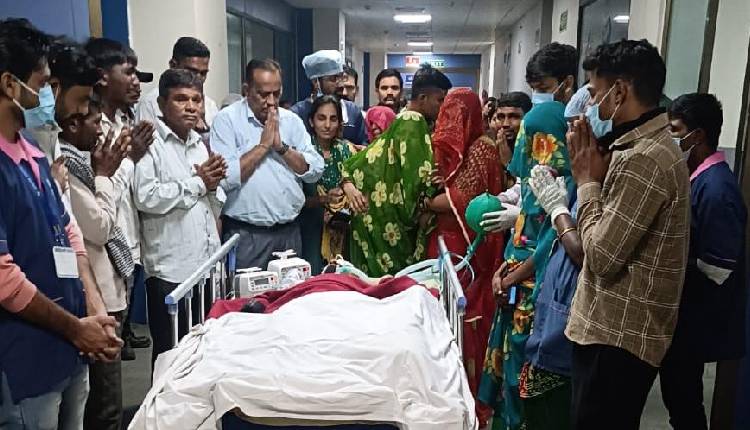
AHMEDABAD — In a major milestone for public healthcare in India, the Ahmedabad Civil Hospital has crossed 1,000 organ and tissue donations since the inception of its dedicated deceased donation program in late 2020. Announcing the achievement, hospital administrators revealed that the program has facilitated the retrieval of 794 organs from 240 deceased donors, alongside 194 eye donations and 44 skin donations. By streamlining the complex medical, legal, and emotional pathways required for deceased organ procurement, the public institution has directly transformed the lives of more than 745 recipients, offering a scalable blueprint for a country grappling with a severe shortage of donor organs.
Redefining Deceased Donation in Public Healthcare
For decades, organ transplantation in India has relied overwhelmingly on living donors—usually close relatives who donate a kidney or a segment of a liver. According to a comprehensive, peer-reviewed national transplant data analysis published in Indian Journal of Transplantation, deceased donations accounted for just 16% of all transplants nationally.
Public hospitals, which serve the vast majority of India’s population, historically faced the steepest hurdles in establishing deceased donor protocols. These challenges include:
-
Logistical constraints: Intensive care units (ICUs) must maintain potential donors on life support while coordinating with transplant teams.
-
Time sensitivity: Organs degrade quickly; hearts and lungs must be transplanted within 4 to 6 hours, livers within 12 to 15 hours, and kidneys within 24 to 36 hours.
-
Administrative hurdles: Rapid mobilization of specialized medical panels is required to certify brain death.
The milestone at Ahmedabad Civil Hospital demonstrates that a structured system can overcome these institutional barriers. By embedding trained transplant coordinators within the trauma and intensive care units, the hospital built a consistent pipeline that bridges the gap between identifying a potential donor and executing a multi-organ retrieval.
Inside the Logistics: Timing, Law, and the “Green Corridor”
Deceased organ donation is a highly regulated, race-against-the-clock medical procedure. Under India’s Transplantation of Human Organs and Tissues Act (THOTA), a patient can only become a deceased donor after being declared brain-dead. Brain death—the irreversible cessation of all brain function—must be certified twice, six hours apart, by a strict four-member medical panel that includes the hospital superintendent, the treating physician, and independent specialists.
[Brain Death Identified] ➔ [4-Member Panel Certification (2 Tests, 6 Hours Apart)]
                                      ⬇
[Grief Counseling & Family Consent] ➔ [Organ Retrieval & Logistical Mobilization]
                                      ⬇
                         [Recipient Transplantation]
Once a family provides legal consent, the logistics move into high gear. Because different organs remain viable for only limited windows, hospitals frequently collaborate with local traffic police to establish “green corridors.” These are manually synchronized traffic routes that allow ambulances carrying retrieved organs to bypass public traffic entirely, traveling from the donor hospital to the airport or recipient hospital in record time.
The Broader Picture: India’s Rising Transplant Curve
The success in Ahmedabad mirrors an aggressive upward trajectory in India’s national transplant capabilities. Data from the Union Ministry of Health and Family Welfare and the National Organ and Tissue Transplant Organisation (NOTTO) indicate that annual transplant surgeries nationwide surged from fewer than 5,000 in 2013 to nearly 20,000.
“The growth we are seeing is promising, but we must contextualize it,” says Dr. Arvinder Singh Soin, a pioneer in liver transplantation and Chairman of the Medanta Liver Transplantation Institute, who was not involved in the Ahmedabad program. “While a public hospital reaching 1,000 donations is a monumental achievement that proves public trust can be earned, India’s overall donation rate still hovers around 0.5 to 0.8 donors per million population. Compare that to countries like Spain or the United States, where rates exceed 30 to 40 per million, and it is clear we still have a long way to go.”
The deficit means that an estimated 500,000 Indians continue to wait for an organ transplant at any given time, with thousands dying annually before a matching organ becomes available.
Beyond Organs: The Crucial Role of Tissue Donation
While high-profile heart and liver transplants dominate public attention, the Ahmedabad milestone highlights the profound public health impact of tissue donation.
Unlike solid organs, which require the donor to be brain-dead on a ventilator, tissues such as corneas (eyes) and skin can be retrieved up to six hours after a patient’s heart has stopped beating.
-
Corneal Donations: The 194 eye donations managed by Ahmedabad Civil Hospital directly address corneal blindness, a major public health issue in India that disproportionately affects rural and lower-income populations.
-
Skin Donations: The 44 skin donations are utilized in specialized burn units as biological dressings. For patients suffering from severe burns, temporary skin grafts reduce infection rates, minimize fluid loss, and dramatically increase survival rates during critical recovery windows.
Limitations and Systemic Hurdles
Despite the celebratory nature of the 1,000-donation mark, public health researchers urge a cautious interpretation of the data. Hospital metrics frequently conflate the total number of individual tissues and organs retrieved with the number of actual donors. A single donor can potentially contribute two kidneys, a liver, a heart, two lungs, two corneas, and skin tissue—meaning the number of lives touched is much higher than the number of families who gave consent.
Furthermore, public reports rarely track the “refusal rate”—the percentage of families who decline donation when approached by counselors.
| Challenge | Impact on System | Potential Solution |
| Family Refusal | Potential organs are lost due to grief or lack of awareness. | Early community education and transparent counseling. |
| Medical Unsuitability | Organs cannot be used due to infection or pre-existing disease. | Rigorous, rapid donor screening protocols in ICUs. |
| Infrastructural Disparities | Rural hospitals lack the facilities to maintain or retrieve organs. | Regional networking and state-supported transplant hubs. |
What This Means for the General Public
For everyday readers, the takeaway from Ahmedabad’s milestone is the critical importance of family communication. Under Indian law, even if an individual carries a donor card or has registered an online pledge with NOTTO, the ultimate decision rests with the next of kin at the time of death.
Medical coordinators note that during sudden, traumatic losses, families are often too overwhelmed to make rapid decisions about organ retrieval. If an individual has explicitly discussed their donation wishes with their family beforehand, it removes the burden of uncertainty during a crisis, ensuring that a tragic loss can safely become a gift of life for others.
Medical Disclaimer
This article is for informational purposes only and should not be considered medical advice. Always consult with qualified healthcare professionals before making any health-related decisions or changes to your treatment plan. The information presented here is based on current research and expert opinions, which may evolve as new evidence emerges.
References
- https://ommcomnews.com/india-news/gujarat-ahmedabad-civil-hospital-records-over-1000-organ-tissue-donations-in-six-years/