 0
0
 0
0
Read Time:6 Minute, 24 Second
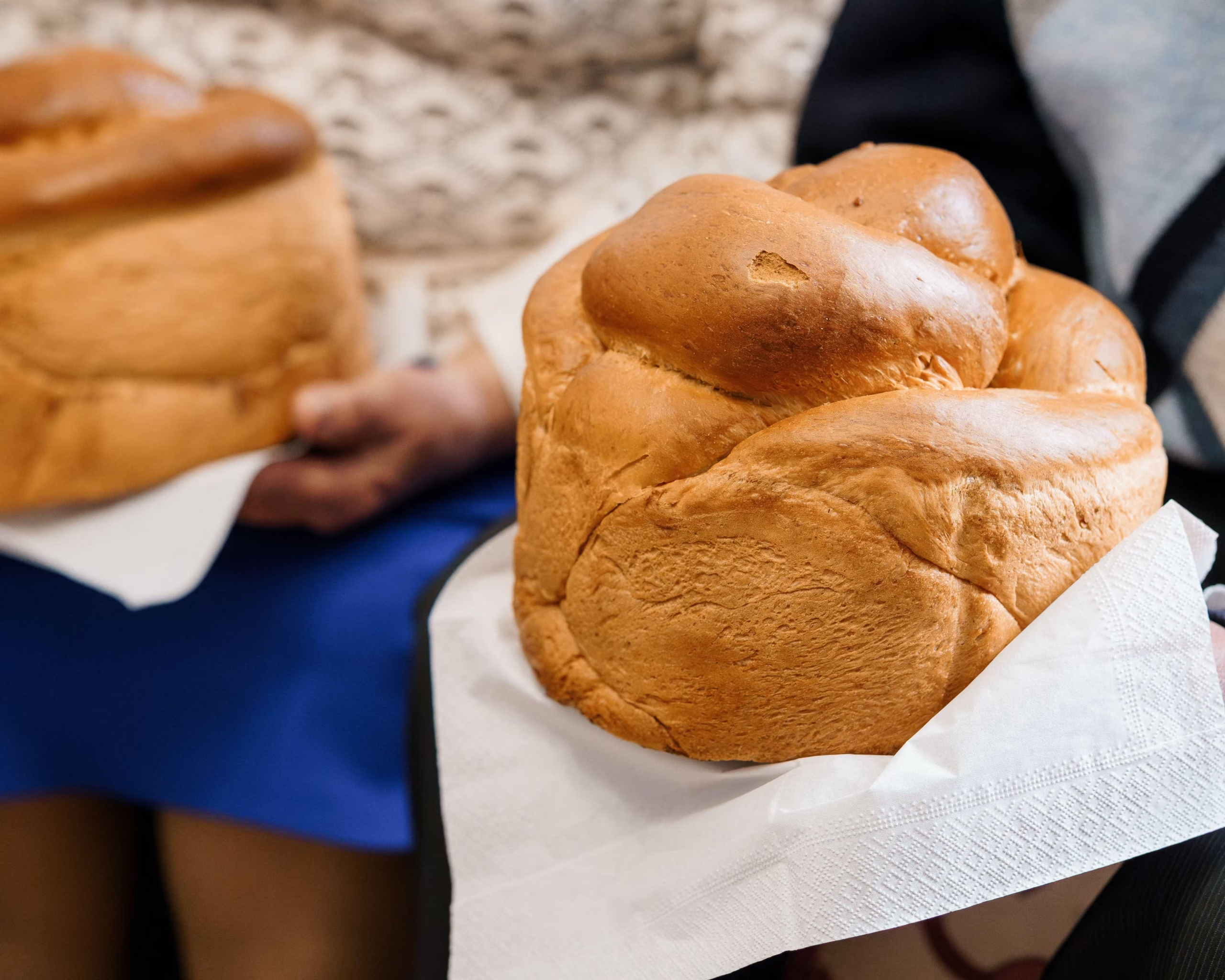
LONDON — A culinary viral phenomenon is sweeping social media feeds and supermarket shelves across the United Kingdom. Driven by TikTok videos showcasing its pillowy texture, glossy crust, and cloud-like interior, Japanese milk bread—known traditionally as shokupan—has officially achieved mainstream food-trend status.
According to recent retail reporting, the social media buzz has sparked a staggering 617% surge in searches for Japanese milk buns on the Waitrose website over the past month, alongside a 27% leap in sales. But as health-conscious consumers rush to try the latest aesthetic loaf, nutritionists and public health experts are urging the public to look beyond the viral hype. While shokupan offers a distinct texture and minor nutritional additions from dairy, health experts caution that its core profile remains that of a refined white bread, carrying many of the same nutritional considerations as standard commercial loaves.
The Chemistry of ‘Pillowy Soft’: Understanding Tangzhong
To understand shokupan’s immense appeal, one must look to the science of its baking technique. Unlike standard Western white loaves, Japanese milk bread frequently utilizes a water-roux starter method known as tangzhong.
In this technique, bakers pre-cook a portion of the flour with water or milk at a specific temperature before combining it with the main dough. Heating the flour starch gelatinizes it, allowing the dough to absorb and retain significantly more liquid throughout the baking process.
“The tangzhong method is brilliant for texture and shelf-life because it traps moisture inside the carbohydrate matrix,” says Dr. Elena Rostova, an independent food scientist and reader in nutritional biochemistry not involved in the commercial trend. “However, gelatinizing starch to retain water doesn’t magically alter the macro-nutritional reality. If the base dough relies on heavily refined white flour, the bread will interact with your digestive system much like any other refined carbohydrate.”
Because the grain’s outer bran and germ are stripped away during the milling of refined white flour, essential micronutrients, healthy plant compounds, and dietary fiber are lost, leaving behind an endosperm rich in easily digestible starch.
The Nutritional Reality: Milk vs. Whole Grains
Proponents of shokupan often point to its enrichment with milk, butter, and occasionally cream or sugar, suggesting these ingredients offer superior nutrition over water-based white loaves.
While milk does introduce small amounts of high-quality protein and calcium, experts emphasize that this addition does not give the bread an all-encompassing “health halo.” Commercial recipes vary widely; many offset these small nutrient additions with elevated levels of saturated fats and added sugars. Standard commercial white bread averages roughly 266 calories and 49 grams of carbohydrates per 100 grams (per USDA FoodData Central metrics), but a rich slice of shokupan can easily exceed these figures depending on the baker’s butter and sugar ratios.
+--------------------------+------------------------------+-------------------------------+
| Nutritional Metric       | Traditional White Bread      | Japanese Milk Bread (Shokupan)|
+--------------------------+------------------------------+-------------------------------+
| Primary Flour Base       | Refined White Flour          | Refined White Flour           |
| Key Liquid Base          | Water                        | Milk & Water (via Tangzhong)  |
| Fiber Content            | Low (~2g per 100g)           | Low (~1.5–2.5g per 100g)      |
| Saturated Fat / Sugars   | Typically Minimal            | Moderate to High (Butter/Sugar)|
| Glycemic & Satiety Impact| Rapid Digestibility; Low     | Rapid Digestibility; Low      |
|                          | Satiety                      | Satiety                       |
+--------------------------+------------------------------+-------------------------------+
The hyper-palatable, ultrasoft texture of shokupan also poses a subtle challenge to appetite regulation. Denser, high-fiber foods require more chewing and slow gastric emptying, signaling fullness to the brain. In contrast, ultra-soft refined breads are consumed rapidly, which can lead to larger portion consumption before satiety kicks in.
Addressing common misconceptions around carbohydrate types, registered dietitian and British Dietetic Association (BDA) spokesperson Azmina Govindji noted in commentary for Athletics Weekly that color or name shouldn’t oversimplify a bread’s impact. “In terms of their glycaemic index, or impact on your blood sugar levels, there is no difference between wholemeal, brown and white bread,” Govindji explained, pointing out that Glycaemic Index (GI) measures how fast a food raises blood glucose, whereas total carbohydrate volume often plays a larger role in overall blood sugar management.
However, the British Dietetic Association and the National Health Service (NHS) continue to advocate strongly for wholegrain options over refined white varieties due to fiber density. The NHS notes that wholegrain, wholemeal, and seeded breads provide crucial B vitamins, vitamin E, essential minerals, and dietary fiber that refined options lack.
The Public Health Context: Fiber Deficits and Long-Term Outcomes
The debate surrounding viral breads highlights a broader public health challenge: the global fiber deficit.
The World Health Organization (WHO) explicitly recommends that adult carbohydrate intake come primarily from whole grains, vegetables, fruits, and pulses, setting a baseline recommendation of at least 25 grams of naturally occurring dietary fiber per day for individuals over age 10.
The rationale for prioritizing wholegrains is backed by extensive observational evidence. A landmark 2016 systematic review and meta-analysis published in the BMJ analyzed dose-response data across multiple global prospective studies. The researchers, led by Dr. Dagfinn Aune, discovered that higher wholegrain intake was consistently associated with significantly lower risks of coronary heart disease, cardiovascular disease, overall cancer mortality, and all-cause mortality. Notably, the study observed the sharpest reduction in type 2 diabetes risk at intakes of roughly 60 to 90 grams of wholegrains (around 2–3 daily servings) per day.
“While observational studies cannot definitively prove direct cause-and-effect due to lifestyle confounders like exercise and socioeconomic status, the consistency of the data is overwhelming,” says Dr. Marcus Thorne, a consultant cardiologist and clinical epidemiologist who was not involved in the BMJ study. “Choosing whole-grain structures over highly refined starches preserves the physical fiber matrix. This matrix slows digestion, supports a healthy gut microbiome, and lowers systemic inflammation over time.”
Navigating the Trend: Smart Grocery and Dietary Strategies
Public health experts stress that enjoying a piece of viral Japanese milk bread occasionally is perfectly safe for healthy individuals. Bread is an accessible starchy carbohydrate that can comfortably exist within a balanced lifestyle. The primary health concern arises when refined bakery items consistently displace nutrient-dense, fiber-rich foods in daily eating habits.
For health-conscious consumers eager to try shokupan without disrupting their nutritional goals, nutritionists recommend several practical guidelines:
-
Read the Label: Look beyond marketing descriptors like “artisan,” “specialty,” or “milk.” Check ingredient lists to see if whole-wheat flour is listed first, and review the nutritional panel for added sugars, saturated fats, and sodium levels.
-
Prioritize Fiber Metrics: Aim for breads that offer at least 3 to 5 grams of dietary fiber per serving.
-
Balance the Meal: Pair refined or enriched breads with high-protein and high-fiber toppings—such as poached eggs, smashed avocado, legumes, or lean proteins—to blunt rapid glucose spikes and enhance satiety.
-
Mind Medical Conditions: Individuals living with coeliac disease must strictly avoid traditional wheat-based shokupan, as the NHS highlights that coeliac management requires lifelong, absolute exclusion of gluten. Furthermore, those with diagnosed dairy allergies or severe lactose intolerance must inspect labels carefully, given the bread’s milk and butter content.
Ultimately, shokupan’s viral explosion is a testament to the sensory delights of modern baking and social media’s power over consumer trends. While it may not qualify as a nutritional superfood, it remains a delicious culinary craft—one best enjoyed mindfully as an occasional treat alongside a fiber-rich, whole-food diet.
References
-
https://www.theguardian.com/food/2026/aug/09/tiktok-turns-japanese-milk-bread-into-latest-uk-food-craze
Medical Disclaimer: This article is for informational purposes only and should not be considered medical advice. Always consult with qualified healthcare professionals before making any health-related decisions or changes to your treatment plan. The information presented here is based on current research and expert opinions, which may evolve as new evidence emerges.


Happy
0 %

Sad
0 %

Excited
0 %

Sleepy
0 %

Angry
0 %

Surprise
0 %