 0
0
 0
0
Published: May 12, 2026
For years, the smartwatch on your wrist has been a silent witness to your morning jogs and sleep cycles. However, a groundbreaking pilot study released this week suggests these consumer devices are poised to become sophisticated early-warning systems for environmental health.
Researchers from The City University of New York (CUNY) have demonstrated that the integration of wearable technology, smartphone GPS data, and real-time mood surveys can track how personal exposure to heat and air pollution immediately impacts both the heart and the mind. Published on May 8, 2026, in JMIR Formative Research, the study marks a significant shift from static, neighborhood-level monitoring toward “personalized preventive medicine” that moves with the individual.
Moving Beyond Fixed Sensors
Traditional environmental health monitoring relies heavily on stationary government sensors located at fixed points throughout a city. While these provide accurate regional data, they fail to account for the “micro-environments” a person inhabits throughout the day—from a stifling subway platform to a breezy city park or a traffic-congested intersection.
“People move through many different environments each day, and this approach lets us capture that in real time,” explained lead author Sameera Ramjan, a doctoral student in CUNY’s Psychology program.
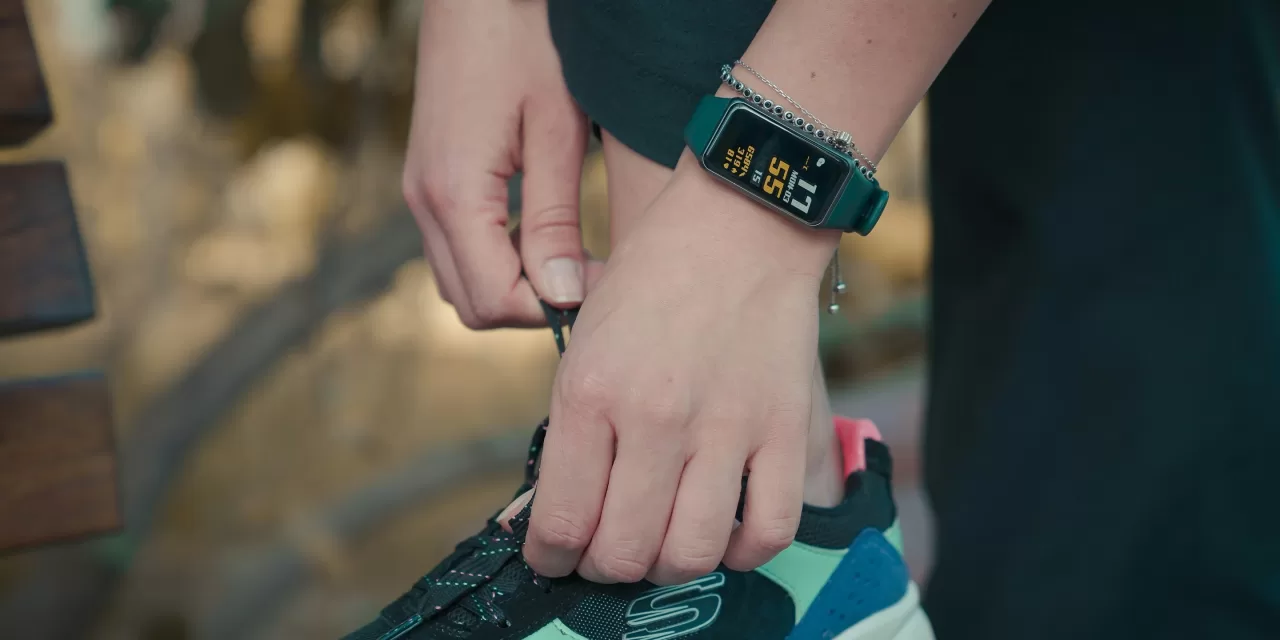
The research team recruited a cohort of young adults who wore Fitbit smartwatches for approximately 30 days. By syncing the watches’ heart rate data with smartphone GPS and “ecological momentary assessments” (short surveys sent to the participants’ phones throughout the day), researchers built a high-resolution map of how the environment gets “under the skin.”
The Physiological Toll of Urban Living
The study’s findings highlight a direct, rapid link between urban pollutants and the human nervous system. Key data points included:
-
Heart Rate Variability (HRV): Higher daily exposure to heat and nitrogen dioxide (NO2)—a common byproduct of traffic emissions—was correlated with a decrease in HRV. HRV is a critical biomarker of the autonomic nervous system; a lower reading suggests the body’s “brake system” is struggling to recover from stress.
-
Mental Health Fluctuations: Elevated levels of sulfur dioxide (SO2) were linked to immediate reports of increased nervousness and feelings of hopelessness.
-
The Heat Paradox: Interestingly, while heat strained the heart, it correlated with lower levels of reported sadness. Researchers hypothesize this may be due to the social and physical benefits of outdoor activity typically associated with warmer weather, illustrating the complex relationship between environment and emotion.
“By combining wearable sensors, GPS data, and real-time surveys, we’re able to build individualized exposure profiles,” said co-first author Melissa Blum, a medical student at the Icahn School of Medicine at Mount Sinai. “That’s a real shift from relying on stationary monitors.”
Expert Perspective: The Need for Validation
While the medical community is optimistic, some experts urge a measured approach to the data. Dr. Emily Chen, an environmental epidemiologist at Johns Hopkins Bloomberg School of Public Health, who was not involved in the study, praised the “real-time granularity” of the research but noted the technical hurdles ahead.
“GPS-estimated exposures are incredibly promising, but they still require rigorous validation against direct, portable sensors,” Dr. Chen noted. “In dense urban ‘canyons,’ GPS signals can bounce, and exposure models often assume outdoor air quality is the same as what a person is breathing indoors. However, using HRV as a proxy for environmental stress is a well-established and smart use of existing wearable tech.”
A Tool for a Changing Climate
The timing of this research is critical. As of 2026, climate-driven heatwaves and fluctuating air quality have become primary public health concerns globally. The World Health Organization (WHO) currently attributes approximately 7 million deaths annually to ambient air pollution, with the burden falling disproportionately on children and low-income urban residents.
For the average consumer, this research suggests that the $100–$200 device already on their wrist could eventually do more than track calories. Future iterations of health apps could theoretically alert a user with asthma to avoid a specific street corner where NO2 levels are spiking, or suggest a “cool route” home during a heatwave to protect cardiovascular health.
Practical Steps for the Health-Conscious
While clinical-grade personal monitoring apps are still in development, consumers can currently use their data more effectively:
-
Contextualize Your Stats: Use apps like Google Fit or Apple Health to overlay your heart rate data with your location history to identify “high-stress” zones in your daily commute.
-
Log Your Environment: Pair your wearable data with a simple mood or symptom diary to see if “bad air days” correlate with your own fatigue or respiratory issues.
-
Advocate for Data: Aggregated, anonymized data from these devices can help city planners identify “heat islands” that require more trees or better ventilation.
Limitations and the Path Forward
As a pilot study, the CUNY research had a relatively small sample size, and researchers noted challenges with “participant adherence”—essentially, people forgetting to fill out their smartphone surveys. Furthermore, consumer-grade wearables like Fitbits, while useful for trends, lack the precision of medical-grade electrocardiograms (ECG).
Privacy also remains a paramount concern. Constant GPS tracking requires robust data encryption and clear user consent to prevent the misuse of sensitive location and health data.
Despite these hurdles, the momentum is building. Senior author Yoko Nomura, Distinguished Professor of Psychology at the CUNY Graduate Center, confirmed that the team is already scaling this methodology for a National Institutes of Health (NIH)-funded study focusing on how prenatal environmental exposures impact adolescent brain health.
“This is the first study to combine wearables, EMA, and continuous GPS in this specific way,” Nomura stated. It likely won’t be the last. As we move further into an era of climate volatility, the ability to monitor our health in the context of our environment may shift from a high-tech luxury to a public health necessity.
References
- https://www.ndtv.com/health/wearables-with-location-and-surveys-may-capture-exposures-health-effects-study-11479316
Medical Disclaimer: This article is for informational purposes only and should not be considered medical advice. Always consult with qualified healthcare professionals before making any health-related decisions or changes to your treatment plan. The information presented here is based on current research and expert opinions, which may evolve as new evidence emerges.