 0
0
 0
0
STANFORD, CA — In a milestone for regenerative medicine, researchers at Stanford Medicine have successfully engineered a lab-grown model of the human pain-sensing pathway. By fusing distinct clusters of brain tissue known as organoids, the team has recreated the complex “highway” that pain signals travel from the skin to the brain. The study, published in Nature on April 9, 2025, offers a groundbreaking alternative to animal testing and a high-fidelity platform for discovering non-addictive pain medications. While the achievement marks a leap forward for the 1 in 3 Americans living with chronic pain, it has also reignited global debates regarding the ethics and potential sentience of sophisticated lab-grown neural tissues.
Mapping the Circuit of Suffering
For decades, pain research has relied heavily on animal models—primarily rodents. However, the evolutionary gap between species often means that drugs successful in mice fail in human clinical trials. To bridge this “translational chasm,” Dr. Sergiu Pașca and his team at Stanford utilized human induced pluripotent stem cells (iPSCs) to grow four specific types of neural tissue:
-
Dorsal Root Ganglion: The gateway for sensory neurons.
-
Dorsal Spinal Cord: The first relay station for signals.
-
Thalamus: The brain’s central “switchboard.”
-
Somatosensory Cortex: The region responsible for processing physical sensations.
By aligning these millimeter-sized organoids in sequence, the researchers created an “assembloid”—a 3D circuit of nearly 4 million cells. Over 100 days, these clusters fused and formed functional connections, creating a directional stream of electrical activity.
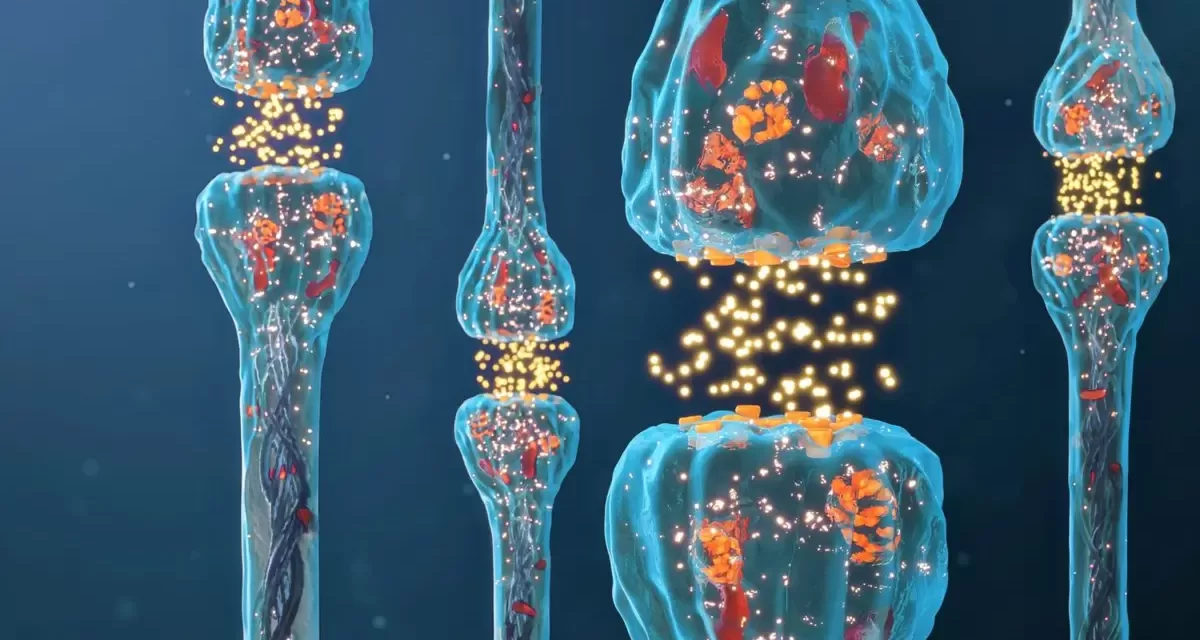
To test the circuit, the team applied capsaicin—the active component in chili peppers—to the sensory neurons. The result was an immediate, synchronized chain reaction that propagated through the spinal and thalamic sections all the way to the cortical tissue. This effectively mirrored how a “burn” on the skin is registered by the human brain.
A New Hope for Chronic Pain Patients
The clinical implications of this research are profound. Chronic pain is a public health crisis, often leading to a cycle of disability and opioid dependency.
“I can’t even tell you how sad it is to sit in front of a patient who’s suffering from chronic pain after we’ve tried everything and there’s nothing left in our arsenal,” says Dr. Vivianne Tawfik, an associate professor of anesthesiology at Stanford who was not involved in the study. She describes this pathway as the most critical infrastructure for conveying pain in the human body.
The assembloid allows researchers to study genetic pain disorders with surgical precision. The team tested mutations in the Nav1.7 sodium channel—a protein that acts like a “volume knob” for pain signals.
-
Hyper-frequent waves: Mutations linked to extreme pain hypersensitivity caused the assembloid to fire excessively.
-
Disrupted synchronization: Mutations linked to “pain insensitivity” (where individuals cannot feel physical harm) caused the circuit to fail, even if individual cells were active.
By screening new drugs on these human-derived circuits, scientists hope to find compounds that “tame” these excessive waves without triggering the brain’s reward centers, thereby avoiding the addictive pitfalls of traditional opioids.
Addressing the “Sentience” Question
The idea of “brains in a dish” responding to pain naturally evokes visceral reactions and ethical concerns. However, Dr. Pașca is quick to distinguish between nociception (the transmission of signals) and the subjective experience of pain.
“They don’t ‘feel’ any pain,” Pașca clarifies.
The current assembloids lack the higher brain centers required for emotion or consciousness, such as the insula or the amygdala. They are roughly equivalent to the neural development of a human fetus at 100 days and represent only 1/42,000th the size of an adult human brain.
Nonetheless, at the 2025 Asilomar conference on bioethics, experts gathered to discuss the trajectory of this technology. Bioethicist Alta Charo noted that while we are currently far from “conscious” organoids, the International Society for Stem Cell Research (ISSCR) is continuously updating guidelines to ensure public involvement and ethical oversight. Critics like Ben Hurlbut, however, warn against a “science first, ethics second” mentality, urging for deeper debate as these models grow in complexity.
Limitations and the Road Ahead
While the Stanford assembloid is a revolutionary tool, it is not yet a perfect replica of an adult human. Current limitations include:
-
Immaturity: The cells remain in a “fetal-like” state.
-
Scale: The model lacks the billions of cells found in a full-sized brain.
-
Isolation: There are no immune system interactions or “descending” pathways (the signals the brain sends back down to suppress pain).
Despite these hurdles, the model is already being adapted to study autism and sensory overload, where many individuals experience hypersensitivity to touch or sound. Because the assembloids are grown from the skin cells of specific patients, they also pave the way for personalized medicine, allowing doctors to test which pain medication works best for an individual’s unique genetic makeup before prescribing it.
As the research moves into its next phase, the goal is to “age” these organoids to better represent adult chronic pain conditions. If successful, the era of relying solely on animal proxies may soon be replaced by a new standard: human-centric science that is as ethical as it is effective.
Reference Section
- https://indiandefencereview.com/scientists-grew-brain-lab-asking-if-can-feel-pain/
Medical Disclaimer: This article is for informational purposes only and should not be considered medical advice. Always consult with qualified healthcare professionals before making any health-related decisions or changes to your treatment plan. The information presented here is based on current research and expert opinions, which may evolve as new evidence emerges.