 0
0
 0
0
February 19, 2026
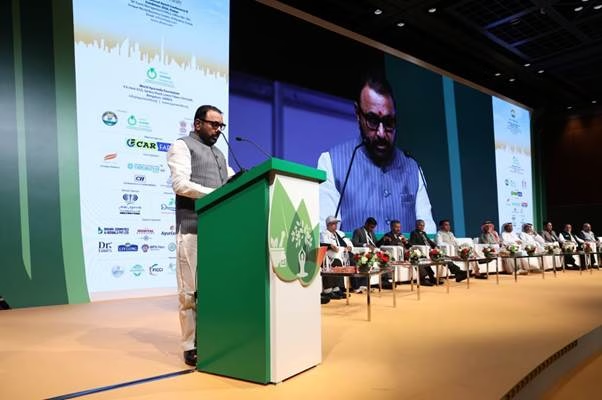
DUBAI — In a landmark shift for global medicine, the 3rd International Ayush Conference & Exhibition (IACE 2026) concluded yesterday with a resounding message: traditional medicine is no longer a “complementary” afterthought. Led by a high-level Indian delegation and featuring representatives from 28 nations, the summit positioned the Ayush systems—Ayurveda, Yoga, Unani, Siddha, and Homeopathy—as central pillars in a new, human-centric global health architecture designed to combat the modern epidemics of chronic disease and mental health struggles.
Union Minister of State for Ayush, Shri Prataprao Jadhav, set the tone for the assembly, declaring that the world is moving toward a “preventive and sustainable” health ecosystem. “Ayush is no longer at the margins but at the center of global health discourse,” Jadhav told an audience of international researchers and policymakers.
From Experience to Evidence: The New Global Standard
For decades, traditional medicine faced skepticism in the West due to a perceived lack of standardized data. However, the IACE 2026 marked a pivotal transition from “experience-based” anecdotes to “evidence-based” validation.
The centerpiece of the conference was the deliberation on a draft International White Paper on Ayush Interventions. This document aims to provide a structured framework for:
-
Treatment Protocols: Standardizing how traditional therapies are administered globally.
-
Integrated Frameworks: Moving away from “parallel” systems where patients choose between Western or traditional medicine, toward a “unified” approach where both work in tandem.
-
Regulatory Harmonization: Ensuring that an Ayurvedic supplement or a Unani treatment meets the same safety and quality certifications across different borders.
“The goal is not to replace modern medicine, but to complete it,” says Dr. Elena Rossi, an independent integrative medicine researcher not affiliated with the conference. “By creating a common language of clinical evidence and pharmacopeial compliance, we can ensure patient safety while utilizing the deep holistic wisdom these systems offer.”
Addressing the “Silent Epidemics”
The push for Ayush integration comes at a critical time. The World Health Organization (WHO) reports that non-communicable diseases (NCDs)—including cardiovascular disease, diabetes, and mental health disorders—account for 74% of all deaths globally.
Minister Jadhav emphasized that the rising tide of lifestyle disorders and stress-related illnesses requires more than just pharmaceutical intervention; it requires a lifestyle overhaul. Ayush systems focus on the harmony between the body, mind, and environment, offering preventive strategies that conventional “sick-care” models often overlook.
Key Pillars of the Ayush Integration:
| System | Primary Focus | Application in Modern Health |
| Ayurveda | Metabolic balance and gut health | Management of Type 2 Diabetes and inflammation |
| Yoga | Mind-body connection | Stress reduction and musculoskeletal health |
| Unani/Siddha | Elemental balance and herbal therapy | Chronic skin conditions and respiratory wellness |
| Homeopathy | Individualized immune response | Adjunct therapy for allergies and pediatric care |
Global Diplomacy and Economic Ties
The conference wasn’t just about clinical trials; it was a masterclass in “health diplomacy.” With 28 countries participating, the event facilitated new investment partnerships and expanded the scope of Medical Value Travel (medical tourism).
India’s leadership follows the momentum of the WHO Global Summit on Traditional Medicine and the Delhi Declaration, which established global standards for safety and evidence generation. By promoting joint research programs and academic exchanges, India is positioning itself as a hub for affordable, evidence-based holistic care.
The Skeptic’s View: Challenges in Integration
Despite the optimism, the path to full integration faces hurdles. Critics often point to the variability in herbal product potency and the potential for herb-drug interactions.
“Integration requires extreme caution,” notes Dr. Marcus Thorne, a clinical pharmacologist. “While the holistic approach is valuable, we must ensure that traditional treatments undergo the same rigorous double-blind, placebo-controlled trials as any pharmaceutical drug before they are integrated into public health policy.”
The IACE 2026 addressed these concerns by emphasizing pharmacopeial compliance—the process of ensuring every herbal ingredient is chemically profiled and free from contaminants.
What This Means for You
For the average health-conscious consumer, the outcomes of this conference signal a future where healthcare is more personalized.
-
More Options: Patients may soon see “Integrative Departments” in major hospitals where Yoga therapy or Ayurvedic dietary counseling is prescribed alongside standard treatments.
-
Verified Quality: As international certifications become standardized, consumers can have higher confidence in the safety and purity of Ayush products found on store shelves.
-
Preventive Focus: There is a growing shift toward “Self-Care” protocols that empower individuals to manage stress and diet before chronic diseases take root.
As the conference concluded, Minister Jadhav expressed confidence that these discussions would translate into “actionable outcomes.” For a world weary of rising healthcare costs and chronic illness, the integration of ancient wisdom and modern science may be the prescription it has been waiting for.
References
-
Ministry of Ayush (2026). Press Release: International Ayush Conference & Exhibition (IACE 2026) Proceedings. PIB Delhi.
Medical Disclaimer: This article is for informational purposes only and should not be considered medical advice. Always consult with qualified healthcare professionals before making any health-related decisions or changes to your treatment plan. The information presented here is based on current research and expert opinions, which may evolve as new evidence emerges.