 0
0
 0
0
February 3, 2026
For decades, the quest to understand human intelligence was a search for a “sweet spot”—a specific cluster of neurons or a dedicated “genius center” tucked away in the prefrontal cortex. However, a groundbreaking study from the University of Notre Dame, published in Nature Communications, suggests we have been looking at the map all wrong.
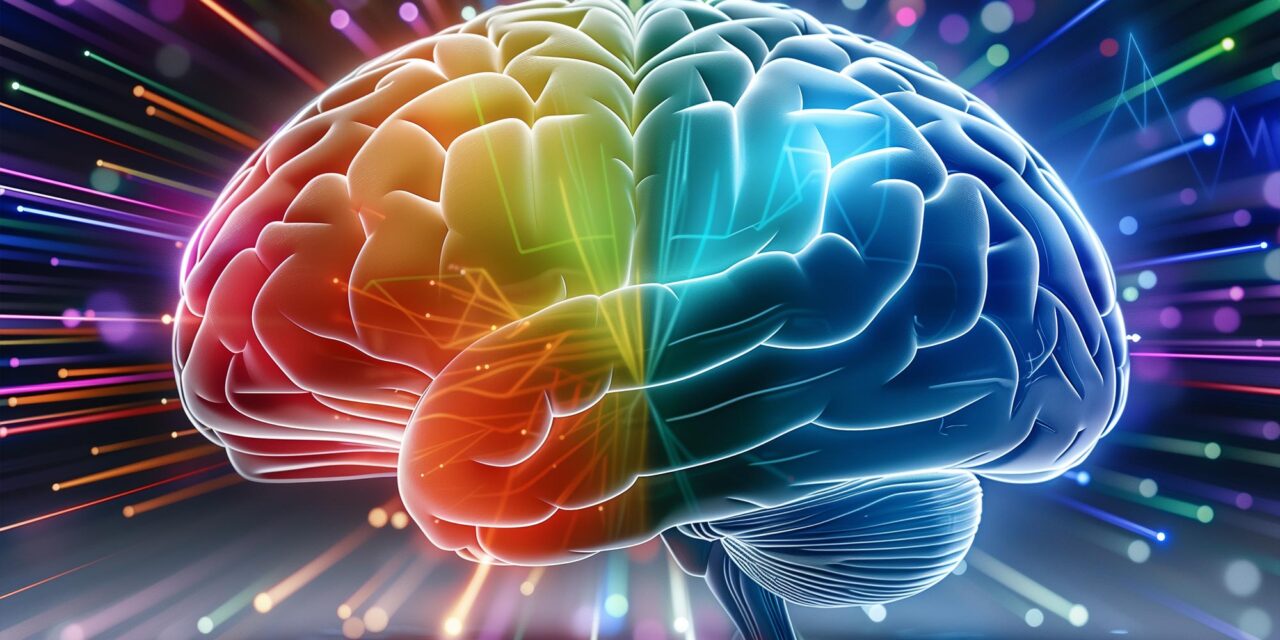
The research provides robust evidence for the Network Neuroscience Theory, suggesting that intelligence is not the product of a single brain region, but rather a system-wide property. In this view, high cognitive ability is defined by how efficiently and flexibly the entire brain coordinates its activity to solve problems. By analyzing the neural architecture of nearly 1,000 individuals, researchers have shifted the conversation from where intelligence lives to how the brain organizes itself as a unified global network.
Mapping the Global Network
To test the Network Neuroscience Theory, lead author Ramsey Wilcox and senior author Dr. Aron Barbey analyzed high-resolution brain imaging and cognitive data from 831 adults participating in the Human Connectome Project. To ensure the findings weren’t a fluke, they replicated the analysis with an independent group of 145 adults.
The results were consistent across both groups: general intelligence was inextricably linked to “system-level” properties. Instead of seeing one area of the brain “light up” during difficult tasks, researchers observed a complex dance of coordination across the entire organ.
“We found evidence for system-wide coordination in the brain that is both robust and adaptable,” says Wilcox. “This coordination does not carry out cognition itself, but determines the range of cognitive operations the system can support.”
The “Small-World” Architecture
The study highlights four key pillars that define an intelligent brain system:
-
Distributed Processing: Intelligence engages multiple networks simultaneously rather than relying on one “logic” center.
-
Global Efficiency: It relies on “weak,” long-range connections that act as shortcuts between distant regions.
-
Modal Control: Specific regions act as “conductors,” orchestrating interactions between various networks.
-
Small-World Architecture: The brain maintains a balance where local clusters (for specialized tasks) are tightly connected to a global network (for general integration).
A Symphony, Not a Solo
To understand this concept, imagine a major metropolitan power grid. In the old model of intelligence, we might have looked for a single massive power plant that provides all the energy. In the Network Neuroscience model, intelligence is more like a “smart grid.” It’s the ability of the system to reroute power instantly, balance loads between distant neighborhoods, and ensure that a hospital in the north can communicate with a warehouse in the south during an emergency.
Dr. Aron Barbey, a professor of psychology at Notre Dame, explains that general intelligence depends on this delicate balance between local specialization and global integration.
“The brain functions best when tightly connected local clusters communicate well, but are still able to link to distant regions of the brain across short communication paths,” Barbey notes. This “short-path” communication allows the brain to integrate information rapidly, leading to more effective problem-solving.
“General intelligence becomes visible when cognition is coordinated, when many processes must work together under system-level constraints.” — Dr. Aron Barbey, University of Notre Dame
Expert Perspectives: Why Scale Matters
While the Notre Dame study offers a compelling look at the “big picture,” independent experts suggest this marks a turning point in cognitive science.
“This research moves us away from a modular view of the mind—the idea that we have a ‘math’ box or a ‘language’ box,” says Dr. Elena Rossi, a clinical neuropsychologist not involved in the study. “It suggests that what we call ‘intelligence’ is actually a measure of neural health and network efficiency. It’s about how well the ‘pipes’ are connected across the entire house, not just whether one faucet works well.”
However, Dr. Rossi cautions that while the study is robust, it primarily looks at “general intelligence” (often referred to as the g-factor). “We still need to understand how this global coordination interacts with individual talents or neurodiversity, where a brain might be highly efficient in one network but less so in another.”
What This Means for Your Brain Health
For the general public, the implications of the Network Neuroscience Theory are more practical than they might seem. If intelligence is a system-wide property of coordination and flexibility, then “brain health” is less about “brain games” that target one skill and more about maintaining the overall integrity of the neural network.
Practical Takeaways for Cognitive Longevity:
-
Prioritize Cardiovascular Health: Since the brain relies on long-range connections, the health of white matter (the “cables” of the brain) is vital. High blood pressure and sedentary lifestyles can damage these connections.
-
Seek Cognitive Variety: Rather than mastering one digital puzzle, engage in activities that require “multi-network” coordination—such as learning a new language, playing a musical instrument, or engaging in complex social interactions.
-
Focus on Flexibility: The study emphasizes “adaptability.” Staying curious and challenging your mental routines may help maintain the “plasticity” required for system-wide coordination.
Limitations and Future Frontiers
Despite the large sample size of nearly 1,000 participants, the study does have limitations. The data is “cross-sectional,” meaning it provides a snapshot of the brain at one point in time. It cannot yet determine if high network efficiency is something people are born with, or if it can be significantly developed through environment and education.
Furthermore, the study utilizes the Human Connectome Project data, which largely consists of healthy young adults. Future research will need to determine if these network properties hold true in aging populations or in individuals with neurodegenerative conditions like Alzheimer’s disease.
As neuroscience moves forward, the focus will likely shift toward “network therapeutics”—treatments designed not to fix one “broken” part of the brain, but to improve the flow of information across the entire system.
Medical Disclaimer
This article is for informational purposes only and should not be considered medical advice. Always consult with qualified healthcare professionals before making any health-related decisions or changes to your treatment plan. The information presented here is based on current research and expert opinions, which may evolve as new evidence emerges.
References
- https://www.ndtv.com/health/study-links-intelligence-to-overall-brain-activity-rather-than-specific-region-10931939