 0
0
 0
0
MELBOURNE, AUSTRALIA – As the world grapples with a documented “backlash” against gender equality, a powerful coalition of over 6,000 activists, healthcare workers, and policymakers converged in Melbourne (Narrm) this week for the Women Deliver Conference 2026. The central message of the summit was clear: achieving global health and gender equity requires moving beyond “quiet advocacy” toward a model of Development Justice—a framework that links individual health rights to economic and environmental systemic change.
The conference, the largest of its kind, arrives at a critical juncture for public health. Leaders from Public Services International (PSI) and grassroots organizations warned that the “corporatization of care” and extractive development projects are not merely economic issues but are emerging as significant social determinants of health (SDOH) that exacerbate mortality and morbidity among marginalized populations.
The Health Impact of ‘Corporatized Care’
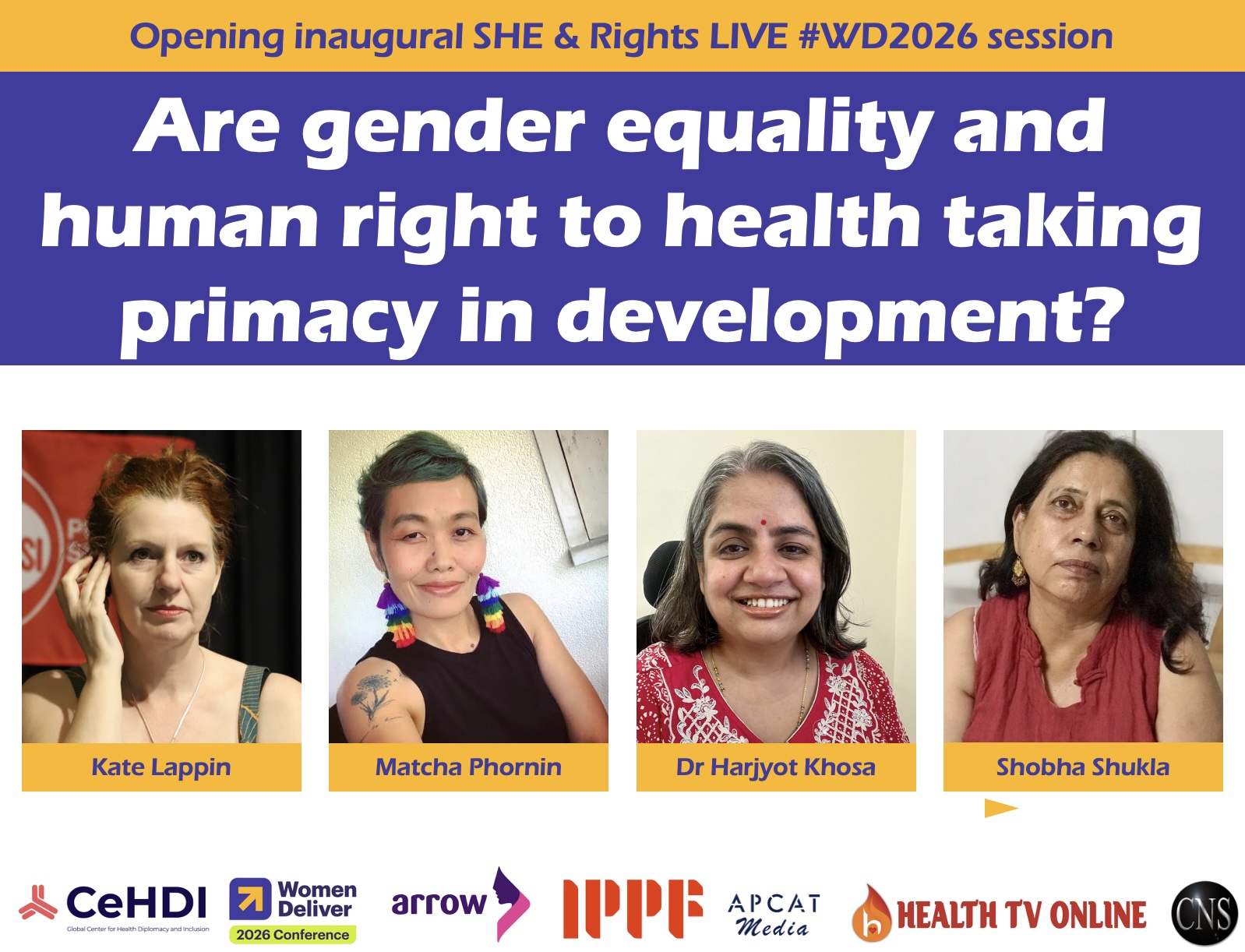
A primary focus of the summit was the shifting landscape of healthcare delivery. Kate Lappin, Regional Secretary of PSI Asia Pacific, presented evidence on how the privatization and corporatization of social services—often framed as “development”—can undermine public health.
“Social protection is critical for advancing the rights of women, gender-diverse, and indigenous peoples,” Lappin stated during the inaugural session of SHE & Rights Live. She argued that when care services are privatized, the focus often shifts from patient outcomes to profit margins, frequently leading to:
-
Reduced access to reproductive health services in rural areas.
-
The devaluation of the care workforce, which is predominantly female.
-
Increased “care burdens” on families, which correlates with higher rates of stress-related illness and economic instability for women.
Lappin pointed to Melbourne’s own history—the site of the world’s first eight-hour workday in 1856—as a template for health through labor rights. In 2026, this evolution continues with the state of Victoria leading on Reproductive Health and Wellbeing Leave. This policy recognizes that health is a lifecycle issue, providing paid leave for conditions including endometriosis, menopause, and IVF treatments—a move experts say is essential for keeping women in the workforce while maintaining long-term physical health.
Environmental Integrity as a Health Mandate
The intersection of “development” projects and indigenous health was highlighted by Matcha Phorn-in, Executive Director of Sangsan Anakot Yaowachon. Reporting from the Myanmar-Thailand border, Phorn-in detailed how large-scale extractive industries, such as rare earth mining and hydro-power dams, act as direct threats to community health.
“These projects cause environmental degradation and water contamination,” Phorn-in explained. “They are not just environmental crises; they are human rights violations that exacerbate gender inequalities.”
Research from the Indigenous Determinants of Health Alliance (IDHA) supports this, noting that for indigenous communities, health is “intrinsically connected to the health of Mother Earth.” The degradation of local ecosystems often leads to a loss of traditional food systems, resulting in increased rates of non-communicable diseases (NCDs) and psychological distress.
Decolonizing Health Finance and ‘Radical Inclusivity’
The medical community at the conference also addressed the rising tide of “pseudo-science” being used to justify rollbacks in bodily autonomy. Dr. Harjyot Khosa, a global health advocate, emphasized that the public health sector must pivot toward “radical inclusivity.”
“Regressive states are attempting to reverse agreed-upon language on bodily autonomy,” Dr. Khosa noted, referencing recent UN Commission on the Status of Women (CSW70) debates. She called for the decolonization of development finance, ensuring that health funding reaches grassroots movements rather than being tied to restrictive, top-down agendas.
Key Health Demands from the Summit:
-
Recognition of Community Health Workers: A call for the Global Care Alliance to recognize community-based health work as formal employment with full labor protections.
-
Gender-Affirming Care: Advocates demanded that healthcare systems include full access to gender-affirming care, citing it as a life-saving medical necessity for gender-diverse populations.
-
Free, Prior, and Informed Consent (FPIC): A requirement that any development project must undergo rigorous health and environmental impact assessments with the consent of local indigenous populations.
Limitations and Counterarguments
While the conference presented a unified front, some policy experts suggest that “disruptive” collective action can lead to short-term instability in service delivery. Furthermore, critics of the “Development Justice” model argue that private-sector investment is often the only viable way to scale healthcare infrastructure in low-resource settings. However, the consensus among WD2026 delegates was that without a rights-based framework, such “scaling” often fails to reach the most vulnerable, effectively “leaving them behind” despite global slogans.
Practical Implications for Readers
For the general public, the discussions in Melbourne underscore that health is political. The ability to access a doctor, afford medication, or take time off for a chronic condition is often determined by the strength of collective bargaining and social protections.
“We need a unified front against the hierarchical oppression we are facing today,” concluded Dr. Khosa. For consumers, this means advocating for policies that treat healthcare as a public good rather than a commodity.
Medical Disclaimer: This article is for informational purposes only and should not be considered medical advice. Always consult with qualified healthcare professionals before making any health-related decisions or changes to your treatment plan. The information presented here is based on current research and expert opinions, which may evolve as new evidence emerges.
Gender-affirming Care Saves Lives
This video provides essential context on how healthcare innovation and rights-based access contribute to the mental and physical well-being of gender-diverse individuals, echoing the calls for inclusive health systems made at the conference.
SHOBHA SHUKLA – CNS