 0
0
 0
0
Redefining Medical Eligibility: Focus on Function Over Formula
For years, aspiring medical students in India holding a Unique Disability ID (UDID) card were evaluated against fixed arithmetic cut-offs. Under the legacy system, a candidate whose physical disability exceeded or fell short of specific mathematical percentages could be disqualified outright, regardless of whether modern assistive technology, prosthetic devices, or specialized training enabled them to perform clinical procedures safely.
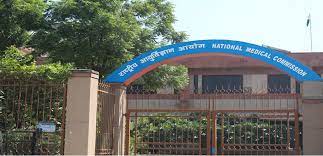
The NMC’s new framework fundamentally shifts this dynamic. Eligibility for Persons with Benchmark Disabilities (PwBD) will no longer hinge exclusively on static percentage scores. Instead, candidates will undergo real-world evaluations conducted by designated Medical Assessment Boards. These boards evaluate core functional competencies—such as motor dexterity, spatial mobility, direct communication, and cognitive comprehension—to determine if a student can fulfill course-relevant tasks with or without reasonable accommodations.
“Medicine is an applied skill where real-world adaptability matters far more than a fixed diagnostic score. A candidate using an advanced motorized mobility aid or digital stethoscopic amplifier may execute clinical procedures with flawless precision. Evaluating practical functional capability rather than raw mathematical impairment aligns Indian medical training with global standards.”
— Dr. Ananya Mukherjee, Senior Medical Educator & Healthcare Policy Analyst (independent expert commentary)
What the New Pathway Requires for PwBD Aspirants
The updated protocol establishes a streamlined three-step verification process:
-
Document Verification: Candidates submit a valid, government-issued UDID card.
-
Self-Declaration: Candidates file a self-certified affidavit detailing their specific functional strengths and personal physical limitations.
-
Board Assessment: Candidates undergo comprehensive evaluation at one of 61 designated medical assessment centers—a substantial expansion from the 16 centers previously operational nationwide.
Upon completion, boards issue individualized eligibility certificates containing reasoned assessment orders rather than simple numeric declarations. To protect candidates’ rights, an appellate mechanism under the Ministry of Health and Family Welfare offers a formal avenue for appeal if a candidate disputes a assessment decision.
Mandating Support: The Role of On-Campus ‘Enabling Units’
To ensure that admission accessibility translates into academic success, a separate circular issued by the NMC directs every medical college operating under its authority to institute an institutional Enabling Unit.
[Student Admission] ──► [Enabling Unit Intake] ──► [Tailored Accommodations] ──► [Clinical Training Support]
These Enabling Units serve as a centralized hub for students with disabilities throughout their MBBS journey. Their operational mandates include:
-
Reasonable Accommodation: Coordinating adaptive learning materials, accessible laboratory equipment, and adjusted exam timing.
-
Accessibility Oversight: Auditing campus infrastructure—from lecture halls to hospital wards—to eliminate physical and digital barriers.
-
Institutional Coordination: Liaising directly with Disability Assessment Boards and administrative leadership to resolve disability-related concerns promptly.
-
Proactive Transparency: Publicly displaying support services and direct contact information across campus notice boards and official college portals to ensure support is accessible from day one.
Context and Legal Impetus
The NMC’s notification aligns with directives from the Supreme Court of India enforcing strict compliance with the Rights of Persons with Disabilities (RPwD) Act, 2016. The statute mandates equal access to higher education and prohibits discrimination based on physical or cognitive variations.
This reform seamlessly integrates with India’s broader Competency-Based Medical Education (CBME) framework, initially introduced in 2019. CBME transitioned Indian healthcare training from a time-bound lecture model toward outcome-driven clinical mastery, prioritizing patient safety and demonstrable graduate capability.
| Assessment Dimension | Legacy Framework | 2026 Competency-Based Framework |
| Primary Metric | Arithmetic disability percentage (UDID card) | Real-world functional capability assessment |
| Technology Integration | Rarely factored into admission eligibility | Explicitly considers assistive devices & reasonable accommodations |
| Assessment Centers | 16 centers nationwide | 61 centers nationwide |
| Institutional Support | Ad-hoc support at individual college discretion | Mandatory institutional “Enabling Units” across all colleges |
| Outcome Document | Pass/Fail percentage certificate | Individualized, detailed eligibility order with appeal recourse |
Public Health Implications and Practical Considerations
Enriched Healthcare Perspective
Inlisting qualified individuals with diverse physical backgrounds enriches the medical workforce. Healthcare providers who personally navigate disabilities bring unique empathy, communication skills, and insight to patient care, directly improving healthcare experiences for disabled patient populations.
Implementation Challenges
Despite the framework’s strong foundation, healthcare policy experts emphasize that success hinges on consistent implementation:
-
Standardized Board Evaluations: Ensuring all 61 designated assessment centers apply uniform, objective standards without falling back on legacy biases.
-
Infrastructure Capital: Medical colleges must actively invest in accessible facilities, adaptive clinical tools, and faculty training on inclusive pedagogy.
-
Objective Criteria: Functional benchmarks must remain transparent and evidence-based, balancing educational equity with uncompromised patient safety.
Medical Disclaimer
Medical Disclaimer: This article is for informational purposes only and should not be considered medical advice. Always consult with qualified healthcare professionals before making any health-related decisions or changes to your treatment plan. The information presented here is based on current research and expert opinions, which may evolve as new evidence emerges.
References
-
The New Indian Express. “NMC notifies guidelines for persons with benchmark disabilities to MBBS course.” Published July 28, 2026. Available at:
[https://www.newindianexpress.com/](https://www.newindianexpress.com/)