 0
0
 0
0
NOVATO, CA — In a significant shift from traditional Alzheimer’s research that focuses on clearing toxic proteins from the brain, scientists at the Buck Institute for Research on Aging have identified a biological “repair crew” that could restore memory even after disease damage has set in. The study, published February 1, 2024, in the Journal of Clinical Investigation, reveals that a protein called KIBRA (kidney and brain expressed protein) holds the key to repairing the communication points between neurons, known as synapses. By boosting a specific fragment of this protein, researchers successfully reversed memory loss in mice with high levels of toxic tau—a primary driver of dementia—without needing to reduce the tau itself.
A New Strategy for a Global Crisis
For decades, the “amyloid hypothesis” has dominated Alzheimer’s research, leading to recently approved drugs like lecanemab that clear amyloid plaques from the brain. However, these treatments often show modest results in patients with advanced disease, where tau “tangles” have already begun to dismantle the brain’s circuitry.
“Most current therapies aim to get rid of the ‘trash’ in the brain, like amyloid and tau,” says Dr. Li Gan, a co-author affiliate from Weill Cornell Medicine. “This research is different. It distinguishes KIBRA as a foundation for synapse repair, potentially reversing impairment without tackling tau directly.”
The discovery comes at a critical time. According to World Health Organization (WHO) data, over 55 million people worldwide live with dementia, a number expected to nearly triple by 2050. In the United States alone, the cost of caring for these patients reaches an estimated $360 billion annually.
The “Highway” Analogy: How KIBRA Works
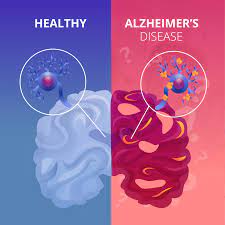
To understand the breakthrough, it helps to view the brain as a complex network of highways. In a healthy brain, synapses are the interchanges where information passes from one neuron to another. This process, called synaptic plasticity, allows us to learn and store new memories.
In Alzheimer’s and other “tauopathies” (diseases characterized by tau protein buildup, such as frontotemporal dementia), the tau protein acts like a series of clogs or roadblocks. These clogs prevent AMPA receptors—the vehicles carrying chemical signals—from reaching the synapse. When the signal can’t get through, the memory is lost, and the synapse eventually withers away.
The Buck Institute team, led by Assistant Professor Tara Tracy, PhD, discovered that the KIBRA protein acts as a stabilizer for an enzyme called Protein Kinase Mζ (PKMζ). This enzyme is the “maintenance crew” that keeps AMPA receptors at the synapse.
In the study, researchers found that:
-
Human Correlation: Patients with Alzheimer’s showed significantly lower KIBRA levels in their brain tissue but higher levels in their cerebrospinal fluid (CSF), suggesting the protein leaks out as synapses fail.
-
The Intervention: When researchers delivered a modified portion of the protein, called CT-KIBRA, into the brains of mice with severe tau pathology, the results were striking.
-
Memory Restoration: Treated mice regained the ability to remember threats in “fear conditioning” tests, performing as well as healthy control mice. Remarkably, they did this while their brains were still full of toxic tau.
The Potential for a Dual-Action Treatment
While clearing amyloid and tau remains important, many experts believe the future of dementia treatment lies in combination therapies.
“Stabilizing PKMζ could complement amyloid-targeting therapies, addressing a gap in late-stage disease,” notes Dr. Samuel Gandy, an Alzheimer’s expert at Mount Sinai who was not involved in the study.
By repairing the synapse “downstream” of the toxic protein buildup, doctors might eventually be able to offer patients a way to regain cognitive function even if the underlying disease triggers cannot be fully eliminated. Furthermore, because KIBRA levels in the CSF correlate so strongly with cognitive decline, it could serve as a vital biomarker—a measurable indicator that helps doctors track how fast a patient’s disease is progressing or how well a treatment is working.
Practical Implications for the Public
While a KIBRA-based drug is likely five to ten years away from human clinical trials, the research reinforces the importance of protecting “synaptic health” today.
Public health experts and neurologists emphasize that “brain reserve”—the brain’s ability to improvise and find alternate ways of getting a job done—is built through lifestyle. Current meta-analyses suggest that activities known to boost synaptic plasticity include:
-
Regular Aerobic Exercise: Increases growth factors that support neuron health.
-
Social Engagement: Challenges the brain to process complex linguistic and emotional cues.
-
Quality Sleep: Essential for the “glymphatic system” to clear metabolic waste and for the brain to consolidate memories.
“Lower brain KIBRA and higher CSF KIBRA predict tau-driven decline,” says Kaitlin B. Casaletto, PhD, of UCSF’s Memory and Aging Center and study co-author. This finding suggests that in the future, a simple spinal tap could identify patients who are at high risk for memory loss before they even start forgetting names or losing their keys.
Limitations and the Long Road Ahead
As with any preclinical “breakthrough,” caution is necessary. The study was conducted on dozens of mice, and mice are not humans. Human brain chemistry is far more complex, and delivering KIBRA via viral vectors—as was done in the lab—presents significant hurdles for human safety, including potential immune reactions.
Critics also point out that while restoring memory is the “holy grail,” leaving the tau protein unchecked might eventually lead to widespread neuron death that no amount of repair protein can fix. “We have seen many ‘synapse boosters’ fail in Phase II human trials,” warns the Alzheimer’s Association in their 2025 research updates.
The Buck Institute is currently pursuing patents for KIBRA-related therapies and is looking toward larger-scale animal studies to refine the delivery method.
Conclusion
The KIBRA discovery marks a pivot in how we view dementia: not just as a relentless accumulation of “trash” to be cleared, but as a system of damaged connections that might be actively repaired. For the millions of families navigating the “long goodbye” of Alzheimer’s, it offers a glimmer of hope that the person they love might one day be reached, even through the fog of the disease.
Medical Disclaimer: This article is for informational purposes only and should not be considered medical advice. Always consult with qualified healthcare professionals before making any health-related decisions or changes to your treatment plan. The information presented here is based on current research and expert opinions, which may evolve as new evidence emerges.
References
Primary Study:
-
Kauwe JS, et al. KIBRA repairs synaptic plasticity and promotes resilience to tauopathy-related memory loss. J Clin Invest. 2024;134(3):e169064. doi:10.1172/JCI169064. [PMID: 38299587]