 0
0
 0
0
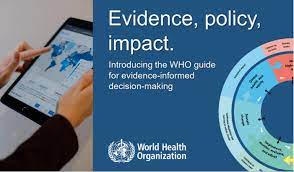
The Guide, launched on 6 April 2022, with over 400 participants from across the world attending the event, brings together WHO’s joint experience and know-how from different departments and workstreams into a central platform. The publication’s sub-title “Evidence. Policy. Impact.” is key to the Organization’s global mission and ambition.
At the core of the Guide and repository is its evidence ecosystem for impact’ framework, serving as a user-friendly matrix outlining the process and steps of evidence-informed decision-making, and capturing WHO’s methods and tools linked to promoting better-informed decision-making in countries and globally.
Apart from providing guidance on how to apply rigorous systematic and transparent methods for evidence-informed decision-making, the Guide aims to promote more dialogue and collaboration between communities of the evidence ecosystem of evidence producers and users – whether within the Organization or at the country level.
As the WHO Chief Scientist has postulated in the foreword of the Guide: “To achieve even better results in the future, we need to further optimize our work across the evidence ecosystem and ensure that decision-makers are equipped to navigate a plethora of partially overlapping evidence and guidance of variable quality. A well-functioning evidence ecosystem with structures, capacity and incentives in place will ensure that evidence is available and accessible to all, and routinely used to inform decision-making.”
For questions and comments on the guide and tool repository, please contact [email protected].
The recording of the launch webinar can be accessed here (Passcode: 7j%U&&Uq), the PowerPoint slides are available here.