 0
0
 0
0
NEW DELHI — A growing wave of concern is sweeping through the menstrual health community as consumers and health advocates increasingly question the safety of sanitary pads—specifically the thin, perforated top sheet that rests directly against the highly sensitive vulvar and vaginal skin.
A ground-breaking study by the New Delhi-based environmental NGO Toxics Link revealed that virtually all sanitary pads sold in India, including conventional and those marketed as “organic,” contain trace amounts of phthalates and volatile organic compounds (VOCs).
With regulatory bodies like the Bureau of Indian Standards (BIS) only recently enforcing stricter manufacturing guidelines, millions of menstruators are left balancing daily convenience against potential long-term, low-dose chemical exposure through the body’s most permeable tissues.
What the Top Sheet Is—and Why It Matters
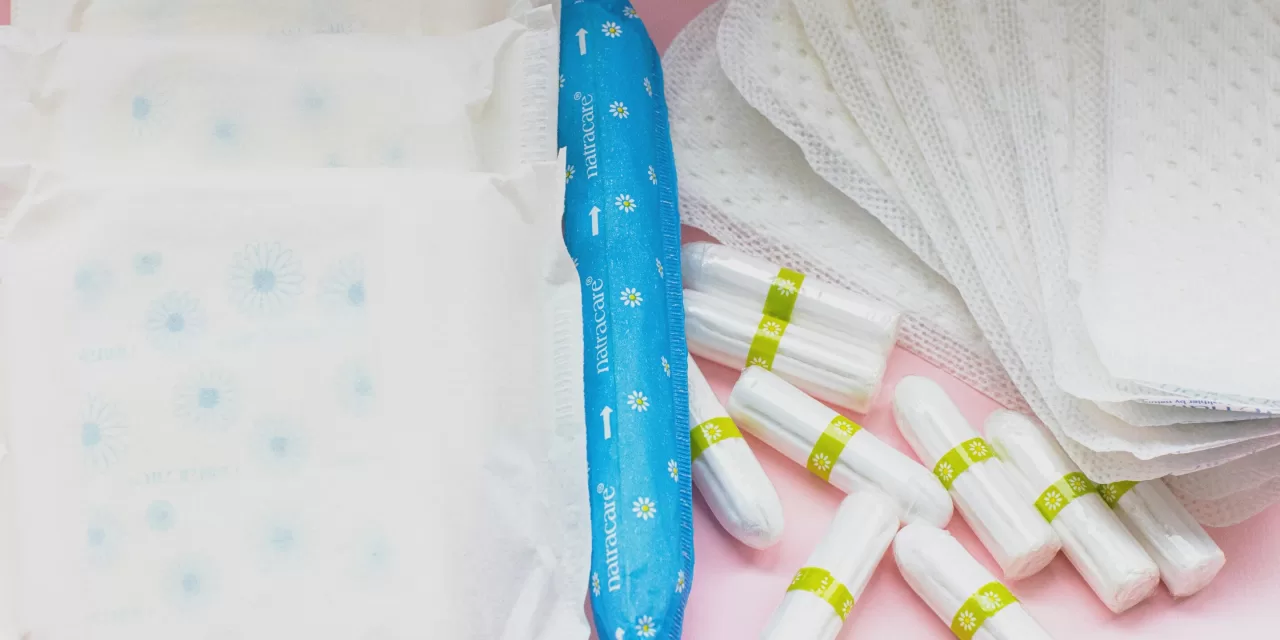
The top sheet is the outermost layer of a sanitary pad designed to wick blood away from the body into an absorbent core, keeping the skin dry. In mass-market commercial pads, this sheet typically consists of either a perforated polyethylene (PE) “dry-net” plastic film or a synthetic non-woven fabric designed to mimic the feel of cotton.
From a physiological standpoint, the composition of this layer is uniquely critical. Unlike ordinary skin, vulvar and vaginal tissues are highly vascular, exceptionally thin, and highly permeable.
When chemicals come into contact with the vaginal mucosa, they can be absorbed directly into the bloodstream. This bypasses “first-pass metabolism”—the liver’s natural filtration process—meaning any transferred toxins circulate through the body at higher concentrations.
Key Chemicals Found in Pads—and What They Do
The 2022 Toxics Link study, titled Wrapped in Secrecy: Toxic Chemicals in Menstrual Products, tested 10 widely available brands in India (four organic and six conventional). The findings were stark: every single brand tested positive for both VOCs and phthalates.
The Chemical Breakdown
-
Phthalates: These plastic-softening chemicals are frequently used in polymers, binders, and synthetic fragrances. Epidemiological research has widely linked phthalates to endocrine disruption, reproductive toxicity, insulin resistance, and developmental issues.
-
Volatile Organic Compounds (VOCs): Compounds such as acetone, chloroform, and benzene are often remnants of manufacturing, adhesives, or moisture barriers. Chronic exposure to certain VOCs is linked to organ irritation, respiratory distress, and, in high-dose occupational settings, elevated cancer risks.
Historically, because sanitary pads have been classified as medical products or essential hygiene commodities in India, manufacturers have not been legally required to print an ingredient list on the packaging. This has left consumers entirely in the dark regarding the materials touching their bodies for days at a time.
Shifting Regulations: What Regulators Are Doing in India
For decades, the Bureau of Indian Standards (BIS) focused almost exclusively on the functional performance of menstrual products—evaluating absorbency, back-sheet fluid retention, mechanical strength, and basic microbiological cleanliness. Chemical toxicity thresholds were entirely absent from testing protocols.
However, regulatory frameworks are evolving. India notified an updated standard: IS 5405:2025 “Sanitary pads for women.” This updated mandate introduces material-composition requirements and strict safety-testing parameters for surface layers and absorbent cores. Crucially, the ISI certification mark is now mandatory for all sanitary napkins distributed in the country, signaling adherence to these newly established safety benchmarks.
Yet, public health experts urge cautious optimism. While mandatory certification is an excellent regulatory milestone, the standard’s ultimate efficacy depends entirely on consistent third-party enforcement, routine batch testing, and moving toward full ingredient transparency on consumer packaging.
Health Implications: What Is Known vs. What Is Missing
From a clinical perspective, the short-term dermatological risks of sanitary pads are well-documented. Prolonged contact with moisture and heat can trigger:
-
Contact dermatitis and severe chafing
-
Vulvar irritation and allergic reactions (predominantly driven by synthetic fragrances and dyes)
-
Bacterial vaginosis or fungal overgrowth (yeast infections)
The greater scientific debate centers on the long-term, systemic impacts of chronic, low-dose exposure to endocrine-disrupting chemicals (EDCs) via the genital mucosa. A comprehensive systematic review published in Environmental Health Perspectives highlighted that because a menstruator uses thousands of pads over a reproductive lifetime, the cumulative exposure to absorbed EDCs is non-trivial.
However, establishing a direct causal link between pad usage and complex conditions like infertility, endometriosis, or reproductive cancers remains a challenge for researchers.
“We know these chemicals are biologically active and that the genital area is a direct route of exposure,” explains Dr. Priya Mehta, a reproductive endocrinology specialist who was not involved in the Toxics Link study. “What we currently lack is large-scale, longitudinal data that can cleanly isolate chemical exposure from pads from the background noise of daily environmental exposure, such as diet, cosmetics, and household plastics.”
Navigating the Market: Pad Types and Trade-Offs
As consumer awareness has heightened, brands have flooded the market with alternative labels. However, independent testing indicates that these options come with distinct trade-offs:
| Pad Type | Composition | Pros | Cons / Hidden Risks |
| Conventional Plastic-Based | Perforated polyethylene (PE) top sheet, synthetic core. | Highly economical, excellent absorbency, widely accessible. | Higher plastic density; typically contains higher traceable loads of VOCs and phthalates. |
| “Cotton-Top” / Non-Woven | Synthetic fibers processed into a fabric-like feel. | Softer texture, significantly reduces friction and chafing. | Still woven with synthetic polymers; relies heavily on chemical adhesives. |
| “Organic” / Natural | Unbleached or chlorine-free cotton layers. | Free from chlorine bleaching; lower risk of synthetic dye irritation. | Toxics Link testing revealed some organic brands still contained high VOC loads from processing or adhesives; higher cost. |
| Reusable Alternatives | Menstrual cups (silicone), discs, period underwear. | Drastically reduces plastic waste; completely avoids traditional pad adhesives. | Period underwear components must be vetted to ensure they are free from fluorinated “forever chemicals” (PFAS) used for waterproofing. |
Practical Steps to Reduce Exposure and Maintain Health
While policy and long-term research catch up to consumer concerns, gynecologists and public health agencies, including the Centers for Disease Control and Prevention (CDC), emphasize that menstruators do not need to panic. Instead, they can adopt practical habits to minimize risk:
-
Look for the ISI Mark: Ensure your preferred brand complies with the updated IS 5405:2025 safety guidelines.
-
Go Strictly Fragrance-Free: Avoid any products marketed as “scented,” “odor-neutralizing,” or possessing “fresh” herbal fragrances, as these are primary vectors for volatile chemicals and skin sensitization.
-
Adhere to a Strict Changing Schedule: Change pads every 4 to 6 hours, regardless of how light the menstrual flow is, to prevent moisture traps and bacterial proliferation.
-
Wear Breathable Underwear: Pair pads with loose, breathable cotton underwear. Synthetic fabrics trap ambient heat and moisture, which accelerates skin breakdown and chemical absorption.
-
Avoid DIY Substitutes: Never substitute designated sanitary pads with improvised materials like toilet paper or facial tissues, which lack adequate structural integrity and can introduce unknown manufacturing chemicals directly to the vulva.
The Broader Public Health Balance
Many epidemiologists and clinicians caution against sensationalizing chemical traces. They point out that the levels of phthalates detected in menstrual products are often comparable to the ambient levels found in everyday consumer goods like food packaging and personal care products.
Furthermore, from a global public health perspective, restricted access to menstrual products out of disproportionate fear could trigger a regression in menstrual hygiene. In resource-limited settings, removing affordable sanitary pads from the market without viable alternatives directly correlates with increased school absenteeism, heightened vulnerability to severe urogenital infections from unhygienic rags, and reinforced social stigma.
The immediate path forward requires a balanced approach: empowering consumers with clearer labeling and tighter manufacturing thresholds while ensuring that safe, dignified, and affordable menstrual hygiene products remain universally accessible.
Medical Disclaimer
Medical Disclaimer: This article is for informational purposes only and should not be considered medical advice. Always consult with qualified healthcare professionals before making any health-related decisions or changes to your treatment plan. The information presented here is based on current research and expert opinions, which may evolve as new evidence emerges.
References
- https://english.mathrubhumi.com/lifestyle/health/menstrual-hygiene-sanitary-pad-top-sheet-safety-biw1hfu2