 0
0
 0
0
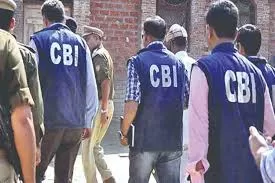
SIKAR, Rajasthan — A major national exam-security crisis has unfolded following the National Testing Agency’s (NTA) decision to cancel the National Eligibility-cum-Entrance Test Undergraduate (NEET-UG) 2026, plunging more than 22 lakh medical aspirants into profound uncertainty. The Central Bureau of Investigation (CBI), which recently took over the interstate probe, has identified the rapidly growing coaching hub of Sikar, Rajasthan, as the primary operational nerve centre for a highly sophisticated, multi-state paper-leak racket.
The crisis escalated rapidly after a local educator received a handwritten “guess paper” on May 3, 2026, which was subsequently confirmed to match nearly all Biology and Chemistry questions on the actual exam. With the integrity of India’s medical admissions compromised, investigators are currently untangling a complex web of printing-supply vulnerabilities, tech-savvy intermediaries, and illicit financial transactions that trace directly back to local coaching institutes and student-hostel networks.
The Sikar Connection: Inside the Investigation
According to intelligence gathered by the CBI and local police forces across Rajasthan and Maharashtra, the operation was set in motion months prior to the exam, with planning reportedly tracing back to late 2025. Investigators allege that the physical leak originated from an individual connected to the security and printing-supply chain in Nashik, Maharashtra. From there, the question templates moved via intermediaries through Haryana before crystallizing into a actionable distribution network within Sikar.
Sikar has evolved over the last decade into a sprawling educational ecosystem. Often dubbed a “mini Kota,” the town hosts hundreds of competitive test-prep centers, private tutors, and densely packed student hostels. Authorities state that this exact density allowed the racket to operationalize with maximum efficiency. Peer groups, hostel managers, and coaching-circle contacts allegedly served as conduits, allowing illicit handwritten question sets to circulate rapidly through tight-knit student networks and private WhatsApp groups.
To date, the CBI has arrested a Jaipur-based mastermind—identified as a BTech graduate—alongside two MBBS students who functioned as “solvers” to decode the leaked material. Investigators are actively questioning medical students, coaching staff, and relatives of the accused who recently secured medical college seats in Mumbai, Dausa, and Sawai Madhopur under highly irregular circumstances.
The Scale of the Scam and the Money Trail
Financial intelligence reveals a highly lucrative black market built around the anxieties of competitive admissions. Investigative reports indicate that candidates were charged anywhere between ₹2 lakh and ₹5 lakh each to access the compromised material.
The sheer volume of converging intelligence eventually forced a total shutdown of the current admission cycle:
| Metric / Aspect | Details of the NEET-UG 2026 Breach |
| Total Affected Candidates | Over 22 lakh aspirants nationwide |
| Alleged Cost per Candidate | ₹2,00,000 to ₹5,00,000 |
| Primary Vectors of Spread | Handwritten copies, localized peer networks, encrypted messaging |
| Origin of Leak Chain | Printing/supply interface, Nashik, Maharashtra |
| Primary Distribution Hub | Coaching and hostel networks, Sikar, Rajasthan |
The NTA has confirmed that a nationwide re-examination will be conducted. While existing student applications remain valid to mitigate further financial burdens on families, finalized dates and new admit-card schedules have yet to be announced, leaving millions of households in limbo.
Public Health Implications and Systemic Risks
While paper leaks are fundamentally an administrative and criminal issue, their downstream effects pose a critical threat to public health infrastructure. The NEET-UG serves as the definitive gatekeeper for undergraduate medical and dental education in India. When the integrity of this mechanism fails, it directly threatens the quality of future healthcare delivery.
Medical education analysts warn that repeated structural breaches—echoing elements of the 2024 NEET controversies—threaten to erode public trust in merit-based selection. This is particularly damaging to individuals from rural or low-income backgrounds who lack the financial capital to access premium coaching centers or illicit “guaranteed-admission” schemes.
“A leak in NEET doesn’t just distort one year’s rankings; it can shape the entire future of medical professionalism if even a small group of students gains an artificial advantage,” warns Dr. Arvind K. Sharma, a senior public health educator not involved in the active investigation. “The system needs to rebuild trust through tighter logistics, forensic-grade monitoring, and strict penalties for anyone who facilitates cheating.”
Security Vulnerabilities and Call for Policy Reform
The mechanics of the 2026 breach underscore deep vulnerabilities within the exam-security lifecycle. The involvement of a BTech graduate as the alleged mastermind emphasizes that these leaks are no longer isolated academic indiscretions; they are highly organized criminal enterprises utilizing non-medical intermediaries who view public-service entrance exams strictly as lucrative commodities.
To prevent future systemic failures, independent educational and logistics experts are calling for comprehensive, multi-agency structural reforms, including:
-
End-to-End Digital Tracking: Implementing biometric logs and cryptographic tracking at every single node of the print, transport, and dispatch chain.
-
Coaching Industry Regulation: Establishing strict background checks, mandatory licensing norms, and severe contractual penalties for coaching institute staff and hostel operators found participating in unauthorized paper-solving rings.
-
Predictive Anomaly Detection: Creating centralized monitoring systems to flags repeated patterns in localized “guess papers” or sudden, statistically improbable spikes in mock-test performance within specific geographic clusters.
The Human Toll: Mental Health Strain on Aspirants
Beyond the legal and structural arguments lies a worsening mental health crisis among India’s youth. The sudden cancellation and compounding ambiguity of the re-exam schedule have placed an immense psychological burden on individuals already navigating an intensely competitive environment.
Clinical professionals note that systemic uncertainty acts as a severe chronic stressor. Competitive exam aspirants, particularly those on their second or third attempts, are reporting heightened levels of severe anxiety, acute sleep disturbances, and depressive symptoms.
“Students who prepared honestly feel betrayed, while those who benefited—or believed they benefited—from leaks live under constant fear of exposure,” observes Dr. Meera N. Joshi, a clinical psychologist specializing in adolescent stress. “This is not just about an exam; it is about self-worth and trust in the system.”
Guidance for Parents and Aspirants Navigating the Crisis
As the CBI probe continues, public health and educational authorities urge families to approach the test-preparation ecosystem with heightened caution and ethical scrutiny.
-
Reject Unrealistic Promises: Avoid any coaching center, educational consultant, or independent agent that guarantees admission, hints at “internal networks,” or promises access to early question sets. These entities are under active regulatory surveillance.
-
Prioritize Holistic Learning: Align with institutions that emphasize sustainable conceptual comprehension, verified mock assessments, and structured psychological and counseling support rather than shortcuts or proprietary “sure-shot” tricks.
-
Proactive Whistleblowing: If an aspirant encounters suspicious pre-exam material or highly specific “guess papers” circulating in peer circles, it should be immediately reported to the NTA or local law enforcement. The swift exposure of the Sikar hub was only possible because an ethical educator chose to step forward.
Moving forward, Sikar’s position as an unregulated educational hub faces permanent structural changes. As policymakers debate a unified, state-and-centre monitoring framework, the outcome of this investigation may fundamentally alter how test-preparation towns operate across India.
Medical Disclaimer
This article is for informational purposes only and should not be considered medical advice. Always consult with qualified healthcare professionals before making any health-related decisions or changes to your treatment plan. The information presented here is based on current research and expert opinions, which may evolve as new evidence emerges.
References
-
Indian Express, “Exclusive | What teacher who first flagged NEET leak wrote in his complaint,” 15 May 2026.