 0
0
 0
0
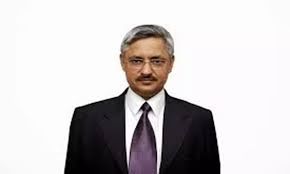
NEW DELHI — In a move signaling a major overhaul of India’s dental healthcare landscape, the Ministry of Health and Family Welfare appointed Dr. Sanjay Tiwari as the Chairperson of the National Dental Commission (NDC) on February 4, 2026. Dr. Tiwari, a distinguished endodontist and long-time academic leader, takes the helm at a critical juncture as the nation transitions from the decades-old Dental Council of India (DCI) to a modern regulatory framework designed to tackle a burgeoning oral health crisis.
The appointment comes under the mandate of the National Dental Commission Act, 2023, which seeks to democratize dental education and improve the quality of oral care for over 1.4 billion people. With nearly 90% of the Indian population suffering from dental issues but only 9% seeking regular professional help, Dr. Tiwari’s leadership is expected to bridge the gap between clinical excellence and public accessibility.
A Legacy of Academic and Clinical Excellence
Dr. Tiwari’s ascent to the chairpersonship is backed by 34 years of experience in restorative dentistry and endodontics. An alumnus of the prestigious King George Medical University (KGMU), Lucknow, he has spent over two decades as the Principal of the Post Graduate Institute of Dental Sciences (PGIDS) in Rohtak.
His credentials go beyond administration; Dr. Tiwari is a prolific researcher with over 80 published papers and a focus on cutting-edge fields like tooth tissue engineering and regenerative endodontics. As a Commonwealth Fellow at King’s College London, he brings a global perspective to a domestic system often criticized for being outdated.
“Dr. Tiwari has guided and mentored numerous postgraduate students over the years, earning recognition as both an academician and a clinician of repute,” noted Rahul Garg, Deputy Director at the National Health Mission, Panchkula. This blend of clinical “boots-on-the-ground” experience and high-level academic oversight is what the Ministry hopes will revitalize the profession.
Out With the Old: Understanding the NDC Framework
The National Dental Commission is not merely a name change for the DCI; it represents a fundamental shift in how dental medicine is governed in India. By repealing the Dentists Act of 1948, the government has established four distinct pillars of governance:
-
Under-Graduate and Post-Graduate Dental Education Board: Responsible for standardizing curricula across all dental colleges.
-
Dental Assessment and Rating Board (DARB): A transparency-focused body that will rate institutions, helping students and parents make informed choices.
-
Ethics and Dental Registration Board (EDRB): Tasked with maintaining a National Dental Register and enforcing ethical conduct.
-
National Exit Test (NExT-Dental): A standardized licensing exam for all BDS graduates, ensuring that a dentist in a rural clinic meets the same competency standards as one in a metropolitan hospital.
Addressing India’s Oral Health Crisis
The urgency of these reforms is underscored by staggering statistics. According to recent public health data, the average Indian suffers from six different dental diseases simultaneously, ranging from tooth decay (48%) to attrition (46%).
“We are seeing a silent epidemic,” says one public health expert. “With over 90% of children suffering from dental caries and a massive portion of the adult population dealing with periodontal (gum) disease, oral health can no longer be treated as an elective luxury.”
The correlation between oral health and systemic conditions—such as diabetes and cardiovascular disease—makes these reforms a matter of national longevity. Dr. Tiwari’s background in endodontics (root canal and internal tooth health) is particularly relevant, as advanced decay remains one of the leading causes of tooth loss in rural India, where access to specialized care is historically low.
Challenges and Counterarguments
Despite the optimism, the road ahead for the NDC is paved with hurdles. Critics within the Indian Dental Association (IDA) and various academic circles have raised concerns regarding:
-
Centralization of Power: Some fear that the transition might lead to bureaucratic redundancy, mirroring early growing pains seen in the National Medical Commission (NMC).
-
Financial Barriers: While the NDC aims to regulate fees in private institutions, the costs associated with implementing new technology and standardized exams could inadvertently trickle down to students.
-
Rural Outreach: 78% of dental professionals surveyed believe government funding for community-based programs is “very important,” yet urban centers still hold the vast majority of dental clinics.
Dr. Sowmya K R, a former dental journal editor, noted that while the undergraduate community is increasingly supportive of standardized testing like NExT, the implementation must be “seamless to avoid disrupting the careers of thousands of qualifying students.”
What This Means for You: The Patient Perspective
For the average citizen, the appointment of Dr. Tiwari and the activation of the NDC should translate into three tangible benefits:
-
Affordability: Increased oversight of private college fees may make dental education more accessible, eventually lowering the cost of private dental care.
-
Quality Assurance: The DARB ratings will allow patients to verify the quality of the institution where their dentist was trained.
-
Preventive Focus: The NDC’s mandate includes a shift toward preventive care. Public health experts hope to see a rise in the 44.7% of Indians who currently brush twice daily.
Practical Advice for Readers:
-
Check Registration: Once the National Dental Register is fully online, ensure your practitioner is NDC-certified.
-
Focus on Prevention: Don’t wait for pain. 91% of dental visits in India are for emergencies; regular cleanings can prevent the systemic inflammation linked to heart disease.
-
Tobacco Cessation: With tobacco use being a primary driver of oral cancer in India, the NDC is expected to ramp up anti-tobacco advocacy within dental clinics.
Looking Ahead
The tenure of Dr. Sanjay Tiwari will likely be defined by how effectively he can transition the NDC from a regulatory body to a public health catalyst. By integrating dental health into primary healthcare and standardizing the “NExT” generation of dentists, India may finally move toward a future where a healthy smile is a right, not a privilege.
Medical Disclaimer: This article is for informational purposes only and should not be considered medical advice. Always consult with qualified healthcare professionals before making any health-related decisions or changes to your treatment plan. The information presented here is based on current research and expert opinions, which may evolve as new evidence emerges.
References
https://medicaldialogues.in/news/health/doctors/dr-sanjay-tiwari-appointed-as-chairperson-of-national-dental-commission-164409