 0
0
 0
0
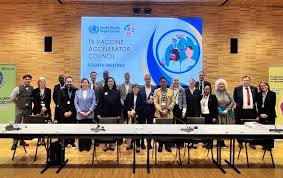
GENEVA — In a quiet but high-stakes gathering on the sidelines of the World Health Assembly, global health ministers and international delegates solidified a countdown that could break a hundred-year medical stalemate. The Tuberculosis (TB) Vaccine Accelerator Council convened for its fourth formal meeting on May 19, 2026, mapping out the final infrastructure needed to deploy the world’s first highly effective adult and adolescent TB vaccines. With critical Phase 3 efficacy data officially on track to emerge in 2028, the council sent a clear message to the international community: the science is arriving, but global healthcare systems are not yet ready for the rollout.
The meeting, chaired by the World Health Organization (WHO), assembled an influential coalition of high-burden nations—including Brazil, Indonesia, Kenya, Pakistan, the Philippines, and South Africa—alongside financial heavyweights like the Gates Foundation, the World Bank, Gavi, and the Wellcome Trust. The urgent focus of the session was transitioning from clinical development to actual implementation, ensuring that the moment a vaccine is approved, factories can produce it and local clinics can distribute it without delay.
The 100-Year Gap and the Adult Pipeline
To understand why this meeting marks a monumental shift, one must look at the glaring gap in our current medical toolkit. The only existing vaccine for tuberculosis is the Bacille Calmette-Guérin (BCG) vaccine, which was developed in 1921. While BCG is highly effective at preventing severe, disseminated forms of TB in infants and young children, its protective benefits fade dramatically by adolescence.
Critically, BCG offers highly variable and often negligible protection against pulmonary TB in adults and adolescents—the exact population responsible for over 90% of global transmission.
“Tuberculosis remains the world’s leading infectious killer, claiming more than one million lives annually and sickening an estimated 10 million more,” notes Dr. Helen Evans, an independent infectious disease epidemiologist not involved with the council. “We cannot treat our way out of this epidemic with antibiotics alone, especially with drug-resistant strains on the rise. A vaccine that stops transmission in adults is our only true exit strategy.”
Currently, the global clinical pipeline features several frontrunner candidates advancing through late-stage trials. These include M72/AS01E (a subunit vaccine backed by the Gates Medical Research Institute and GSK) and MTBVAC (a live-attenuated vaccine derived from a human TB strain). Early data published in The Lancet Global Health have shown that these candidates spark robust, long-lasting immune responses in adults far outperforming the century-old BCG.
Three Core Breakthroughs from the Council
Building on the foundation of the inaugural TB Vaccine Accelerator Forum held in Geneva this past April, the Council reviewed the concrete progress made by its specialized working groups:
-
Establishment of the Readiness Working Group: A newly officialized Working Group on Country Readiness, Advocacy, and Community Partnership will act as the bridge between global laboratories and rural clinics, preparing communities for widespread adult immunization.
-
Regionalized Manufacturing: Rather than relying on a few centralized Western factories, the Council actively pushed for “regionally-diversified manufacturing.” By building local production plants in South America, Africa, and Southeast Asia, the WHO aims to prevent the catastrophic supply hoarding seen during the early days of the COVID-19 pandemic.
-
Integrated Public Health Evaluation: The working groups are constructing economic and epidemiological models to show exactly how introducing an adult vaccine will reduce the strain on local diagnostic tools and hospitals, proving the long-term cost-effectiveness of the intervention.
The Financial and Logistical Hurdles
Despite the optimism surrounding the 2028 data timeline, major roadblocks remain. The foremost is financing. While international philanthropy from organizations like the Gates Foundation keeps clinical trials moving, the Council emphasized that long-term sustainability requires high-burden countries to substantially elevate “domestic financing” as a national priority.
Transitioning from vaccinating infants (via standard pediatric wellness visits) to vaccinating hundreds of millions of adults and adolescents poses a historic logistical nightmare.
| Challenge Area | Logistical Prerequisite | Public Health Impact |
| Cold Chain Logistics | Ultra-low temperature infrastructure in developing regions | Prevents vaccine degradation prior to delivery |
| Target Delivery | Creating non-pediatric delivery networks (schools, workplaces) | Reaches the active transmission reservoir |
| Public Acceptance | Extensive community education to combat vaccine hesitancy | Ensures adequate herd immunity thresholds |
Limitations and Counterarguments
While global health leaders are understandably eager, independent experts urge caution regarding the 2028 timeline. Efficacy data “on track for 2028” does not mean a syringe in an arm by 2028.
A primary scientific limitation is that researchers still lack universally accepted “correlates of protection”—clear biological markers in a blood test that prove an individual is immune to TB. Without these markers, scientists cannot fast-track approvals; they must wait years to monitor large populations in Phase 3 trials to see who naturally contracts the disease and who does not.
Furthermore, a vaccine that proves 50% effective in a controlled clinical trial may show lower efficacy in real-world environments where malnutrition, HIV co-infection, and extreme poverty are prevalent. If a vaccine requires two doses spaced months apart, real-world compliance could plummet, limiting its public health impact.
What This Means for Global Citizens
For the general public, the steps taken in Geneva signify a slow but monumental shift in global health security. Tuberculosis is often mistakenly viewed as a disease of the past or one restricted to isolated pockets of the world. In reality, it is an airborne pathogen that ignores geographic borders.
If the Council’s efforts to establish regional manufacturing and secure local funding succeed, the resulting infrastructure could finally eliminate an ancient killer, changing the landscape of respiratory medicine forever. For now, the global medical community watches and waits for 2028.
References
Study Citations & Portals
-
World Health Organization (WHO). (2026). The TB Vaccine Accelerator Council meets for the fourth time. Departmental Update, published May 20, 2026.
-
Tuberculosis Vaccine Accelerator Forum Proceedings. (April 27–28, 2026). WHO Headquarters, Geneva, Switzerland.
Medical Disclaimer: This article is for informational purposes only and should not be considered medical advice. Always consult with qualified healthcare professionals before making any health-related decisions or changes to your treatment plan. The information presented here is based on current research and expert opinions, which may evolve as new evidence emerges.