 0
0
 0
0
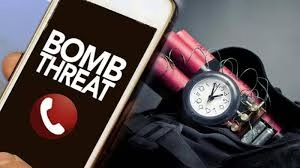
Bomb threat email sent to Kozhikode Government Medical College Hospital (GMCH) earlier this week led to intensive police searches, tightened security checks, and round‑the‑clock surveillance across the campus, even as authorities later assessed the threat as a hoax but kept vigilance high. The incident has again highlighted how bomb threats targeting hospitals can disrupt patient care, strain resources, and test disaster preparedness systems in India’s health facilities.medicaldialogues+2
What happened at Kozhikode Medical College
Authorities at Kozhikode GMCH received a threatening email on January 7 at the official address of the medical college principal, claiming that three bombs had been planted in the hospital premises and calling for immediate evacuation before a specified time. The email, sent from an ID reportedly traced to Tamil Nadu, mentioned “three RDX IED bombs” and demanded that people be moved out before 1:35 p.m., prompting rapid mobilisation of police and hospital security teams.asianetnews+2
Police deployed the Bomb Detection and Disposal Squad, who conducted multiple rounds of searches across key areas, including the outpatient department (OPD), parking zones, and other high‑footfall locations, but no suspicious objects were found during several hours of inspection. Entry and exit points for patients and caregivers were brought under strict monitoring, with uniformed and plainclothes officers increasing checks at gates and within the campus while assuring the public there was no need for panic.malayalam.news18+2
Security response and ongoing investigation
Following preliminary investigation, police officials described the threat as lacking evidence of an actual device but maintained heightened security, indicating that periodic inspections and strict monitoring would continue for some time. Additional security guards were instructed to remain on high alert, screening procedures at the OPD were intensified, and 24‑hour surveillance was introduced to reduce the risk of any “untoward incident.”keralakaumudi+1
Technical teams from Kerala and Tamil Nadu’s hi‑tech crime inquiry units have been roped in to trace the origin of the email, which is believed to have been sent from an account linked to Tamil Nadu, though investigators have not yet publicly disclosed a confirmed suspect or motive. Local media reports noted that similar bomb threats have recently targeted other hospitals in Indian cities, including facilities in Delhi and Mumbai, suggesting a worrying pattern of hoax threats that still demand full‑scale emergency responses.medicaldialogues+2
Why hospital bomb threats matter for public health
Even when they are eventually deemed hoaxes, bomb threats to hospitals can significantly disrupt health services by delaying consultations, interrupting procedures, and diverting staff and security resources away from routine care. The Kozhikode incident unfolded in a large government teaching hospital that typically manages high patient load in OPD and emergency departments, meaning that any evacuation or prolonged search operation could have serious implications for people seeking urgent care.nidm+1
National Disaster Management Authority (NDMA) guidelines on hospital safety emphasise that hospitals must remain “safer and functional” during emergencies and advocate detailed Hospital Disaster Management Plans (HDMPs), including protocols for crowd control, evacuation, securing access points, and coordination with law enforcement. These guidelines specify that every hospital should have a dedicated Hospital Disaster Management Committee and a trained security team responsible for prioritising security needs, identifying vulnerable areas, and defining thresholds for involving police in threats such as bomb scares.ndma+1
Expert views on safety, communication, and preparedness
Emergency medicine specialists and hospital safety experts who were not involved in the Kozhikode response say that bomb threats must always be treated as real until proved otherwise, but stress the importance of clear risk communication to avoid unnecessary panic. For example, Indian emergency preparedness experts working with disaster management training programs often recommend that hospitals designate a command centre and a standard communication protocol so that staff, patients, and visitors receive timely, consistent updates during security incidents.nidm+1
Security professionals also highlight that drills and simulations are critical: NDMA hospital safety guidance calls for regular training and periodic disaster drills to test and refine hospital plans, including scenarios like bomb threats, fires, and mass casualty events. Independent healthcare quality auditors in India similarly advise hospitals to integrate bomb threat responses into broader emergency preparedness, ensuring that staff know how to act quickly while maintaining patient confidentiality, safe evacuation routes, and continuity of essential services such as critical care and neonatal units.ndma+1
Digital threats and misuse of technology
The Kozhikode threat arrived via email, underscoring the growing role of digital channels in security incidents affecting healthcare facilities. Law enforcement agencies increasingly rely on cybercrime units and “hi‑tech” investigation cells to track IP addresses, account histories, and digital trails when dealing with anonymous or pseudonymous threat messages.medicaldialogues+1
Cybersecurity researchers and law‑enforcement advisors note that email‑based threats can often be routed through multiple servers or spoofed accounts, making attribution complex and time‑consuming, even when early technical leads suggest a particular state or region. This complexity is one reason investigators typically avoid releasing detailed technical findings too early, while still reassuring the public that they are working to identify and, where appropriate, prosecute those responsible under relevant sections of criminal and IT laws.ndma+2
Practical implications for patients and hospital visitors
For patients and families, incidents like the Kozhikode bomb scare highlight the importance of staying calm, following instructions from hospital staff and security, and avoiding crowding at entry points or in OPD corridors during security checks. Public health communication specialists advise that hospitals use multiple channels—such as public address systems, notice boards, official social media accounts, and local media briefings—to provide clear information about what is happening and whether services are temporarily restricted or relocated.medicaldialogues+2
Experts in risk communication also caution against spreading unverified messages or rumours about bomb threats on social media, as this can amplify fear and potentially interfere with police operations. For individuals who experience significant anxiety after such events, mental health professionals recommend seeking support from counsellors or helplines, especially if fear of visiting hospitals begins to interfere with needed medical care.nidm+1
Balancing vigilance with avoiding panic
Kerala police authorities publicly stated that there was no reason for the public to be unduly alarmed, even as they continued comprehensive searches of the medical college campus after the threat email. This approach—acknowledging the seriousness of the threat while emphasising the absence of any suspicious findings—aligns with international best practices in risk communication, which encourage transparency without sensationalism.asianetnews+3
However, security analysts note that repeated hoax threats can create “alert fatigue,” potentially leading staff or the public to downplay future alerts, which makes adherence to structured protocols and regular drills even more critical. Health policy observers argue that high‑profile incidents like the Kozhikode scare should be used as opportunities to review and strengthen hospital safety systems, including investments in surveillance infrastructure, staff training, and integrated coordination between hospitals, police, and disaster management agencies.ndma+1
Limitations, unanswered questions, and next steps
As of the latest reports, investigators had not announced any arrests or definitive conclusions about the identity or motives of the person or group behind the Kozhikode threat email. Details such as whether the same source has been linked to threats against other hospitals, or whether the message was part of a broader pattern of coordinated hoax alerts, remain unclear and will depend on ongoing forensic and cyber investigations.medicaldialogues+2
Another limitation is the lack of publicly available data on the cumulative impact of bomb threats on hospital productivity, patient outcomes, and staff mental health in India, although international studies indicate that repeated security scares can increase stress and burnout among healthcare workers. Policy experts suggest that national‑level reporting systems and research initiatives could help quantify these effects and guide targeted interventions, ranging from staff psychosocial support to infrastructure improvements and legislative deterrents against hoax threats.ndma+2
Medical Disclaimer: This article is for informational purposes only and should not be considered medical advice. Always consult with qualified healthcare professionals before making any health-related decisions or changes to your treatment plan. The information presented here is based on current research and expert opinions, which may evolve as new evidence emerges.
References