 0
0
 0
0
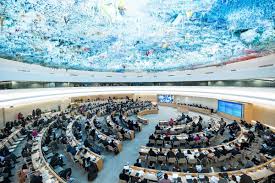
ISTANBUL, TURKEY — The World Health Organization (WHO) urged parliamentarians from around the world to step up leadership on global health during the 152nd Inter-Parliamentary Union (IPU) Assembly held in Istanbul from April 15–19, 2026. Addressing a gathering of more than a thousand lawmakers and parliamentary staff, the WHO called for the rapid enactment of stronger national laws, sustainable financing, and the swift translation of international treaties into domestic action. The global health body emphasized that such legislative actions are vital to safeguarding international health security and accelerating progress toward Universal Health Coverage (UHC).
The high-level convening arrives at a critical juncture for global health governance, as nations navigate the protracted negotiations of the landmark Pandemic Agreement and grapple with the chronic underfunding of primary healthcare systems.
Key Developments: Translating Global Commitments to National Law
The 152nd IPU Assembly served as a major platform for the WHO to press for deeper parliamentary engagement on pressing global health priorities. Central to the discussions was the operationalization of the renewed WHO-IPU partnership. Formally extended through a five-year Memorandum of Understanding (MoU) signed in 2024, the collaboration anchors joint efforts around three long-standing pillars: achieving UHC, bolstering global health security, and advancing health promotion.
During the five-day assembly, the WHO and its partners introduced a heightened emphasis on sustainable financing and the domestic ratification processes required for the upcoming Pandemic Agreement. Furthermore, the Assembly echoed urgent calls from the Partnership for Maternal, Newborn & Child Health (PMNCH). The coalition implored lawmakers to prioritize the health of women, children, and adolescents, framing these foundational health services as indispensable components of global peace, economic stability, and sustainable development.
Expert Perspectives: The Levers of Legislative Power
In recorded remarks and strategic communications connected to the Assembly, WHO leadership underscored that international health treaties remain inert without domestic legislative intervention. Because multilateral agreements do not automatically become law in most jurisdictions, parliamentarians are the central gatekeepers responsible for translating global accords into enforceable national policies, dedicated budgets, and rigorous statutory oversight.
Independent health governance experts not directly involved in the drafting of the accords note that parliaments possess unique structural levers—specifically legislation, budget approval, oversight, and constituency representation—that can drastically accelerate national preparedness.
“Parliaments hold the purse strings and the legislative authority required to transform abstract global health goals into reality,” explained an independent health policy analyst reviewing the assembly’s proceedings. “However, these structural levers are only as effective as the political will, technical capacity, and sustained resources backing them. Without these three components, statutory frameworks risk becoming empty promises.”
Context and Background: Institutionalizing Health in Politics
The Inter-Parliamentary Union is the global organization of national parliaments, functioning as a vital bridge between international diplomacy and domestic lawmaking. Over recent years, successive IPU Assemblies have evolved into regular venues for the WHO to brief lawmakers on technical accountability frameworks and structural health reforms.
Rather than treating health as a sporadic agenda item, the WHO-IPU collaboration has successfully institutionalized health within the parliamentary framework. Previous assemblies established permanent structures, including the IPU Advisory Group on Health and a permanent IPU Committee on Health. These entities ensure that technical health data, demographic trends, and epidemiological insights are continuously integrated into parliamentary oversight, sexual and reproductive health rights (SRHR) legislation, and climate-resilient health initiatives.
Implications for Public Health and the Daily Lives of Citizens
Enhanced parliamentary involvement has direct, tangible benefits for public health infrastructure. When lawmakers actively participate in health governance, the time elapsed between an international scientific consensus and national implementation narrows significantly.
For the general public, this efficiency translates into robust legal protections, dependable vaccine delivery networks, and the uninterrupted continuity of essential medical services during crises. To illustrate, consider a scenario where a national parliament codifies a law guaranteeing dedicated primary care funding alongside a transparent, non-divertible budget line for epidemic preparedness:
[Parliament Passes Preparedness Law]
                │
                ▼
[Guaranteed Primary Care & Outbreak Funding]
                │
                ▼
┌───────────────────────┼───────────────────────┐
│                       │                       │
▼                       ▼                       ▼
[Predictable Vaccine    [Workforce Training     [Resilient Supply-
    Procurement]            & Retention]          Chain Upgrades]
This legal and fiscal predictability effectively eliminates the bureaucratic delays and emergency funding debates that cost human lives during sudden disease outbreaks. Furthermore, prioritizing health inside national budgets shields vulnerable demographics—such as pregnant women, newborns, and adolescents—whose access to clinical services is traditionally the first to erode during economic or geopolitical crises.
Limitations, Divergent Priorities, and Counterarguments
Despite the optimistic outlook presented in Istanbul, health governance experts point out significant systemic limitations. Parliamentary independence and technical capacity vary widely across the globe. While some nations feature well-resourced legislative committees staffed by scientific advisors, many parliaments face severe resource constraints, high political turnover, or executive pressures that undermine effective independent oversight. Consequently, any guidance issued by the WHO and IPU must be heavily adapted to fit nuanced national contexts.
Additionally, critics and political analysts note that health policy is frequently vulnerable to intense domestic political debates. Friction regarding national sovereignty, competing domestic priorities, and short-term electoral incentives can severely delay the ratification of global instruments like the Pandemic Agreement. If short-term political gains outweigh long-term preventative planning, funding may be systematically diverted away from primary healthcare infrastructure toward more visible, immediate projects.
Ultimately, while international bodies like the WHO and IPU can provide robust technical tools and high-level convening power, sustained public health impact relies entirely on domestic follow-through by local governments, ministries of finance, civil society, and independent media.
Practical Takeaways: How Stakeholders Can Drive Action
The outcomes of the 152nd IPU Assembly provide clear avenues of action for citizens, healthcare professionals, and media advocates alike:
-
For Health-Conscious Citizens: Individuals can directly utilize parliamentary channels—such as writing to constituent representatives, launching targeted petitions, and participating in public legislative hearings—to demand that local lawmakers prioritize primary healthcare financing and emergency preparedness.
-
For Medical Professionals and Civil Society: Healthcare practitioners should view parliamentary committees as strategic avenues for systemic change. By translating complex, clinical data into actionable legislative proposals and clear budgetary priorities, medical professionals can significantly increase the likelihood that technical solutions receive statutory funding.
-
For Journalists and Communicators: The commitments outlined in the WHO-IPU partnership offer an objective roadmap. Journalists can track whether their national representatives are executing the global promises made regarding Universal Health Coverage and pandemic resilience.
References
Study & Institutional Citations
-
World Health Organization. (2026, July 10). WHO at the 152nd IPU Assembly: strengthening parliamentary leadership for global health. WHO News Release.
Medical Disclaimer: This article is for informational purposes only and should not be considered medical advice. Always consult with qualified healthcare professionals before making any health-related decisions or changes to your treatment plan. The information presented here is based on current research and expert opinions, which may evolve as new evidence emerges.