 0
0
 0
0
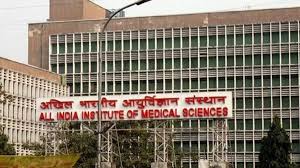
NEW DELHI — The Supreme Court of India pulled up the acting director of the All India Institute of Medical Sciences (AIIMS), New Delhi, issuing a stern reminder that administrative compliance is just as vital as clinical excellence. The apex court initiated contempt proceedings against the head of India’s premier medical institution following what it termed a “casual” response to a direct judicial order. While the contempt notice was ultimately dropped after an unconditional apology, the high-profile dressing-down has reignited a critical conversation about institutional accountability, medico-legal procedures, and the public trust tethered to major healthcare systems.
The confrontation stemmed not from a medical malpractice dispute, but from an administrative lapse during a court-monitored matrimonial case involving a DNA parentage test. The Supreme Court had explicitly directed the AIIMS Director to personally explain why the forensic report faced delays. Instead of a direct explanation from the acting chief, AIIMS submitted an affidavit filed by a deputy secretary. The bench, visibly displeased by the delegation of a personal directive, expressed shock at the institution’s handling of judicial orders before the acting director appeared in person to resolve the standoff.
The Matrimonial Dispute and the Role of Forensic DNA
The underlying case centers on a sensitive matrimonial dispute where the court required objective scientific data to establish paternity. The Supreme Court took formal note of findings from the AIIMS Department of Forensic Medicine and Toxicology, which ultimately confirmed a biological father-child relationship by matching the DNA profiles of the parties involved.
In modern jurisprudence, DNA testing serves as the gold standard for resolving parentage questions, moving family law away from assumptions and toward empirical certainty. However, as forensic experts point out, the validity of a DNA test relies on more than just laboratory precision. It demands an ironclad chain of custody, meticulously documented timelines, and absolute transparency from the testing facility to the courtroom. In this instance, while the underlying science was never in question, the bureaucratic pipeline delivering that science broke down.
Institutional Responsibility vs. Clinical Excellence
The Supreme Court’s harsh language was trained squarely on administrative process and executive responsibility, rather than the clinical care or treatment quality provided by AIIMS. Even so, health system experts emphasize that administrative bottlenecks in public hospitals have real-world consequences.
A senior doctor from a prominent government hospital, speaking on the condition of anonymity, explained the delicate balance public medical centers must maintain:
“In a massive public health ecosystem like AIIMS, doctors are managing thousands of critical patients daily. However, medico-legal cases operate on strict legal timelines. A court order isn’t an invitation for administrative delegation; it is a mandatory directive. Small procedural lapses, like passing a personal explanation down to a deputy, can quickly balloon into major institutional failures that erode public confidence.”
Health-law analysts note that premier public institutions frequently find themselves balancing intense clinical demands with highly sensitive legal documentation. When administrative systems treat court deadlines casually, it delays justice for patients and litigants, shifting the public perception of the institution from a reliable sanctuary to a sluggish bureaucracy.
Public Health Implications: Trust in the System
For the general public, this development does not alter everyday medical guidance, nor does it cast doubt on the diagnostic accuracy of AIIMS laboratories. It does, however, highlight the infrastructure supporting public health logistics.
Large-scale public health institutions do not exist in a vacuum; they serve as critical pillars for the state, frequently providing forensic pathology, toxicological analysis, and expert medical testimonies that decide legal destinies. When the executive leadership of such an institution faces judicial rebuke, it risks casting a shadow over the thousands of healthcare professionals working under its banner. Experts argue that robust public health systems require an equal measure of clinical precision and administrative discipline to maintain long-term public trust.
Limitations of the Dispute and Balanced Perspective
It is critical to contextualize the Supreme Court’s actions to avoid reactionary conclusions. This legal friction involved one specific compliance issue tied to a single court matter and focused on the acting director’s filing protocol. It does not reflect a systemic failure of the medical, surgical, or diagnostic services that AIIMS provides to millions of citizens annually.
Furthermore, legal experts urge caution when interpreting secondary news reports and summaries, which can occasionally vary in emphasis or terminology. The core facts remain clear: the judiciary took issue with procedural non-compliance, not the validity of the forensic science or the integrity of the medical staff. AIIMS remains an elite center for medical excellence, even as it navigates these administrative growing pains.
References
-
-
Procedural Accountability: Why the Supreme Court’s Rebuke of the AIIMS Chief Matters for Public Health Systems
-
Medical Disclaimer: This article is for informational purposes only and should not be considered medical advice. Always consult with qualified healthcare professionals before making any health-related decisions or changes to your treatment plan. The information presented here is based on current research and expert opinions, which may evolve as new evidence emerges.