 0
0
 0
0
BOSTON — A collaborative research team has developed a highly sensitive, paper-based strip test capable of detecting mosquito-borne viruses within minutes without relying on specialized laboratory equipment. The breakthrough, detailed in a study published in Targetome, utilizes a novel molecular amplification technique to provide a highly visible color signal at exceptionally low viral concentrations. While conventional diagnostic tools often require days of lab processing, this field-friendly platform could drastically shorten the time between symptom onset and public health response, offering a vital resource for remote clinics and outbreak response teams worldwide.
Amplifying the Signal: How the Test Works
The newly developed platform introduces an advanced methodology known as a multisite bridging-mediated lateral flow immunoassay (mbLFIA). To achieve high sensitivity without the costly thermal cyclers required for traditional testing, the system relies on an enzyme-free process called catalytic hairpin assembly. This mechanism builds multi-binding sites onto the target viral genetic material, creating a structural framework that easily binds to gold-platinum nanoparticles. These specialized nanoparticles amplify the colorimetric signal, making a positive result visible to the naked eye even when very little virus is present in the sample.
Using the chikungunya virus (CHIKV) as their model target, the researchers demonstrated that this enhancement process drastically improved the test’s lower detection threshold. The visual detection limit dropped to 2 pmol·L⁻¹, widening the functional detection window significantly compared to the 20 to 10⁴ pmol·L⁻¹ range of the unenhanced version.
Furthermore, the assay demonstrated robust specificity. When tested against a battery of clinically similar arboviruses—including Zika, dengue, West Nile, yellow fever, Japanese encephalitis, and Getah viruses—the test maintained a distinct signal exclusively for chikungunya. In a validation phase evaluating 36 suspected CHIKV mouse serum samples, the strip test achieved 100% concordance, sensitivity, and specificity when compared directly against the laboratory gold standard, Reverse Transcription Polymerase Chain Reaction (RT-PCR).
Why Rapid Field Diagnostics Matter
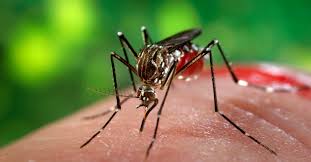
Mosquito-borne illnesses represent a massive and growing burden on global healthcare systems. According to the World Health Organization (WHO), chikungunya alone caused 445,271 suspected and confirmed cases alongside 155 reported deaths across 40 countries in the first nine months of 2025. Because arboviruses like chikungunya, dengue, and Zika are transmitted by the same Aedes mosquito vectors and present with near-identical early symptoms—such as acute fever, severe joint pain, and rash—clinical misdiagnosis is frequent in regions where multiple viruses co-circulate.
“Distinguishing between these viruses early in the course of illness is critical for patient management,” explains Dr. Elena Vance, an infectious disease specialist at the Global Health Institute, who was not involved in the study. “For instance, clinical protocols require providers to definitively rule out dengue before recommending aspirin or nonsteroidal anti-inflammatory drugs (NSAIDs) for joint pain. If a patient actually has dengue, these medications can drastically elevate the risk of severe, life-threatening hemorrhages.”
Currently, definitive differentiation requires RT-PCR testing, which depends heavily on stable electricity, expensive reagents, and highly trained personnel—resources that are often unavailable in rural or resource-limited environments. A portable, affordable paper strip test allows frontline workers, border ports, and local clinics to rapidly identify cases. This rapid identification accelerates vector-control measures, enabling public health teams to target mosquito spraying and containment strategies before local transmission escalates into a widespread epidemic.
A Growing Shift Toward Decentralized Testing
This research builds upon a continuous technological shift toward accessible molecular diagnostics. The development follows a 2024 study published in Viruses, which introduced an integrated, “sample-in result-out” device utilizing Reverse Transcription Loop-Mediated Isothermal Amplification (RT-LAMP) coupled with lateral flow detection. That device managed to detect chikungunya within approximately 40 minutes at a sensitivity threshold of 598.46 copies/mL.
The introduction of the newer mbLFIA platform highlights an evolving trend where diagnostic tools are becoming increasingly autonomous, removing mechanical heating steps and enzyme dependencies to make testing truly field-ready.
Current Limitations and the Path to Clinical Use
While the engineering behind the mbLFIA platform is highly promising, independent experts urge caution before anticipating immediate widespread deployment. The primary limitation rests on the size of the validation cohort; the study proved its 100% sensitivity using only 36 suspected mouse serum samples. Fulfilling the rigorous safety standards of human clinical care requires large-scale validation trials involving diverse human patient populations within actively endemic regions.
Operational hurdles also remain a factor when transitioning from a controlled laboratory environment to real-world outbreak settings. External variables such as extreme tropical heat, high humidity, variable sample collection quality, and supply chain disruptions can heavily impact the stability and shelf-life of paper-based chemical strips. Furthermore, public health frameworks will need to establish clear reporting pipelines so that positive field results are seamlessly communicated to regional epidemiological databases.
What This Means for the Public
For the general consumer, this breakthrough indicates that diagnostic technology is steadily catching up to the speed of viral transmission, though home-based testing kits for these conditions are not yet hitting pharmacy shelves.
If you develop a sudden fever, debilitating joint pain, rash, severe headache, or eye redness following travel to a tropical region or after known mosquito exposure, you must seek a professional medical evaluation immediately. Because symptoms alone cannot reliably separate chikungunya from the more dangerous dengue virus, self-treatment with over-the-counter pain relievers should be avoided until a healthcare provider has evaluated the illness.
In the absence of a widely available vaccine or instant cure, primary protection still relies on aggressive vector avoidance. Public health agencies advise individuals to consistently use EPA-registered insect repellents, wear long-sleeved clothing, ensure window screens are intact, and routinely empty containers of standing water around the home where mosquitoes lay their eggs.
Reference Section
-
“New portable strip test accurately detects mosquito-borne viruses.” News-Medical. Published July 16, 2026.
Medical Disclaimer: This article is for informational purposes only and should not be considered medical advice. Always consult with qualified healthcare professionals before making any health-related decisions or changes to your treatment plan. The information presented here is based on current research and expert opinions, which may evolve as new evidence emerges.