 0
0
 0
0
GENEVA — Cancer is no longer a rare disease affecting isolated segments of the population; instead, it has transformed into a universal reality that will touch almost every person on the planet either directly or through a loved one. In a stark global update, the World Health Organization (WHO) and its specialized research arm, the International Agency for Research on Cancer (IARC), warned that the disease remains one of the world’s leading causes of death. Amid rising case counts, persistent care inequities, and a projected surge in diagnoses, international health authorities are urging a fundamental shift toward aggressive public health prevention strategies, revealing that nearly 40% of all global cancer cases are entirely preventable.
The new figures outline a escalating global crisis. According to the updated WHO data, nearly 10 million people lost their lives to cancer in 2024, cementing its status as one of the top global killers. The most frequently diagnosed malignancies worldwide remain lung, breast, colon and rectum, and prostate cancers.
A related analysis published by the IARC in CA: A Cancer Journal for Clinicians calculated that roughly 1 in 5 people will develop cancer during their lifetime. Furthermore, the epidemiological modeling shows that approximately 1 in 9 men and 1 in 12 women will die from the disease.
Moving Beyond Clinical Limits to Public Health Action
This lifetime-risk estimate forms the core of the WHO’s warning: cancer has expanded to the point where it causes nearly one in six deaths globally. The data show that the disease is not merely a clinical issue managed in isolation inside oncology wards, but a profound public health and social crisis.
Long-term projections paint a challenging picture for global health infrastructure. A landmark IARC-led analysis previously tracked 20 million new cancer cases and 9.7 million deaths, projecting that annual new cases could rise to 35 million by 2050 if current trajectories continue. The WHO’s updated assessment emphasizes that the burden falls unevenly, with cancer-related infections like human papillomavirus (HPV) and hepatitis B and C continuing to account for a disproportionately large share of cases in lower-income settings.
However, public health experts stress that these rising numbers should not be interpreted as an inevitability. Rather, the statistical surge underscores precisely where public health interventions can achieve the greatest impact. The new data shows that up to four in ten cancer cases could be prevented globally through coordinated action on modifiable behavioral, environmental, and infectious risk factors.
Specifically, the newer analysis highlights that 37% to 38% of all new cancer cases are linked to known, preventable causes.
Modifiable Risk Factors and Preventable Triggers
The landmark study marks the first time that international authorities have comprehensively mapped global and national cancer burdens across 30 modifiable risks simultaneously, including lifestyle factors alongside a expanded roster of nine cancer-causing infections. The data reveals a significant gender disparity in preventable risks: the burden of preventable cancer is substantially higher in men (45% of new cases) than in women (30% of new cases).
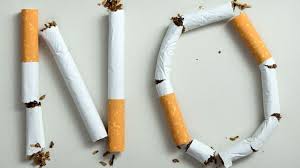
Tobacco use remains the leading preventable cause of cancer globally, responsible for 15% of all new cases worldwide (including 23% of all cases in men and 6% in women). Following tobacco, chronic infections contribute to 10% of the global burden, while alcohol consumption accounts for 3%.
“This is the first global analysis to show how much cancer risk comes from causes we can prevent,” noted Dr. André Ilbawi, WHO Team Lead for Cancer Control and an author of the study. “By examining patterns across countries and population groups, we can provide governments and individuals with more specific information to help prevent many cancer cases before they start.”
The research identifies three specific malignancies—lung, stomach, and cervical cancers—as representing nearly half of all preventable cancer cases globally. Lung cancer remains heavily tied to smoking and ambient air pollution; stomach cancer is frequently driven by Helicobacter pylori bacterial infections; and cervical cancer remains overwhelmingly linked to high-risk strains of HPV.
Expert Perspectives and Regional Realities
Independent specialists emphasize that translating these population-level statistics into daily life requires balancing structural public policy with personal health literacy.
“When people read that 1 in 5 individuals will get cancer, it can easily breed a sense of fatalism,” says Dr. Elena Rostova, an independent medical epidemiologist not involved in the WHO report. “But the real story here is the 40% that we can actively change. We have remarkably effective tools—like the HPV vaccine, which can virtually eliminate cervical cancer, and strict tobacco regulations—that simply aren’t being scaled evenly across the globe.”
The IARC analysis highlights that the distribution of preventable cancers varies widely by geography due to differences in socioeconomic development and policy enforcement. For instance, among men, the highest burden of preventable cancer was observed in East Asia at 57%, driven heavily by high smoking rates, whereas the lowest was tracked in Latin America and the Caribbean at 28%. Among women, preventable fractions ranged from 24% in North Africa and West Asia to 38% in sub-Saharan Africa, where access to preventative screening and vaccines remains constrained.
“Addressing these preventable causes represents one of the most powerful opportunities to reduce the global cancer burden,” stated Dr. Isabelle Soerjomataram, Deputy Head of the IARC Cancer Surveillance Unit and senior author of the study.
Limitations in Global Cancer Modeling
While these statistical findings carry significant authority, epidemiologists urge careful interpretation regarding data collection limitations and communication nuances.
First, the global figures are estimates constructed from mathematical modeling and regional registry data. Because many developing countries lack comprehensive, population-based cancer registries and do not adequately finance palliative care or diagnostic infrastructure, the true case count in low-resource environments is often underreported or difficult to verify.
Second, there is a distinct difference between population-wide “lifetime risk” and an individual’s actual clinical prognosis. A global average of 1 in 5 does not mean every individual possesses a 20% chance of developing a malignancy. Real-world individual risk is highly individualized, shaped by an intricate interplay of non-modifiable genetics, advanced age, biological sex, environmental exposures, localized history of infections, and specific daily behaviors. Experts caution against turning broad population averages into direct personal predictions.
Translating Global Data into Individual Actions
For health-conscious consumers, the practical takeaway from the WHO warning is not panic, but proactive risk reduction and informed preparedness. While genetic risks cannot be altered, a substantial portion of lifetime vulnerability is modifiable. Oncology and public health organizations recommend several evidence-based behaviors to systematically lower individual baseline risk:
-
Complete Tobacco Avoidance: Eliminating exposure to combustible tobacco products and secondhand smoke remains the single most effective step in reducing lung and bladder cancer risks.
-
Nutritional and Physical Alignment: Maintaining a stable body mass index (BMI) through consistent physical activity and a diet rich in whole fruits, vegetables, and fiber helps mitigate risks linked to colorectal and post-menopausal breast cancers.
-
Limiting Alcohol Intake: Restricting alcohol consumption reduces exposures directly toxic to the cells of the mouth, throat, esophagus, liver, and colon.
-
Proactive Immunization: Seeking timely vaccination against HPV and Hepatitis B blocks chronic viral infections that directly trigger cervical and liver malignancies.
-
Adherence to Clinical Screening: Participating in routine screenings, such as colonoscopies, mammograms, and Pap smears, allows clinicians to identify precancerous cellular changes or catch localized malignancies early when curative treatment success rates are highest.
For global health systems, the WHO’s update serves as a sharp reminder that cancer control strategies cannot rely on treating advanced disease alone. Sustainable reductions in both mortality and the societal costs of the disease require national investments balanced equally between state-of-the-art oncology treatments and robust primary prevention, early diagnostic networks, and accessible palliative care.
References
- https://health.economictimes.indiatimes.com/amp/news/industry/nearly-everyone-will-be-affected-by-impact-of-cancer-at-least-once-in-lifetime-who/132293847
Medical Disclaimer: This article is for informational purposes only and should not be considered medical advice. Always consult with qualified healthcare professionals before making any health-related decisions or changes to your treatment plan. The information presented here is based on current research and expert opinions, which may evolve as new evidence emerges.