 0
0
 0
0
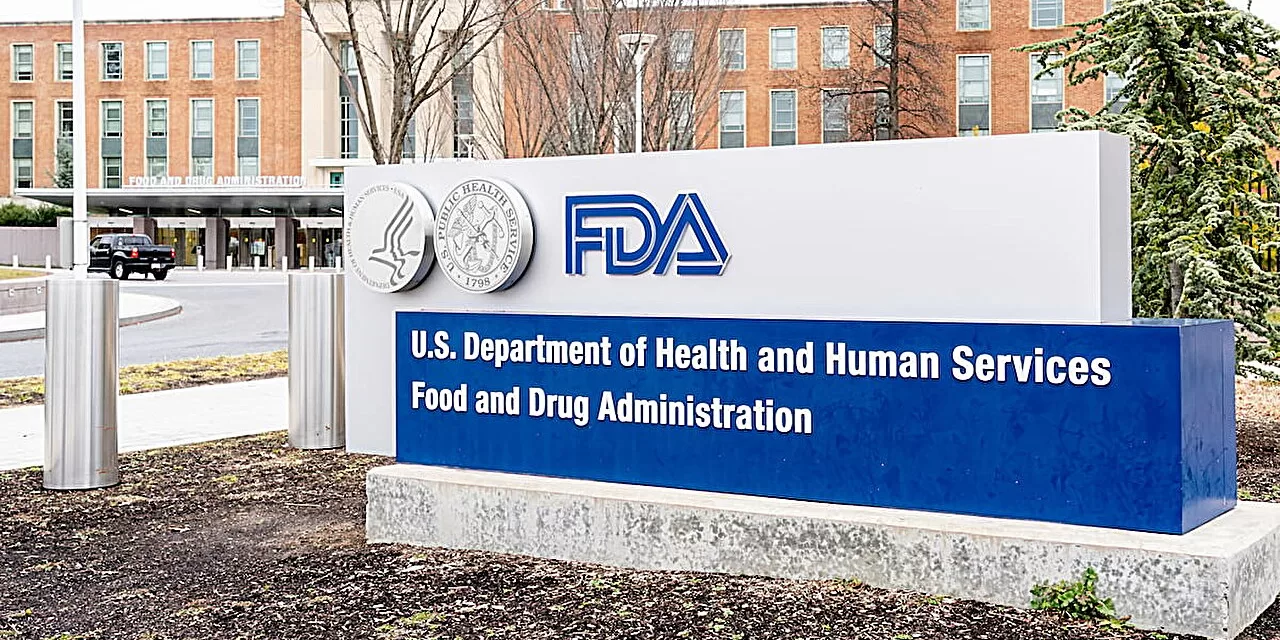
SILVER SPRING, MD — In a move signaling a transformative shift in the landscape of medical research, the U.S. Food and Drug Administration (FDA) issued draft guidance on March 17, 2026, urging drug developers to pivot away from traditional animal testing. The new framework encourages the adoption of New Approach Methodologies (NAMs)—advanced, non-animal technologies—during the early stages of drug development.
The guidance, released by the FDA’s Center for Drug Evaluation and Research (CDER), aims to modernize the drug approval process by prioritizing data derived from human biology over animal models, which have historically struggled to accurately predict how the human body will react to new therapies. By providing a clear roadmap for the validation of these innovative tools, the FDA is attempting to bridge the “translational gap” that currently sees 90% of drugs fail in human trials after successfully passing animal tests.
A New Framework for Modern Medicine
The newly released draft guidance provides specific recommendations for drug sponsors who wish to submit nonclinical data using NAMs to support Investigational New Drug (IND) applications or over-the-counter (OTC) monographs. Rather than relying solely on the physiology of rodents or primates, the FDA is highlighting a suite of high-tech alternatives:
-
Organs-on-Chips: Microfluidic devices lined with living human cells that mimic the structure and function of entire organs.
-
3D Organoids and Spheroids: Tiny, self-organized clusters of human cells that simulate the complexity of human tissue.
-
In Silico Modeling: Advanced computer simulations and AI-driven algorithms that predict drug toxicity and metabolic pathways.
-
Lower Organisms: The use of zebrafish or C. elegans for rapid, high-volume screening.
“This draft guidance advances our commitment to replace animal testing with human-relevant, scientifically rigorous methods,” stated HHS Secretary Robert F. Kennedy Jr.
FDA Commissioner Marty Makary, M.D., M.P.H., noted that technological strides have rendered many traditional methods obsolete. “Technological advances are allowing us to move beyond animal testing in drug development, which has a poor track record of predicting safety and efficacy in humans,” Makary said.
The Flaws in the “Gold Standard”
For nearly a century, animal testing has been the regulatory bedrock of pharmacology. However, significant biological differences between species often lead to misleading results. A drug may appear safe in a non-human primate but prove toxic to a human liver, or vice versa.
These biological discrepancies contribute to high attrition rates in drug development, driving up R&D costs and delaying the arrival of life-saving medications. Beyond the scientific limitations, ethical concerns have reached a fever pitch. Millions of animals are used in testing annually; the shift toward NAMs represents a dual victory for scientific precision and animal welfare.
The federal government has backed this shift with significant funding, including over $150 million in National Institutes of Health (NIH) grants dedicated to NAM development. This builds upon the FDA Modernization Act 2.0, passed in 2022, which legally removed the absolute requirement for animal testing in preclinical stages.
Expert Perspectives: Progress vs. Prudence
While the medical community largely welcomes the move, experts urge a balanced approach. Dr. Sharada Gerke, a bioethicist at Harvard Law School’s Petrie-Flom Center, notes that while NAMs promise “cheaper and safer drugs without animal suffering,” the transition requires rigorous, peer-reviewed qualification to ensure public safety isn’t compromised.
Toxicologist E. von Keutz, writing in Drug Discovery Today, emphasized the statistical necessity of the change: “Nearly 90% of drugs that pass animal tests fail in human trials; NAMs offer human-relevant insights that animals simply cannot provide.”
However, some researchers advise caution. “Phasing out animal testing too quickly risks overlooking complex systemic toxicities that single-organ NAMs can’t replicate,” warned pharmacologist F. Sewell of the University of Illinois. Dr. Rakesh Kumar, an expert in drug development, also pointed to “reproducibility issues,” noting that NAMs currently struggle with inter-lab variability and modeling how a drug moves through the entire body—a process known as ADME (absorption, distribution, metabolism, and excretion).
What This Means for Patients and Providers
For healthcare professionals, the implications are streamlined. By clarifying how to validate NAMs—covering study design, controls, and comparability—the FDA could potentially cut drug development timelines and costs by half within the next decade.
For the general public, the benefits are indirect but profound:
-
Increased Safety: Drugs tested on human-derived cells may carry fewer “surprises” when they reach Phase I clinical trials.
-
Lower Costs: Reduced failure rates in the lab could eventually lead to lower prices at the pharmacy.
-
Faster Access: Streamlined testing protocols mean therapies for rare diseases or emerging pathogens could reach patients faster.
Limitations and the Path Ahead
Despite the excitement, NAMs are not a “magic bullet” yet. Critics argue that current technology cannot yet replicate “immune-endocrine crosstalk”—the complex way different systems in a living body communicate. Most NAMs are also “low-throughput,” meaning they cannot yet be used to screen thousands of compounds as quickly as older methods.
The FDA acknowledges these hurdles, stating that the guidance offers general principles rather than an endorsement of any single technology. A “hybrid approach,” where animal models and NAMs are used in tandem, is likely to persist in the short term as the industry builds confidence in these new tools.
The FDA is inviting public comments on the draft guidance through June 2026. This iterative process, involving partnerships with the NIH and the Department of Veterans Affairs (VA), aims to standardize these methods across all federal agencies. As these “human-centric” models become the new standard, the era of relying on a “blurry map” of animal biology may soon be replaced by the GPS-like precision of human-derived data.
Medical Disclaimer
This article is for informational purposes only and should not be considered medical advice. Always consult with qualified healthcare professionals before making any health-related decisions or changes to your treatment plan. The information presented here is based on current research and expert opinions, which may evolve as new evidence emerges.
References
-
U.S. Food and Drug Administration. “FDA Releases Draft Guidance on Alternatives to Animal Testing in Drug Development.” March 17, 2026. FDA.gov