 0
0
 0
0
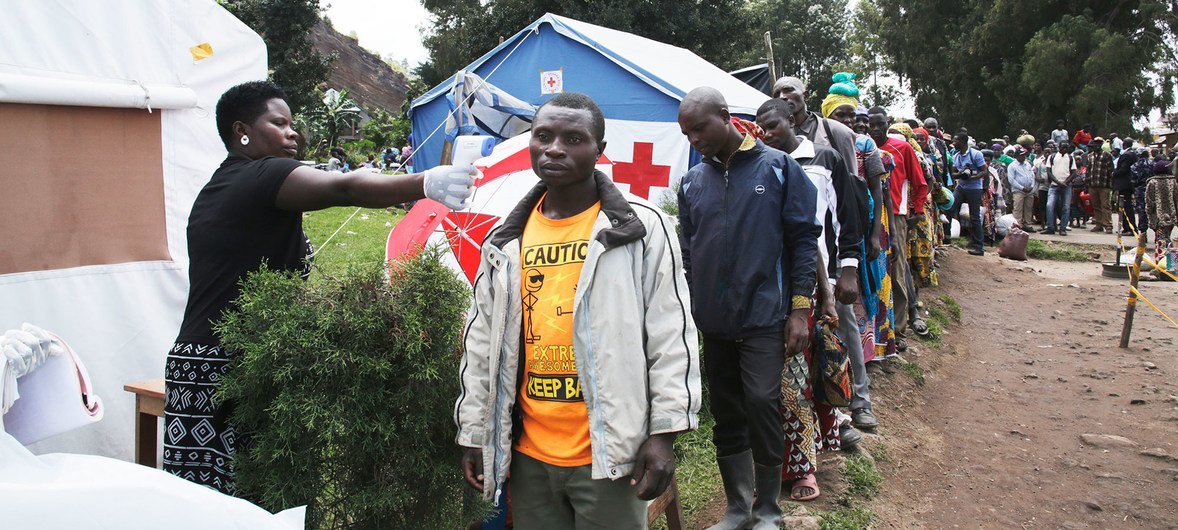
KINSHASA, Democratic Republic of the Congo — The Democratic Republic of the Congo (DRC) is confronting a rapidly worsening health crisis as confirmed cases of Ebola virus disease surpassed 3,000 on July 25, 2026. Driven by the rare Bundibugyo virus strain, the accelerating outbreak across five eastern provinces has overwhelmed local health infrastructure, strained frontline medical workers, and heightened global concern over viral transmission within active conflict zones.
According to figures released by the Congolese government on July 25, official tallies climbed to 3,075 confirmed infections and 1,354 deaths, up sharply from 2,905 cases and 1,269 deaths reported just twenty-four hours earlier. This surge follows extensive laboratory reconciliation and intensified field surveillance. The World Health Organization (WHO) confirmed that the outbreak has become the third largest Ebola epidemic on record, with isolated travel-associated cases reaching as far as Uganda, France, and Germany.
Escalating Numbers and Geographical Spread
The current surge represents an unprecedented expansion for the Bundibugyo species of the ebolavirus genus. Unlike previous major outbreaks dominated by the Zaire strain—for which licensed vaccines exist—this crisis stems from a pathogen with far fewer medical countermeasures.
Epidemiological data highlights a heavy concentration in eastern Congo, where civilian displacement and regional instability severely complicate containment efforts.
| Metric / Dimension | Regional Breakdown & Status |
| Confirmed Cases (DRC) | 3,075 (per Congolese Ministry of Health, July 25, 2026) |
| Total Deceased (DRC) | 1,354 fatalities (Approx. 44% case fatality rate) |
| Geographic Scope | 46 health zones affected across 5 eastern provinces |
| Epicenter Concentration | ~90% of all reported cases centered in Ituri Province |
| International Extent | Confirmed importations: Uganda, France, and Germany |
The Centers for Disease Control and Prevention (CDC) noted that transmission rates are outpacing historical benchmarks for non-Zaire strains, driven largely by high population movement across informal border routes in Ituri and North Kivu.
Crisis in Conflict Zones: Strain on Health Workers
The operational environment in eastern Congo presents unique challenges for infectious disease containment. Armed conflict, targeted violence against transit corridors, and severe logistical bottlenecks have disrupted basic disease surveillance and contact tracing.
Healthcare professionals at the frontlines bear a staggering burden. WHO reports confirm at least 119 health worker infections and 36 deaths within the DRC. In treatment centers across North Kivu, shortages of personal protective equipment (PPE) combined with delayed compensation led to emergency labor strikes on July 25—a disruption that threatens critical supportive care operations at the epicenter.
“Managing a viral hemorrhagic fever in a stable environment requires immense resources. Doing so inside an active security crisis—where contact tracers cannot safely enter villages and triage centers lack basic protective gear—creates ideal conditions for sustained community transmission.”
— Independent Infectious Disease Epidemiologist
Misinformation and institutional mistrust further exacerbate public health efforts, leading some symptomatic individuals to delay seeking care until advanced stages of illness.
Understanding the Bundibugyo Strain and Current Therapies
Ebola virus disease spreads through direct contact with blood, secretions, organs, or other bodily fluids of infected individuals, as well as surfaces contaminated with these fluids. It is not airborne and does not spread through casual contact.
However, the Bundibugyo virus presents distinct clinical hurdles:
-
No Approved Vaccine: Vaccines such as ERVEBO® target the Zaire strain specifically and offer no cross-protection against Bundibugyo.
-
Experimental Treatments: Clinical trials launched in July 2026 are actively evaluating candidate therapies—including investigational monoclonal antibodies and the antiviral compound remdesivir—but proven curative therapeutics remain unavailable.
-
Dependence on Supportive Care: Patient survival relies primarily on early supportive interventions, such as intravenous fluid resuscitation, electrolyte balancing, and symptom-specific treatments.
Public Health Implications and Global Risk Assessment
Health agencies emphasize that while the situation in central Africa is critical, global risk levels vary significantly by region.
-
Risk Levels: WHO classifies the public health risk as very high at the national level (DRC), high regionally (Uganda and neighboring borders), and low globally. The risk to the general public in North America and Western Europe remains minimal.
-
Travel Advisory: The CDC advises against non-essential travel to affected eastern provinces in the DRC. Returning travelers from these areas are advised to monitor their health for 21 days (the maximum incubation period for Ebola) and seek immediate isolated care if fever, fatigue, muscle pain, or unexplained bleeding occurs.
-
Trade and Border Guidance: WHO does not currently recommend general travel or trade restrictions, warning that economic isolation can destabilize emergency response funding and delay vital supply chains.
Limitations in Current Outbreak Data
Public health analysts emphasize that case totals during an active outbreak reflect shifting administrative dynamics. Discrepancies between official government figures and WHO periodic summaries stem from differing reporting cutoffs and ongoing data reconciliation. Additionally, sudden spikes in positive cases frequently represent backlogged laboratory results from remote testing centers rather than immediate clusters of new infections.
Because Bundibugyo remains less studied than other filoviruses, ongoing field research is critical to establishing definitive mortality baselines and evaluating transmission kinetics in high-density settings.
References
-
Reuters. “Congo Says Number of Confirmed Ebola Cases Surpasses 3,000.” July 25, 2026.
Medical Disclaimer: This article is for informational purposes only and should not be considered medical advice. Always consult with qualified healthcare professionals before making any health-related decisions or changes to your treatment plan. The information presented here is based on current research and expert opinions, which may evolve as new evidence emerges.