 0
0
 0
0
The recent research reveals that the highly pathogenic avian influenza (HPAI) H5N1 virus can persist and remain infectious in raw milk cheese made from contaminated milk for extensive periods, raising important concerns for public health and food safety. This finding challenges prior assumptions that the traditional 60-day aging process of raw milk cheese would eliminate harmful pathogens, including the bird flu virus.
Key Findings on Bird Flu Virus in Raw Milk Cheese
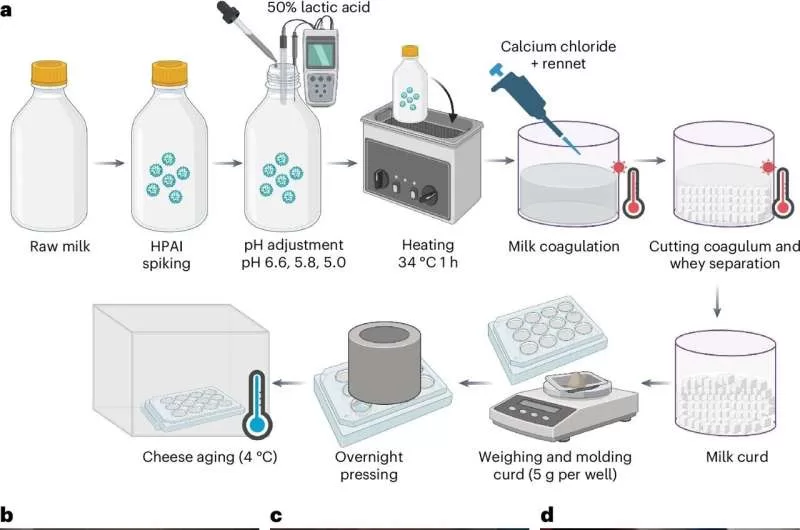
A pivotal study led by researchers at Cornell University, funded by the U.S. Food and Drug Administration (FDA), demonstrated that raw milk cheese products produced from milk of infected cattle can retain infectious H5N1 virus for up to 60 days during aging. The virus exhibited remarkable stability, particularly in cheeses aged at pH levels 6.6 and 5.8, which are within the typical acidity range of cheese. Notably, the virus failed to survive in the most acidic conditions tested, at pH 5.0, suggesting acidity impacts viral survival.
The research involved making mini cheeses spiked with H5N1 virus under controlled pH conditions, followed by assessing viral infectivity by injecting samples into fertilized chicken eggs. Viral levels remained high for the initial week and continued to be infectious throughout the 60-day aging process in less acidic cheeses. These results were corroborated by testing commercial raw milk cheddar cheeses produced inadvertently from contaminated raw milk.
Expert Perspectives on the Findings
Dr. Diego Diel, associate professor of virology at Cornell and lead author of the study, emphasized that the protein and fat content in milk and cheese create an environment conducive to virus survival at refrigeration temperatures, thus allowing the virus to persist despite aging.
Dr. Seema Lakdawala, associate professor of microbiology and immunology at Emory University, who was not involved in the study, highlighted that a much lower pH than normal is needed to inactivate the H5N1 virus, consistent with the study’s findings regarding acidity’s role in viral inactivation.
Another expert, Dr. Yoshihiro Kawaoka of the University of Wisconsin-Madison, cautioned that laboratory heat-treatment studies might not perfectly mirror industrial pasteurization conditions but reiterated that commercial pasteurization is likely effective at neutralizing the virus in milk.
Context and Public Health Implications
The H5N1 avian influenza virus has notably affected dairy cattle herds across multiple U.S. states since early 2024. This spread has resulted in contamination concerns in raw milk and derivative dairy products. While pasteurization processes, including high-temperature short-time (HTST) pasteurization, have been demonstrated as highly effective in inactivating the virus, raw milk and raw milk cheeses remain potentially risky for virus transmission if contaminated.
Currently, U.S. federal regulations permit the sale of raw milk cheese aged for at least 60 days, based on longstanding beliefs that this aging process sufficiently reduces pathogen risks, but recent evidence challenges this assumption regarding H5N1.
The Centers for Disease Control and Prevention (CDC) and FDA continue to monitor and conduct surveillance of dairy products. FDA testing of numerous pasteurized dairy products from retail sources found no viable H5N1 virus, underscoring the safety of pasteurized dairy. However, raw milk cheeses present a unique challenge given the potential for infectious virus persistence.
Limitations and Conflicting Views
The infectious dose of H5N1 virus for humans through ingestion remains unknown. There is limited direct evidence of transmission to humans via raw milk or dairy products, but animal studies indicate that consuming contaminated milk can cause avian flu infection.
Robert F. Kennedy Jr., Secretary of the U.S. Department of Health and Human Services, stated that current evidence shows food products like milk, eggs, or meat do not transmit bird flu to humans. This highlights the need for balanced public messaging to avoid undue fear while encouraging safe consumption practices.
Moreover, the study is currently a preprint and awaiting peer review, warranting cautious interpretation of findings pending further research and regulatory review.
What This Means for Readers
For consumers, the research reinforces the safety of consuming pasteurized dairy products, which effectively eliminate the bird flu virus and other pathogens. Those considering raw milk or raw milk cheese should be aware of the potential risks, especially in regions experiencing active avian influenza outbreaks in livestock.
Food safety experts generally advise opting for pasteurized dairy products, especially for vulnerable populations like the elderly, pregnant persons, young children, and immunocompromised individuals. Regulatory agencies may review existing raw milk cheese aging requirements in light of this emerging evidence.
Medical Disclaimer
This article is for informational purposes only and should not be considered medical advice. Always consult with qualified healthcare professionals before making any health-related decisions or changes to your treatment plan. The information presented here is based on current research and expert opinions, which may evolve as new evidence emerges.
References
- https://www.sciencedirect.com/science/article/pii/S2666910224001522
- https://www.cidrap.umn.edu/avian-influenza-bird-flu/flies-milk-snatching-among-h5n1-transmission-contributors-dairy-cattle