 0
0
 0
0
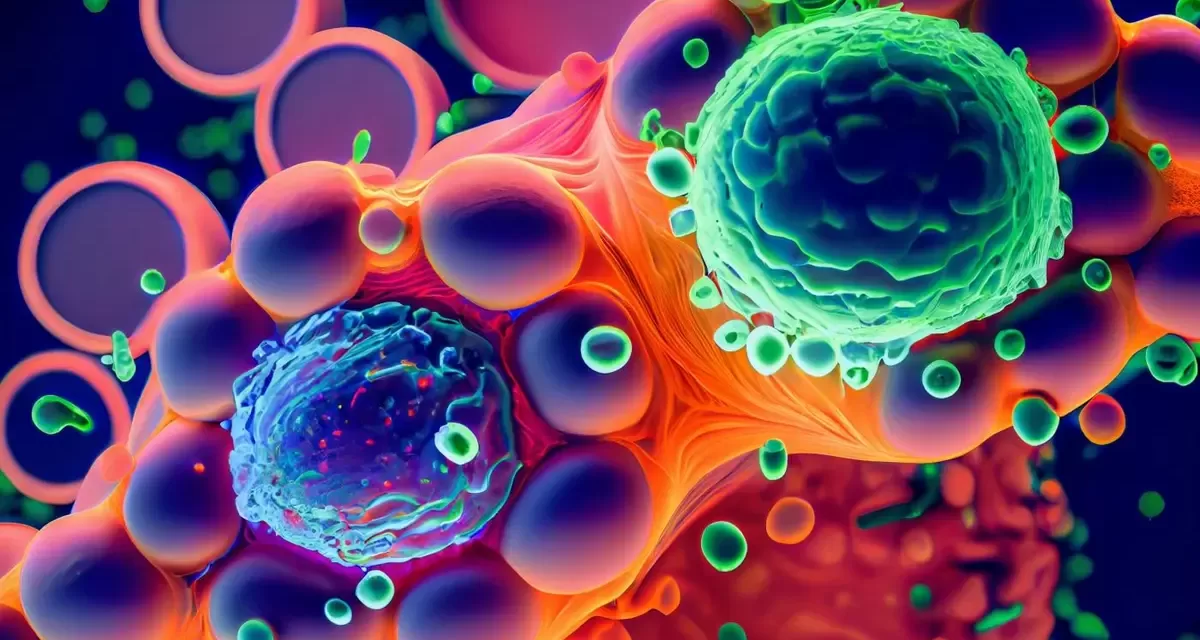
MINNEAPOLIS — In a major development for the field of synthetic biology, researchers at the University of Minnesota have successfully engineered a synthetic cell capable of feeding, growing, copying its genetic material, and dividing in a laboratory setting. Revealed in public reports between June 30 and July 1, 2026, the prototype—dubbed SpudCell—represents a monumental shift in “bottom-up” bioengineering. By assembling non-living chemical components into a system that mimics the core life cycle of a natural cell, scientists have taken a significant step toward understanding the baseline mechanics of biological life.
However, international experts urge a measured perspective. Because the study has been shared publicly prior to undergoing formal peer review, independent scientists emphasize that SpudCell should be viewed as an extraordinary proof of concept rather than a fully autonomous, finished model of artificial life.
Decoding SpudCell: Building Life from the Bottom Up
For decades, geneticists have altered existing, living bacteria by stripping away non-essential genes to find the minimum framework required for survival. SpudCell breaks away from this traditional methodology. Instead of modifying a pre-existing organism, the University of Minnesota research team built their prototype entirely from scratch using defined, non-living chemical blocks.
According to reports from the university, SpudCell is the first synthetic construct of its kind to successfully execute a continuous, life-like sequence:
-
Resource Acquisition: Actively taking in chemical nutrients from its surrounding environment.
-
Genome Replication: Duplicating its laboratory-synthesized genetic blueprint.
-
Cellular Growth: Expanding its physical, membrane-bound structure.
-
Genetically Encoded Division: Splitting into distinct “daughter” cells guided by its own internal code.
To grasp the scale of this achievement, consider an automotive analogy. Traditional synthetic biology is akin to taking a functional car, removing the radio, air conditioning, and back seats, and seeing how minimal the vehicle can be while still running. SpudCell, by contrast, is like gathering raw steel, rubber, and oil, and forging an engine from scratch that can successfully turn over and idle.
Critical Limitations: A Fragile Prototype
Despite the excitement surrounding the announcement, the current iteration of SpudCell remains highly fragile and entirely dependent on laboratory life-support. It is far from an independent organism.
Currently, the synthetic cell is incapable of manufacturing its own core cellular machinery. To survive and divide, it must be continuously supplied with external nutrients, specialized enzymes, and borrowed biological components like ribosomes—the cellular structures responsible for manufacturing proteins.
Furthermore, the system lacks genetic stability across generations. Initial data indicates that after several rounds of division, only about 30 percent of the daughter cells successfully inherited a complete copy of the original synthetic genome. The remaining cells lacked the necessary genetic instructions to continue the cycle, bringing their replication to an abrupt halt.
[External Nutrients & Ribosomes Supplied]
                 │
                 ▼
       ┌──────────────────┐
       │   SpudCell 1     │ (Feeds, grows, replicates genome)
       └─────────┬────────┘
                 │ (Genetically encoded division)
                 ▼
       ┌──────────────────┐
       │   Division       │
       └────┬────────┬────┘
            │        │
            ▼        ▼
       ┌────────┐┌────────┐
       │ 30%    ││ 70%    │
       │ Viable ││ Incom- │
       │ Gen-   ││ plete  │
       │ ome    ││ Genome │
       └────────┘└────────┘
Expert Reactions: Chemistry vs. Biology
The distinction between a chemical reaction that mimics life and life itself remains a central point of debate among global experts.
“We have demonstrated that fundamental chemistry can recreate complex behaviors that were once believed to be exclusive to living biological entities,” noted Kate Adamala, a prominent synthetic biologist at the University of Minnesota who commented on the system’s potential.
However, Adamala and her colleagues are careful to note that SpudCell is not “alive” in the traditional biological sense, given its inability to self-sustain or self-repair without substantial human intervention.
Independent commentators from major scientific outlets have mirrored this cautious stance. While hailing the research as a remarkable milestone, external biophysicists point out that true biological life requires a high degree of metabolic autonomy and open-ended evolution. SpudCell possesses neither; it cannot manage its own metabolism or adapt to changing environmental conditions without its highly controlled laboratory “broth.”
What This Means for Public Health and Medicine
While this breakthrough does not represent an immediate medical cure, treatment, or vaccine, its long-term implications for the biomedical ecosystem are profound.
1. Safer Medical Testing Platforms
Currently, scientists studying human diseases, metabolic disorders, or viral infections must rely on living cell cultures or animal models. These biological systems are incredibly complex and can produce unpredictable variables. Fully synthetic cells could provide a “clean,” simplified testing environment, allowing pharmacologists to witness exactly how a new drug interacts with basic cellular targets without the confounding noise of a fully living organism.
2. Advanced Biomanufacturing
In the future, scaled-up and stabilized versions of synthetic cells could act as hyper-efficient, custom-built factories. Because they lack the competing biological demands of natural bacteria, these synthetic structures could be entirely directed to manufacture complex therapeutic proteins, insulin, or customized cancer treatments with unprecedented purity and lower production costs.
3. Dispelling Public Anxiety
For the general public, separating science fiction from reality is crucial. The creation of SpudCell does not mean that scientists are brewing artificial human beings or engineering uncontrollable, synthetic plagues in clandestine laboratories. SpudCell is an extraordinarily delicate, microscopic structure that instantly ceases to function the moment it is removed from its sterile, nutrient-rich laboratory dish.
The Next Horizon
The immediate priority for the University of Minnesota research team is driving the prototype toward greater self-sufficiency. Future phases of the project will focus on engineering synthetic cells that can synthesize their own ribosomes, thereby reducing their reliance on externally supplied biological parts.
Additionally, researchers are working to optimize genomic stability. If engineers can raise the inheritance success rate well above the current 30 percent threshold, SpudCell could transition from a fragile laboratory proof of concept into a robust, predictable tool for modern medicine.
For now, SpudCell stands as a profound testament to human ingenuity—a window into the exact boundaries where complex chemistry ends, and biological life begins.
Medical Disclaimer
Medical Disclaimer: This article is for informational purposes only and should not be considered medical advice. Always consult with qualified healthcare professionals before making any health-related decisions or changes to your treatment plan. The information presented here is based on current research and expert opinions, which may evolve as new evidence emerges.
References
- https://www.earth.com/news/scientists-create-a-synthetic-cell-that-can-grow-and-replicate/