 0
0
 0
0
New Delhi, September 24, 2025 — Seven years since its launch, the Ayushman Bharat scheme has emerged as a transformative force in India’s public healthcare landscape, moving beyond a policy promise to become a mass movement for universal health coverage (UHC). Designed to deliver accessible, affordable, and comprehensive healthcare, this government-backed initiative now covers over 55 crore beneficiaries, representing more than 12 crore vulnerable families across the nation.
Announced by Prime Minister Narendra Modi on September 23, 2018, Ayushman Bharat embodies India’s commitment to ensuring that no citizen is deprived of quality healthcare due to financial constraints. It does so through two interlinked components: the Health and Wellness Centres (HWCs) aimed at preventive and primary care, and the Pradhan Mantri Jan Arogya Yojana (PM-JAY), which offers financial protection against secondary and tertiary care hospitalizations.
Key Developments in Ayushman Bharat’s Seven Years
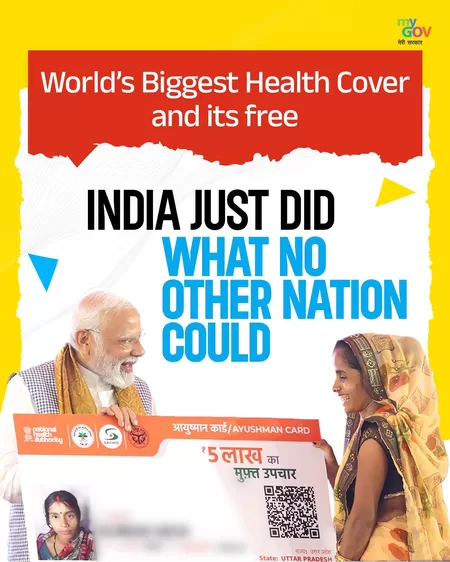
Since its inception, Ayushman Bharat’s impact has been extensive. The PM-JAY scheme, the world’s largest government-funded health insurance program, provides a cover of Rs 5 lakh per family annually, covering hospitalization costs without out-of-pocket expenses at the point of care. To date, more than 10.3 crore hospital admissions have been authorised under the scheme, resulting in cashless treatments worth over Rs 1.48 lakh crore. This extensive reach has significantly alleviated the financial burden of healthcare on millions of families, contributing to a drop in out-of-pocket expenses from 63% down to 39%, according to government data.
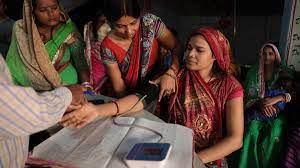
Health and Wellness Centres complement the insurance scheme by providing comprehensive primary health care. About 1.5 lakh HWCs have been established by upgrading existing Sub Centres and Primary Health Centres, focusing on preventive care, screening for non-communicable diseases like hypertension and diabetes, maternal and child health, and free essential drugs and diagnostics. These centres aim to reduce hospital admissions through early intervention and health promotion.
The scheme’s coverage has expanded progressively. Since 2022, the beneficiary base widened to include more families based on updated census data, and in 2024, frontline workers including ASHA and anganwadi workers and their families were added. Notably, all senior citizens aged 70 and above have been included under the Ayushman Vay Vandana Card, enabling vulnerable elderly populations to access vital treatments such as dialysis and cancer care at reduced or no cost.
Expert Perspectives on Ayushman Bharat’s Impact
Prabhat Srivastava, founder of VitusCare, remarks, “The launch of Ayushman Bharat marks a transformative enhancement in access to essential healthcare, especially for the elderly who rely on chronic treatments such as dialysis. The scheme fosters partnerships between public and private sectors, which is crucial for improving service delivery and infrastructure”.
Abhay Soi, President of NATHEALTH and Chairman of Max Healthcare, highlights the scheme’s critical role in elder care. “Expanding coverage to all citizens aged 70 and above addresses a segment with high disease burden and unmet healthcare needs. With sustained private sector engagement and equitable reimbursements, the scheme can ensure comprehensive care continuity,” he explains.
Former Health Secretary JVR Prasada Rao underscores the importance of effective implementation despite the program’s success. “While Ayushman Bharat has drastically reduced out-of-pocket expenses and increased free hospitalization access, challenges such as delayed reimbursements to hospitals need addressing to maintain trust and participation,” he notes.
Context and Public Health Implications
Ayushman Bharat aligns with India’s National Health Policy 2017 and Sustainable Development Goals, aiming to “leave no one behind” in health access. The scheme represents a pivotal shift from fragmented healthcare systems to a continuum of care approach, incorporating prevention, health promotion, and tertiary treatment under one umbrella.
Public health experts emphasize the scheme’s role in lowering financial barriers, which can positively influence health outcomes by enabling timely healthcare seeking. Early detection and management of non-communicable diseases at HWCs reduce the overall disease burden and hospital admissions, enhancing the population’s health resilience.
Limitations and Areas for Improvement
While Ayushman Bharat is hailed as a revolution, independent evaluations suggest that operational challenges remain. Bottlenecks in fund flow and delays in payments to participating hospitals can hinder smooth service delivery and discourage private sector participation. Additionally, reports of fraudulent claims highlight the need for robust oversight mechanisms.
Moreover, while coverage is extensive, ensuring equitable quality of care across diverse geographies and healthcare facilities continues to require attention. Experts call for continuous monitoring, audit, and community engagement to safeguard the initiative’s integrity and impact.
What This Means for Indian Families
For the millions of Indian families covered under Ayushman Bharat, the scheme translates into significant financial protection and access to quality healthcare services. By eliminating upfront payments for treatments covered under PM-JAY, the initiative prevents medical impoverishment and reduces stress associated with healthcare costs.
The expansion to include senior citizens and frontline workers ensures vulnerable populations receive timely care for chronic and acute conditions alike. The Health and Wellness Centres encourage preventive health behaviors, ultimately aiming to keep families healthier and reduce hospital dependence.
Medical Disclaimer
This article is for informational purposes only and should not be considered medical advice. Always consult with qualified healthcare professionals before making any health-related decisions or changes to your treatment plan. The information presented here is based on current research and expert opinions, which may evolve as new evidence emerges.
References
-
Ministry of Health and Family Welfare, Government of India. “About Pradhan Mantri Jan Arogya Yojana (PM-JAY).” Updated July 2020
- https://nha.gov.in/PM-JAY
- https://ianslive.in/ayushman-bharat-from-promise-to-peoples-movement-for-universal-health-coverage-pm-modi–20250923134830