 0
0
 0
0
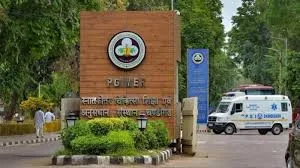
CHANDIGARH – In a remarkable display of medical coordination and human resilience, transplant teams from the Postgraduate Institute of Medical Education and Research (PGIMER) successfully navigated a severe winter storm and grueling logistics to complete a series of life-saving transplants this week.
The operation, which spanned three states and involved a 42-year-old donor from AIIMS Rishikesh, saw the successful retrieval and transport of a liver, pancreas, and kidneys despite biting cold, heavy rain, and visibility-limiting winds. The mission underscores the evolving maturity of India’s organ allocation network and the critical importance of “ischaemia time”—the ticking clock that dictates whether a donated organ remains viable for its recipient.
A Gift Amidst Grief: The Donor’s Story
The chain of life began under tragic circumstances. Raghu Paswan, 42, was admitted to AIIMS Rishikesh on January 16, 2026, following a catastrophic fall from a two-story building. Despite aggressive neurological intervention, Paswan was declared brain dead due to severe traumatic brain injury.
In the wake of their loss, Paswan’s family made the courageous decision to consent to organ donation. Their choice activated a massive logistical machine managed by the National Organ and Tissue Transplant Organisation (NOTTO) and the Regional Organ and Tissue Transplant Organisation (ROTTO-North).
“Organ donation is the ultimate act of human altruism,” said Professor Vivek Lal, Director of PGIMER. “Our teams felt a profound responsibility to ensure that this family’s generosity was not hindered by the elements.”
The Race Against the Elements
Under national protocols, Paswan’s liver, pancreas, and one kidney were allocated to PGIMER Chandigarh. The remaining kidney was sent to AIIMS New Delhi, the heart to the Army Hospital (Research and Referral) in the capital, and the lungs were flown to Apollo Hospital in Chennai.
For the PGIMER team, the challenge was geographical. Departing Chandigarh late on the night of January 22, the surgical teams traveled six hours by road through hazardous weather to reach Rishikesh by dawn.
Minimizing Ischaemia Time
In transplant medicine, ischaemia time is the period during which an organ is without blood supply.
-
The Liver: Generally needs to be transplanted within 12 hours.
-
The Pancreas: Ideally transplanted within 12–15 hours.
-
The Heart: Only has a viable window of 4–6 hours.
To combat these tight windows, authorities established a “Green Corridor”—a manually signaled route where police clear traffic to allow ambulances to maintain high speeds. For the first time, a liver was transported by road from Rishikesh to Chandigarh under such extreme weather conditions, a feat intended to bypass flight groundings caused by the storm.
New Lease on Life: The Recipients
The most poignant success of the mission was the pancreas transplant performed on a 28-year-old woman. Having battled Type 1 diabetes since childhood, she required multiple insulin injections daily and faced the long-term risks of organ failure.
Pancreas transplants remain relatively rare in India compared to kidney or liver procedures. According to data from the Indian Society of Organ Transplantation (ISOT), while kidney transplants number in the thousands annually, pancreas transplants are significantly fewer due to the surgical complexity and the scarcity of suitable donors.
“A successful pancreas transplant can essentially ‘cure’ a patient of diabetes by restoring endogenous insulin production,” explains Dr. Arvinder Soin, a pioneer in Indian transplant surgery (not involved in this case). “For a young patient, this isn’t just life-saving; it is life-transforming.”
The Infrastructure of Hope
The success of this multi-state effort highlights the “hub-and-spoke” model of Indian organ procurement. By adhering to the Transplantation of Human Organs and Tissues Act (1994), NOTTO ensures that organs are matched based on medical urgency, blood group, and geographical proximity to minimize transit time.
Statistical Context: The National Gap
Despite these successes, the gap between organ demand and supply remains wide in India.
-
Demand: Approximately 500,000 people need organ transplants annually.
-
Supply: The deceased organ donation rate in India stands at less than 1 per million population, significantly lower than in many Western nations.
-
Progress: However, the Ministry of Health and Family Welfare reported a 27% increase in the total number of transplants between 2022 and 2024, signaling a shift in public awareness.
Challenges and Limitations
While the PGIMER mission was a triumph, experts note that relying on “heroic” road journeys through storms is not a sustainable long-term solution.
“We need more regional retrieval centers and better-equipped air-ambulance infrastructure to handle adverse weather,” says a senior administrator at the National Health Authority. Additionally, while “Green Corridors” are effective, they require massive police mobilization that can strain local resources.
Furthermore, transplant recipients face a lifelong journey of immunosuppressant therapy to prevent organ rejection. While the 28-year-old recipient is showing “encouraging signs,” the first 30 days are critical for monitoring graft function and potential infection.
What This Means for You
For the general public, this story serves as a vital reminder of the impact of the Organ Donor Registry.
-
Check Your Status: In India, you can pledge your organs via the NOTTO website or during driver’s license renewal.
-
Family Discussion: The most crucial step is informing your family. In most jurisdictions, family consent is required even if an individual has pledged their organs.
-
Dispelling Myths: Brain death is a legal and medical certainty, distinct from a coma. Hospitals follow rigorous protocols involving multiple independent doctors to confirm brain death before donation is even discussed.
The courage of the Paswan family and the grit of the PGIMER surgeons remind us that even in the coldest winters, the warmth of human coordination can save lives.
References
- https://www.nationalheraldindia.com/amp/story/national/pgimer-teams-brave-extreme-weather-to-complete-life-saving-transplants
Medical Disclaimer: This article is for informational purposes only and should not be considered medical advice. Always consult with qualified healthcare professionals before making any health-related decisions or changes to your treatment plan. The information presented here is based on current research and expert opinions, which may evolve as new evidence emerges.