 0
0
 0
0
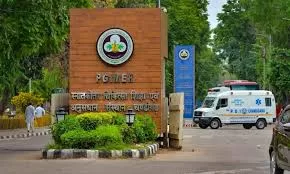
CHANDIGARH, June 8, 2026 — In a major effort to bridge critical gaps in specialized medical infrastructure, Prime Minister Narendra Modi is expected to virtually inaugurate three state-of-the-art medical facilities at the Postgraduate Institute of Medical Education and Research (PGIMER) Chandigarh. The digital launch marks the formal opening of healthcare projects worth nearly ₹1,000 crore, significantly scaling up neurological, maternal-child, and critical care services across North India.
Institutional sources preparing for the high-profile event indicate that while a physical visit by the Prime Minister is unlikely, extensive measures are being finalized to ensure a seamless virtual broadcast. The expansion transforms PGIMER into one of the country’s most advanced public healthcare ecosystems, offering highly specialized treatments to millions of patients who frequently travel from Punjab, Haryana, Himachal Pradesh, and Jammu & Kashmir.
Inside the Megaprojects: Capabilities and Advanced Specialities
The ₹1,000 crore investment is divided across three specialized wings designed to modernize patient care, optimize clinical workflows, and drastically reduce long wait times.
The ₹490 Crore Advanced Neuroscience Centre
This six-storey facility, spanning 47,619 square meters, represents a nine-year journey from its initial approval in 2017 to its full realization in 2026. Designed with an integrated treatment model, the center brings neurology and neurosurgery services under one roof—a massive upgrade from previous fragmented department layouts.
The center features:
-
300 general ward beds and 30 private ward beds.
-
10 cutting-edge modular operating theaters.
-
Dedicated intensive care units (ICUs) and 10 High Dependency Unit (HDU) beds.
-
Advanced sub-specialties including cerebrovascular surgery, skull base surgery, and spinal functional neurosurgery.
The facility has already demonstrated immense demand; upon opening its outpatient departments (OPDs) on April 20, 2026, it registered 581 patients on its very first day.
The ₹485 Crore Mother and Child Care Centre
A five-storey, 430-bed facility designed to relieve severe overcrowding at the hospital’s existing obstetric wings. As live births and neonatal intensive care demands have surged over the decade, this center provides vital breathing room.
The launch also resolves a highly publicized bottleneck: it officially utilizes ₹150 crore worth of advanced medical equipment donated by Infosys in 2024, which had remained unopened in storage awaiting the formal inauguration of the building.
The New Critical Care Block
Constructed to fortify emergency response capabilities, this block adds 150 highly specialized beds. It integrates intensive care units (ICUs), step-down units (SDUs), isolation wards, and oxygen-supported beds. Designed to handle both critical trauma and infectious disease outbreaks under a single roof, the block also houses two advanced labor rooms, recovery rooms, and a dedicated neonatal care unit.
Addressing India’s Critical Care and Neurological Deficits
The integration of these units comes at a pivotal moment for public health infrastructure in India. According to recent government and healthcare metrics, India faces a stark critical care deficit, averaging just 2.3 ICU beds per 100,000 people. This sits far behind global peers like China (12.5 per 100,000) and the United States (34.7 per 100,000). As of the 2025–2026 fiscal year, India’s total public ICU bed capacity stands at 37,834 beds across both pediatric and adult units.
| Country / Region | ICU Beds per 100,000 People |
| United States | 34.7 |
| China | 12.5 |
| India | 2.3 |
Simultaneously, maternal and infant health remain key focuses of national healthcare strategies. While India’s Maternal Mortality Ratio (MMR) successfully declined to 93 per 100,000 live births during the 2019–2021 assessment period, it still strives toward the United Nations Sustainable Development Goals (SDG) target of fewer than 70 per 100,000. Nationally, the infant mortality rate stands at 28 per 1,000 live births. By adding 430 dedicated maternal-child beds and integrated neonatal ICUs, the new facility directly targets these vulnerabilities.
Expert Perspectives and Government Vision
The Critical Care Block was funded in part through the Pradhan Mantri Ayushman Bharat Health Infrastructure Mission (PM-ABHIM), a centrally sponsored scheme with a massive ₹64,180 crore outlay spanning 2021–22 to 2025–26. The mission prioritizes setting up 602 critical care hospital blocks in heavily populated districts. The PGIMER block received a ₹120 crore allocation from PM-ABHIM, with the remaining ₹88.92 crore provided by the institute’s internal budget.
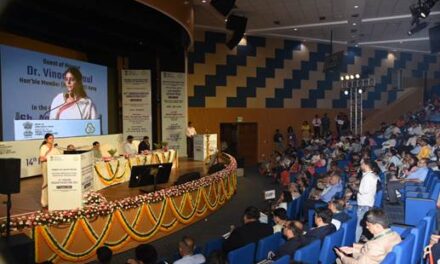
Speaking at PGIMER’s 39th convocation, Union Health Minister J.P. Nadda highlighted the intersection of modern medical engineering and patient-centric delivery:
“Technology will shape the future of medicine, but compassion must remain the soul of healthcare. Artificial intelligence, telemedicine, and precision medicine can advance treatment, yet nothing can replace the healing power of human touch and empathy.”
Nadda noted that since 2014, India’s medical education and infrastructure have scaled significantly, with the number of AIIMS-level institutions growing to 23, total medical colleges rising to 818, and total medical seats across the country surging past 200,000.
Infrastructure Roadblocks and Limitations
Despite the celebratory nature of the upcoming launch, healthcare analysts point out that the journey underscores the systemic delays often seen in large-scale public healthcare projects. The Advanced Neuroscience Centre required nearly a decade to move from approval (2017) to full commissioning (2026), heavily impacted by construction pauses beginning in 2020.
Furthermore, the Mother and Child Care Centre faced prolonged operational setbacks. Internal administrative records from mid-2025 indicated that the facility’s opening was pushed back due to pending environmental clearances and, crucially, a lack of sanctioned, dedicated clinical staff to manage the massive 430-bed influx.
While the virtual inauguration format chosen by the Prime Minister ensures bureaucratic efficiency and avoids technical or logistical delays, it lacks the direct community engagement or personal interaction with frontline healthcare workers that typically accompanies major public health milestones.
Practical Impact: What This Means for Patients
For families and health-conscious consumers across North India, the operationalization of these centers provides concrete, immediate benefits:
-
Unified Care: Neurological and spinal patients no longer face the physical stress of being transferred between disparate departments. Diagnosis, advanced neurosurgery, and intensive post-operative recovery are now handled in a single, dedicated building.
-
Reduced Financial Strain: Because PGIMER is a public institution, these highly advanced sub-specialties—such as skull base surgery and neonatal intensive care—are provided at a fraction of the cost charged by private corporate hospitals, promoting health equity across varied income levels.
-
Lower Wait Times: The massive addition of hundreds of specialized beds and 10 modular operating suites will significantly reduce the months-long waiting lists for complex brain and spine procedures, as well as high-risk obstetric admissions.
As these facilities transition to full, round-the-clock operational capacity this month, they represent a vital step forward in ensuring that tertiary, life-saving healthcare is defined by geographic accessibility and financial viability rather than scarcity.
Medical Disclaimer
Medical Disclaimer: This article is for informational purposes only and should not be considered medical advice. Always consult with qualified healthcare professionals before making any health-related decisions or changes to your treatment plan. The information presented here is based on current research and expert opinions, which may evolve as new evidence emerges.
References
-
Times of India. “PM to virtually inaugurate PGI projects worth Rs 1000 cr.” Published June 8, 2026.