 0
0
 0
0
Hepatitis: Let’s Break It Down
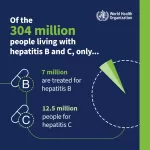
304 million people are living with chronic hepatitis B and C in 2022.
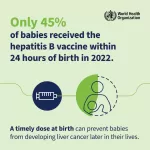
Only 45% of babies received the hepatitis B vaccine within 24 hours of birth in 2022
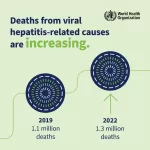
1.3 million people died of chronic hepatitis B and C in 2022
World Hepatitis Day is observed each year on 28 July to raise awareness of viral hepatitis, an inflammation of the liver that causes severe liver disease and liver cancer.
The theme for 2025: Hepatitis: Let’s Break It Down calls for urgent action to dismantle the financial, social and systemic barriers – including stigma – that stand in the way of hepatitis elimination and liver cancer prevention.
Chronic hepatitis B and C silently cause liver damage and cancer – despite them being preventable, treatable, and, in the case of hepatitis C, curable. The theme emphasizes the need to simplify, scale up, and integrate hepatitis services – vaccination, safe injection practices, harm reduction and especially testing and treatment – into national health systems.
The campaign is a reminder that we must act now to expand access, integrate care, and end hepatitis as a public health problem by 2030.
Key messages
1. Hepatitis is a leading cause of liver cancer – and a growing global killer.
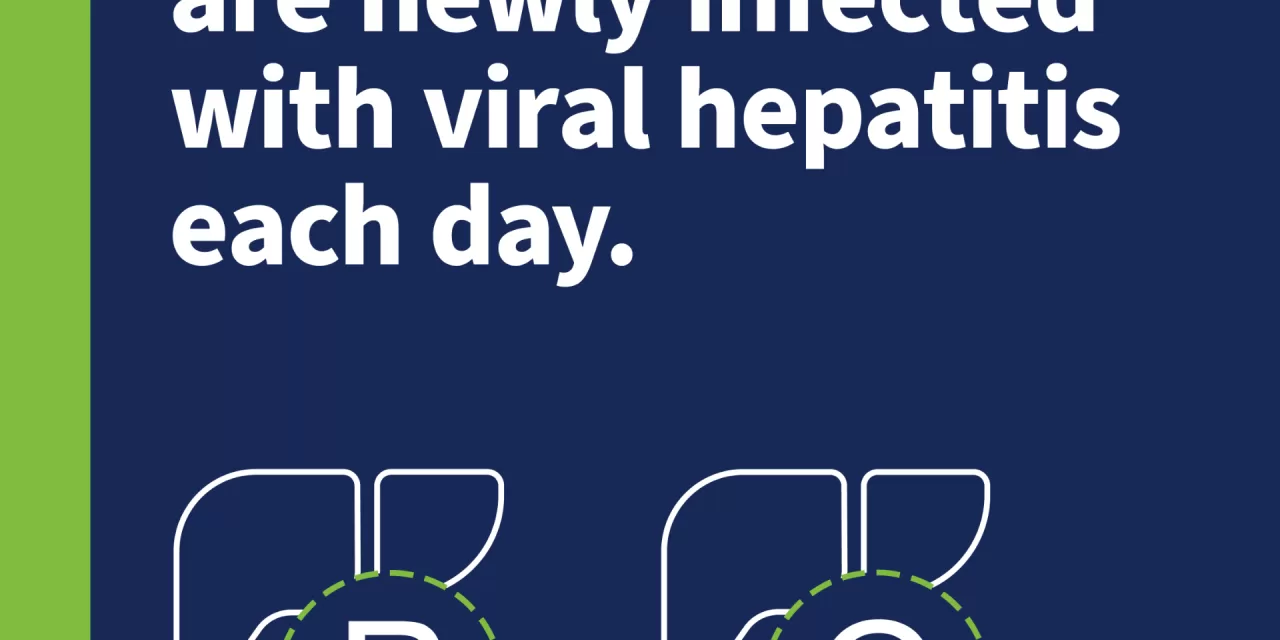
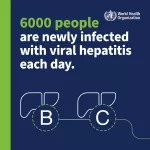
Chronic viral hepatitis causes 1.3 million deaths every year, mostly from liver cancer and cirrhosis. That’s 3500 deaths every single day – on par with tuberculosis. Hepatitis B and C are spreading silently, with 6000 new infections daily. Despite being preventable and treatable, the disease burden continues to rise, especially in regions with limited access to care.
2. Knowing your status is the first step to stopping liver cancer.
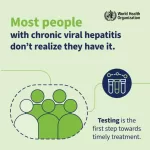
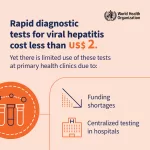
Most people living with hepatitis don’t know they’re infected. Early diagnosis is the first step to accessing life-saving treatment and preventing liver cancer. Testing – especially for those in endemic regions or at higher risk – is critical to ending hepatitis.
3. We can prevent 2.8 million deaths by 2030 – but only if countries act now.
Hepatitis elimination is within reach. We have vaccines, curative therapies, and proven tools to stop transmission. Most cases go undiagnosed until it’s too late. Progress demands national commitment, smart investment, and public health systems that embed hepatitis services into primary care. Investing in timely diagnosis and integrated, people-centred care will save lives and stop liver cancer before it starts.
Call to action: Hepatitis elimination to prevent deaths and liver cancer
For the public:
- Get tested for hepatitis B and C.
- Vaccinate newborns with the hepatitis B birth dose within 24 hours.
- Learn the facts and talk to your healthcare provider about early testing and treatment.
- Help stop stigma by sharing accurate information.
For policymakers and governments:
- Lead and fund awareness campaigns linking hepatitis to care liver cancer prevention.
- Expand hepatitis B birth-dose vaccination, safe blood/injection practices, and harm reduction.
- Scale up affordable, decentralized testing and treatment integrated into primary care across health platforms, including HIV and other communicable and Non-communicable (NCD) care pathways, cancer control, and maternal and child health.
- Embed hepatitis services in universal health coverage and national insurance schemes.
- Engage all stakeholders and invest in strong data systems for accountability.
For national health authorities:
- Prioritize early diagnosis and treatment, focusing on high burden and underserved communities.
- Decentralize services to primary and district health centers.
- Integrate hepatitis prevention into maternal and child health programs.
- Ensure free or universal access to testing and treatment.
- Mobilize sustainable funding and use data to drive progress.
Overview
Hepatitis is an inflammation of the liver that is caused by a variety of infectious viruses and non-infectious agents leading to a range of health problems, including severe liver damage and cancer, some of which can be fatal. There are 5 main strains of the hepatitis virus, referred to as types A, B, C, D and E. While they can all cause liver disease, they differ in important ways including modes of transmission, severity of the illness, geographical distribution and prevention methods.
In particular, types B and C lead to chronic disease in hundreds of millions of people and together are the most common cause of liver cirrhosis, liver cancer and viral hepatitis-related deaths. They are among the main infectious disease killers, causing an estimated 1.3 million deaths per year. An estimated 304 million people worldwide live with hepatitis B or C, and for most, testing and treatment remain beyond reach.
WHO’s Global Health Sector Strategy on HIV, Viral Hepatitis and Sexually Transmitted Infections (2022–2030) outlines clear targets to eliminate viral hepatitis as a public health problem. The strategy aims to reduce new hepatitis infections to 520 000 cases annually and hepatitis-related deaths to 450 000 by 2030, which represents a 90% reduction in incidence and a 65% reduction in mortality compared to 2015. Without urgent and sustained action, however, viral hepatitis is projected to cause an additional 9.5 million new infections, 2.1 million liver cancer cases, and 2.8 million deaths by 2030. These outcomes are largely preventable through the scale-up of hepatitis B vaccination, improved access to prevention, testing and treatment for hepatitis B and C, and targeted public education campaigns to raise awareness and reduce transmission
Symptoms
Many people with hepatitis A, B, C, D or E exhibit only mild symptoms or no symptoms at all. Each form of the virus, however, can cause more severe symptoms; notable is hepatitis E infection in pregnant women. Symptoms of viral hepatitis may include fever, malaise, loss of appetite, diarrhoea, nausea, abdominal discomfort, dark-coloured urine and jaundice (a yellowing of the skin and whites of the eyes). Hepatitis B, C and D virus can also cause a chronic liver infection that can later develop into cirrhosis (a scarring of the liver) or liver cancer. These patients are at risk of premature death.
Hepatitis D (HDV) is only found in people already infected with hepatitis B (HBV); however, the dual infection of HBV and HDV can cause a more serious infection and accelerated progression to cirrhosis and cancer. HBV, HCV and HDV cause hepatocellular carcinoma and are considered carcinogenic.
Treatment
Safe and effective vaccines are available to prevent hepatitis B virus (HBV) infection, and when given at birth, as part of the childhood vaccination series, strongly reduces the risk of transmission from mother to child. Hepatitis B vaccination also protects against hepatitis D virus (HDV) infection. Chronic HBV infection can be treated with antiviral agents. Treatment can slow the progression of cirrhosis, reduce incidence of liver cancer and improve long term survival. Only a proportion of people with chronic HBV infection will require treatment. A vaccine also exists to prevent infections of hepatitis A (HAV) and E (HEV). It is advised to avoid unnecessary medications due to the negative effect on liver function caused by these infections.
Hepatitis C (HCV) can cause both acute and chronic infection. Chronic HCV infection can lead to long-term complications, including cirrhosis or cancer. There is no vaccine for HCV. Antiviral medicines can cure more than 95% of persons with HCV infection, thereby reducing the risk of death from cirrhosis and liver cancer, but access to diagnosis and treatment remains globally low.
HAV and HEV are most common in low- and middle-income countries due to reduced access to clean and safe water sources and the increased risk of contaminated food. A safe and effective vaccine is available to prevent HAV and HEV infections. Most HAV and HEV infections are mild, with the majority of people recovering fully and developing immunity to further infection. However, these infections can also be severe and life threatening due to the risk of liver failure.
https://www.who.int/campaigns/world-hepatitis-day/2025