 0
0
 0
0
Drowning rates are falling –
but not fast enough
Drowning has claimed over 3 million lives in the past decade – mostly children and youth – demanding urgent action now.
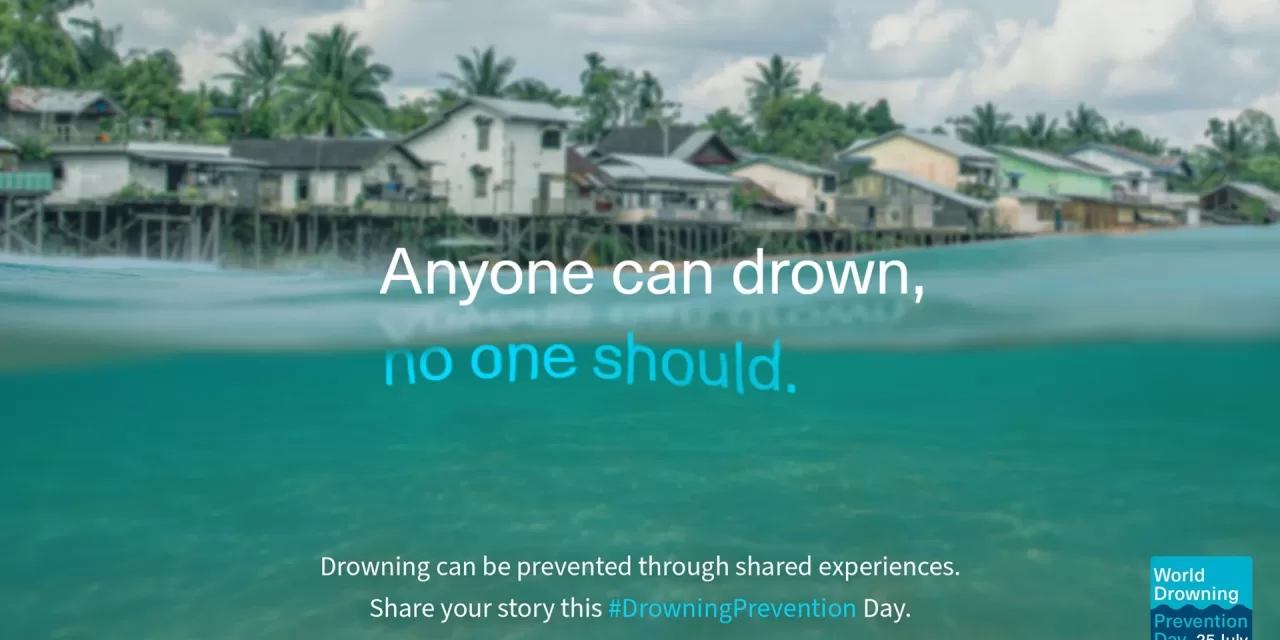
This World #DrowningPrevention Day, we’re sharing powerful stories about changemakers from around the world who are helping to save lives and prevent lifelong disabilities caused by drowning.
From teaching communities about water safety to developing national drowning prevention plans, their combined efforts have helped to keep people safe around water.
What can we do to save more lives?
The WHO Global status report on drowning prevention 2024 identifies a number of ways that governments, communities and individuals can help prevent drowning.
The first-ever Global status report on drowning prevention details the scale of global drowning fatalities, and progress made in advancing strategies and actions to reduce drowning around the world.
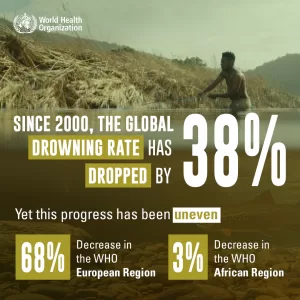
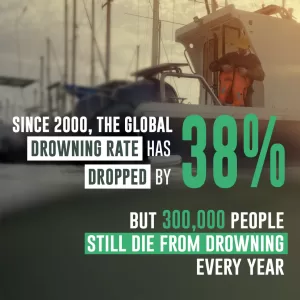
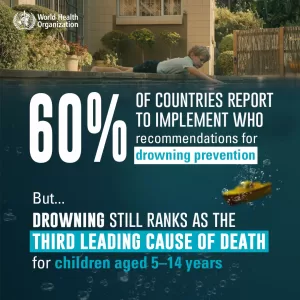
The report shows that the rate of deaths from drowning dropped by 38% between the year 2000 and 2021. Yet drowning remains a major public health issue, with more than 300 000 fatalities in 2021.
Drowning predominately impacts children an young people and more than nine in ten deaths occur in low and middle-income countries.
The report presents a benchmark against which to track drowning prevention progress over time – at global, regional and national levels – and to galvanize meaningful multisectoral collaboration within governments, organizations, societies and across the United Nations.
What can Countries do to prevent drowning?
 Barriers: Installing barriers in public areas to prevent easy access to water hazards
 Supervision: Ensuring lifeguards are present at public swimming pools and beaches
 Training: Providing communities with rescue and resuscitation training
 Respond: Maintaining active and effective search and rescue operations
 Early weather warnings: Delivering free, accessible weather alerts to help communities stay informed about risks
What can You do to prevent drowning?
 Learn to swim: Equip yourself and your children with swimming skills. Swimming lessons save livesSupervise children: Always keep a close eye on children near water. Never leave children unattended, even for a moment
 No alcohol near water: Avoid drinking alcohol when around water. Stay sharp and vigilant
 Be aware of surroundings: Always check weather and water conditions before swimming or boating. Stay informed and safe
 Use safety equipment: Ensure lifejackets are available and used correctly when boating. Access to safety gear can make a crucial difference