 1
1
 0
0
Invest in breastfeeding, invest in the future
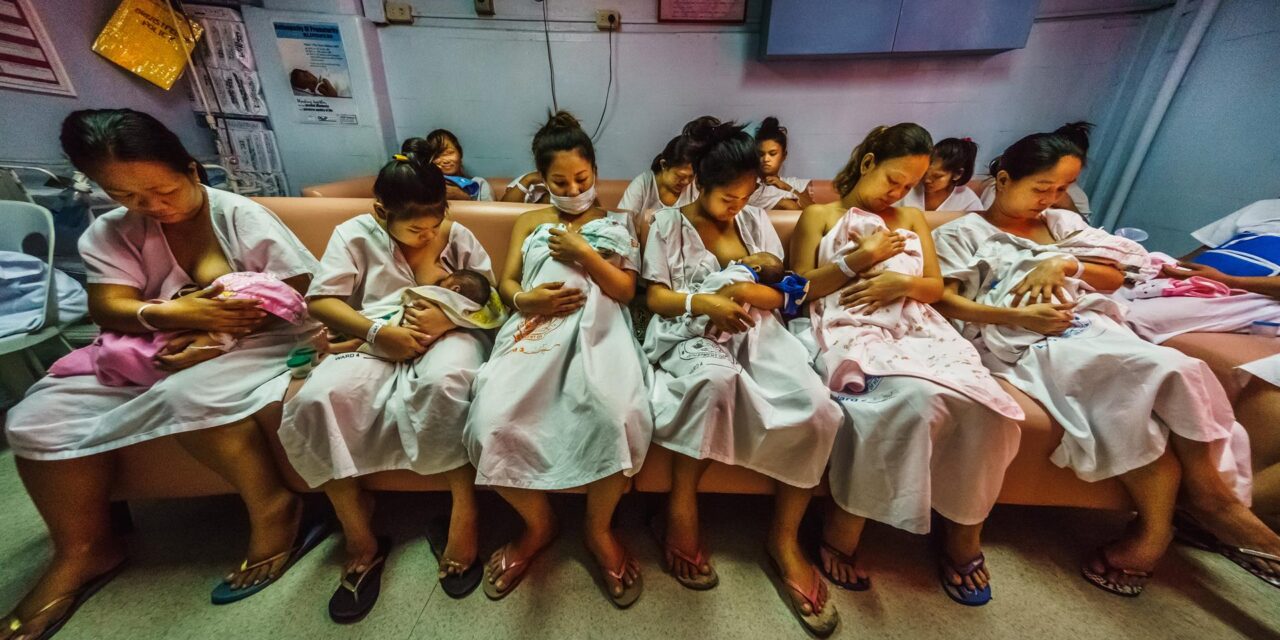
World Breastfeeding Week is celebrated every year in the first week of August, championed by WHO, UNICEF, Ministries of Health and civil society partners around the globe. It’s a time to recognize breastfeeding as a powerful foundation for lifelong health, development, and equity.
Under the banner of WHO’s ongoing Healthy Beginnings, Hopeful Futures campaign, World Breastfeeding Week will shine a particular spotlight on the ongoing support women and babies need from the healthcare system through their breastfeeding journey.
This means ensuring every mother has access to the support and information she needs to breastfeed as long as she wishes to do so – by investing in skilled breastfeeding counselling, enforcing the International Code of Marketing of Breast-milk Substitutes, and creating environments—at home, in healthcare, and at work—that support and empower women.
This isn’t just about doing what’s right—it’s also smart economics.
Breastfeeding delivers a hopeful future not only for children, but for societies. It reduces healthcare costs, boosts cognitive development, strengthens economies, and sets children up with healthy beginnings.
Key facts
- Every infant and child has the right to good nutrition according to the “Convention on the Rights of the Child”.
- Undernutrition is associated with 45% of child deaths.
- Globally in 2022, 149 million children under 5 were estimated to be stunted (too short for age), 45 million were estimated to be wasted (too thin for height), and 37 million were overweight or obese.
- About 44% of infants 0–6 months old are exclusively breastfed.
- Few children receive nutritionally adequate and safe complementary foods; in many countries less than a fourth of infants 6–23 months of age meet the criteria of dietary diversity and feeding frequency that are appropriate for their age.
- Over 820 000 children’s lives could be saved every year among children under 5 years, if all children 0–23 months were optimally breastfed. Breastfeeding improves IQ, school attendance, and is associated with higher income in adult life. (1)
- Improving child development and reducing health costs through breastfeeding results in economic gains for individual families as well as at the national level.
Why invest in breastfeeding
- Investing in breastfeeding support is one of the most powerful tools policy-makers have at their disposal to improve public health, strengthen economies, and secure the well-being of future generations.
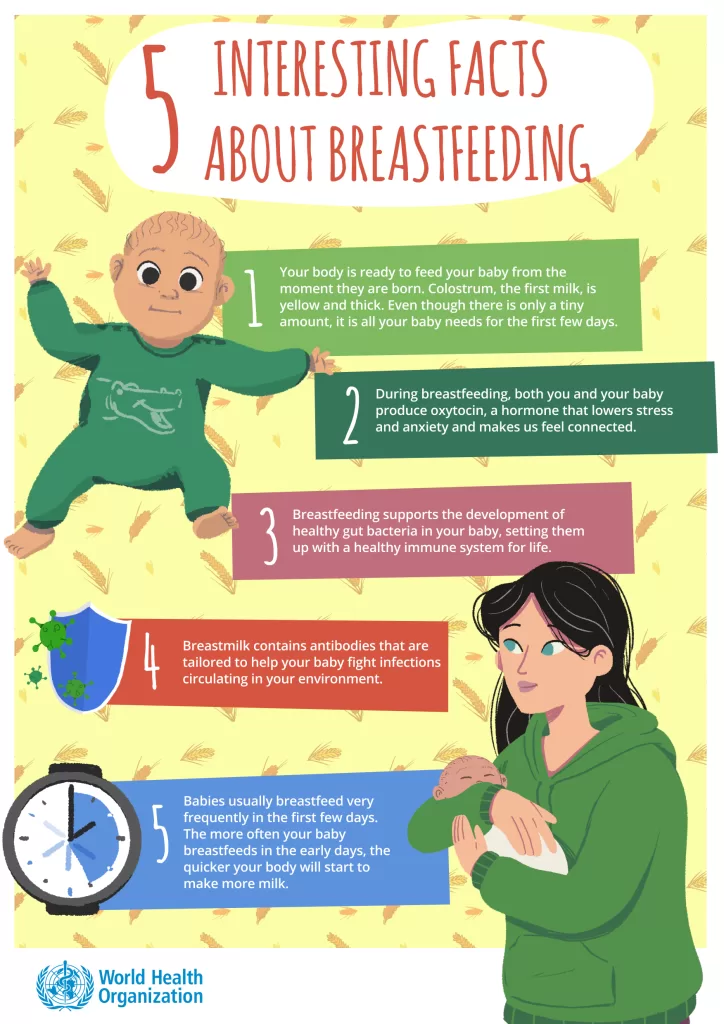
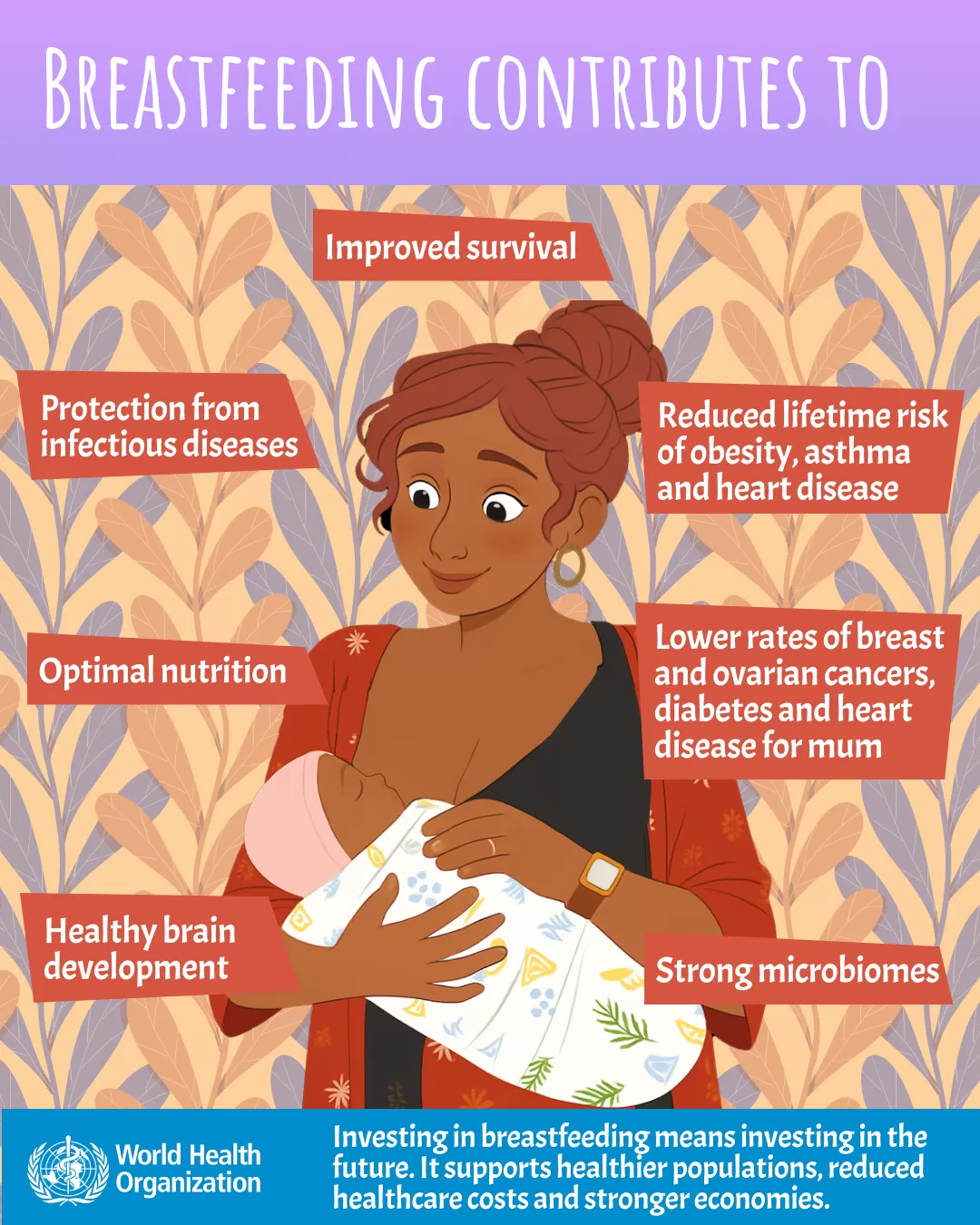
- Breastfeeding protects child health and improves survival, especially in the first months of life. In addition to essential nutrition, it provides critical antibodies that protect against many common illnesses like diarrhoea, pneumonia, and infections.
- The impacts of breastfeeding extend well beyond infancy. Breastfed children are less likely to become overweight or obese and have a lower risk of developing type 2 diabetes and other chronic conditions. Mothers also benefit — breastfeeding reduces the risk of postpartum haemorrhage, breast and ovarian cancers, heart disease, and type 2 diabetes.
- With the right investments, countries can significantly increase rates of exclusive breastfeeding — evidenced by global improvements over the last decade. Around 10% more infants today are exclusively breastfed at 6 months compared to 2013, with some countries seeing 20% increases over this same period.
Key actions for governments
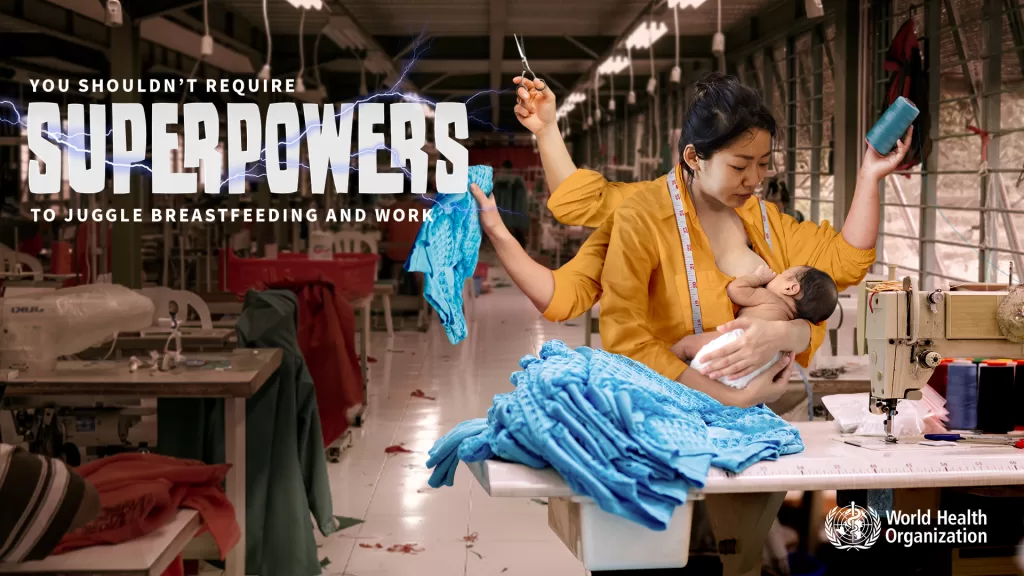
- Invest in the future. Allocate dedicated funding for breastfeeding support, including by ensuring all mothers have access to skilled breastfeeding support in hospital and when they take their babies home, alongside robust maternity protections like paid leave after having a baby.
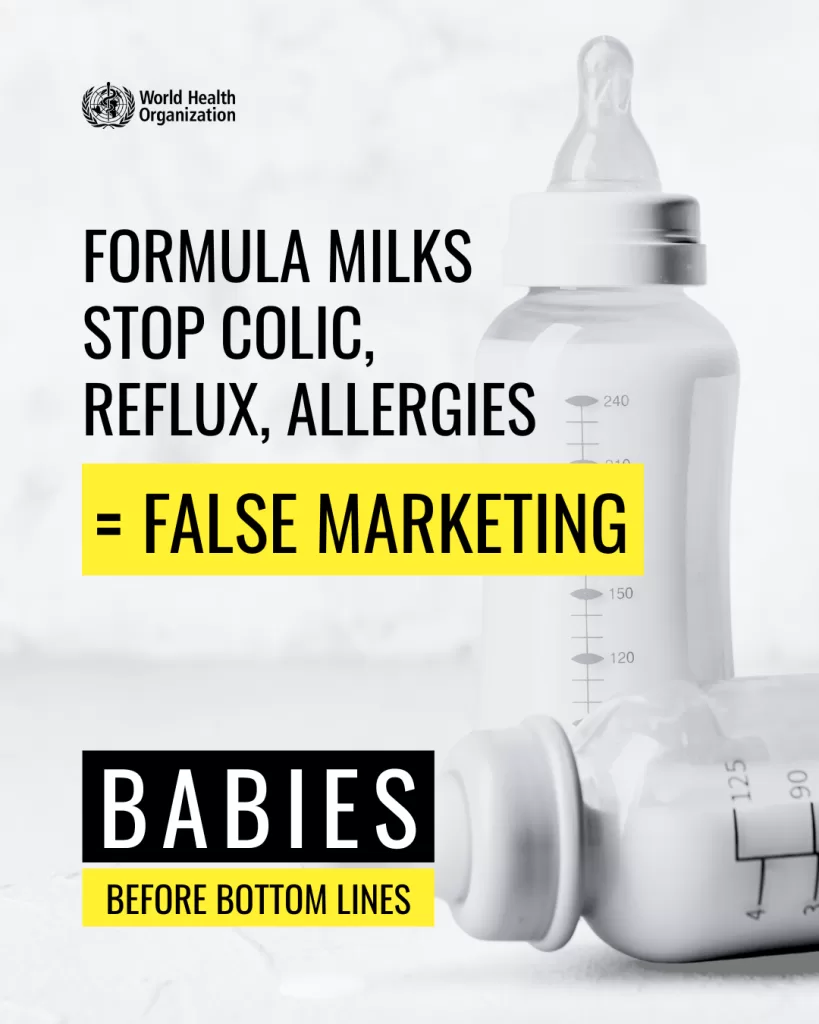
- Implement the WHO Code. Fully adopt and enforce the International Code of Marketing of Breast-milk Substitutes to safeguard public health.
- Lead by example. Champion investment in breastfeeding in national health strategies and ensure accountability through legislation, regulation and monitoring impact of breastfeeding programmes.
- Put babies before bottom lines. Enact and enforce policies that protect breastfeeding and prevent commercial influence over infant feeding.
Key actions for the health sector
- Support every step of the journey. Provide skilled, compassionate breastfeeding support from pregnancy through early childhood, ensuring mothers have ongoing access to trained breastfeeding counselling from pregnancy through the early years – providing particular support at moments of transition.
- Train and empower health workers. Ensure all health workers covering maternal and child health are equipped with up-to-date breastfeeding knowledge and skills.
- Create breastfeeding-friendly health systems. Make hospitals and clinics safe, supportive spaces for breastfeeding through the Baby-Friendly Hospital Initiative and beyond.
Key actions for the general public
- We can all step up to support mums. Families, friends, employers, and communities all play a role in supporting breastfeeding mothers and creating supportive environments for them to breastfeed anytime, anywhere.
- Know the facts. Breastfeeding is a natural, powerful way to give babies the best start in life—strengthening their immune systems, helping them fight diseases – now and in the future – and providing vital comfort and nutrition.
- Speak up for breastfeeding support. Advocate for policies and environments that make breastfeeding easier and more accessible for all families.
Breastfeeding
Exclusive breastfeeding for 6 months has many benefits for the infant and mother. Chief among these is protection against gastrointestinal infections which is observed not only in developing but also industrialized countries. Early initiation of breastfeeding, within 1 hour of birth, protects the newborn from acquiring infections and reduces newborn mortality. The risk of mortality due to diarrhoea and other infections can increase in infants who are either partially breastfed or not breastfed at all.
Breast-milk is also an important source of energy and nutrients in children aged 6–23 months. It can provide half or more of a child’s energy needs between the ages of 6 and 12 months, and one third of energy needs between 12 and 24 months. Breast milk is also a critical source of energy and nutrients during illness, and reduces mortality among children who are malnourished.
Children and adolescents who were breastfed as babies are less likely to be overweight or obese. Additionally, they perform better on intelligence tests and have higher school attendance. Breastfeeding is associated with higher income in adult life. Improving child development and reducing health costs results in economic gains for individual families as well as at the national level.(1)
Longer durations of breastfeeding also contribute to the health and well-being of mothers: it reduces the risk of ovarian and breast cancer and helps space pregnancies–exclusive breastfeeding of babies under 6 months has a hormonal effect which often induces a lack of menstruation. This is a natural (though not fail-safe) method of birth control known as the Lactation Amenorrhoea Method.
Mothers and families need to be supported for their children to be optimally breastfed. Actions that help protect, promote and support breastfeeding include:
- adoption of policies such as the International Labour Organization’s “Maternity Protection Convention 183” and “Recommendation No. 191”, which complements “Convention No. 183” by suggesting a longer duration of leave and higher benefits;
- adoption of the “International Code of Marketing of Breast-milk Substitutes” and subsequent relevant World Health Assembly resolutions;
- implementation of the “Ten Steps to Successful Breastfeeding” specified in the Baby-Friendly Hospital Initiative, including:
- skin-to-skin contact between mother and baby immediately after birth and initiation of breastfeeding within the first hour of life;
- breastfeeding on demand (that is, as often as the child wants, day and night);
- rooming-in (allowing mothers and infants to remain together 24 hours a day);
- not giving babies additional food or drink, even water, unless medically necessary;
- provision of supportive health services with infant and young child feeding counselling during all contacts with caregivers and young children, such as during antenatal and postnatal care, well-child and sick child visits, and immunization; and
- community support, including mother support groups and community-based health promotion and education activities.
Breastfeeding practices are highly responsive to supportive interventions, and the prevalence of exclusive and continued breastfeeding can be improved over the course of a few years.
Complementary feeding
Around the age of 6 months, an infant’s need for energy and nutrients starts to exceed what is provided by breast milk, and complementary foods are necessary to meet those needs. An infant of this age is also developmentally ready for other foods. If complementary foods are not introduced around the age of 6 months, or if they are given inappropriately, an infant’s growth may falter. Guiding principles for appropriate complementary feeding are:
- continue frequent, on-demand breastfeeding until 2 years of age or beyond;
- practise responsive feeding (for example, feed infants directly and assist older children. Feed slowly and patiently, encourage them to eat but do not force them, talk to the child and maintain eye contact);
- practise good hygiene and proper food handling;
- start at 6 months with small amounts of food and increase gradually as the child gets older;
- gradually increase food consistency and variety;
- increase the number of times that the child is fed: 2–3 meals per day for infants 6–8 months of age and 3–4 meals per day for infants 9–23 months of age, with 1–2 additional snacks as required;
- use fortified complementary foods or vitamin-mineral supplements as needed; and
- during illness, increase fluid intake including more breastfeeding, and offer soft, favourite foods.
Feeding in exceptionally difficult circumstances
Families and children in difficult circumstances require special attention and practical support. Wherever possible, mothers and babies should remain together and get the support they need to exercise the most appropriate feeding option available. Breastfeeding remains the preferred mode of infant feeding in almost all difficult situations, for instance:
- low-birth-weight or premature infants;
- mothers living with HIV in settings where mortality due to diarrhoea, pneumonia and malnutrition remain prevalent;
- adolescent mothers;
- infants and young children who are malnourished; and
- families suffering the consequences of complex emergencies.
HIV and infant feeding
Breastfeeding, and especially early and exclusive breastfeeding, is one of the most significant ways to improve infant survival rates. While HIV can pass from a mother to her child during pregnancy, labour or delivery, and also through breast-milk, the evidence on HIV and infant feeding shows that giving antiretroviral treatment (ART) to mothers living with HIV significantly reduces the risk of transmission through breastfeeding and also improves her health.
WHO now recommends that all people living with HIV, including pregnant women and lactating mothers living with HIV, take ART for life from when they first learn their infection status.
Mothers living in settings where morbidity and mortality due to diarrhoea, pneumonia and malnutrition are prevalent and national health authorities endorse breastfeeding should exclusively breastfeed their babies for 6 months, then introduce appropriate complementary foods and continue breastfeeding up to at least the child’s first birthday.