 0
0
 0
0
February 15, 2026
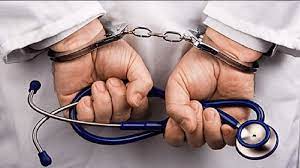
THIRUVANANTHAPURAM, KERALA — A security breach at one of Kerala’s premier healthcare institutions has sparked a nationwide conversation on patient safety and institutional vigilance. On the morning of February 12, 2026, a woman was apprehended at the Thiruvananthapuram Government Medical College Hospital (MCH) after allegedly posing as a senior neurosurgeon. The individual, who gained access to the high-security super-specialty block using little more than a white coat and a stethoscope, was intercepted by hospital security following a brief period of unauthorized roaming.
The incident, which concluded without reported physical harm to patients, has nevertheless exposed the vulnerabilities inherent in large, high-pressure medical environments where visual cues of authority often bypass rigorous identity verification.
The Breach: A Stethoscope as a Skeleton Key
According to hospital officials and the Medical College Police, the suspect entered the super-specialty block dressed in a sari, a traditional white doctor’s coat, and carrying a stethoscope. She reportedly introduced herself to staff as a senior neurosurgeon originally from Perunna and currently residing in Peroorkada.
While her attire and confident demeanor initially allowed her to blend into the clinical environment, her undoing came from the keen eyes of the hospital’s internal security team. Staff grew suspicious when her movements appeared aimless and her name failed to appear on any departmental rosters or the hospital’s official neurosurgery directory.
The Apprehension
Hospital administrators utilized the facility’s CCTV network to track the woman’s movements across the campus. Footage revealed her traversing various zones, including the canteen and non-clinical areas, before she attempted to evade detection.
“She attempted to change her outfit to blend back into the crowd of visitors,” noted a security official involved in the intervention.
Despite her attempts to leave the premises via an auto-rickshaw near the multi-specialty block, she was intercepted by female security personnel and handed over to local law enforcement. She is currently facing questioning as authorities work to determine her motive—whether it was financial fraud, psychological compulsion, or an attempt to access sensitive medical data.
A Growing National Concern: The “Quack” Crisis
The Thiruvananthapuram incident is not an isolated case. It mirrors a disturbing trend of medical impersonation across India. In 2025, a high-profile National Human Rights Commission (NHRC) inquiry investigated a “fake cardiologist” at a Mission Hospital in Damoh, Madhya Pradesh. That case revealed significant lapses in credential-checking, leading to a renewed call for stricter oversight.
Medical impersonation is a serious criminal offense under the Indian Penal Code (IPC). Common charges include:
-
Section 419: Punishment for cheating by personation.
-
Section 420: Cheating and dishonestly inducing delivery of property.
Legal experts note that while some impostors seek the prestige of the profession, others operate “quack” clinics that lead to catastrophic health outcomes. According to a 2019 Union Health Ministry report, while India has approximately 1.2 million registered doctors, the shortage of qualified professionals in rural areas often creates a vacuum filled by unlicensed individuals.
Expert Perspective: The Risk Beyond the Scalpel
Even if an impostor never touches a patient, their presence in a clinical space poses a “invisible” risk to public health. Dr. Ashish Kumar, a health policy researcher who specializes in hospital safety protocols, emphasizes that the danger is multi-faceted.
“A single person in the wrong uniform can cause panic, spread misinformation, or even breach patient confidentiality,” Dr. Kumar explains. “Hospitals must balance open access for visitors with rigorous identity checks for anyone entering clinical zones. The psychological distress for a patient—realizing an unqualified person was privy to their most private health data—cannot be understated.”
How Patients Can Protect Themselves
In the wake of this incident, health authorities are urging patients and their families to remain vigilant without becoming cynical. Large institutions are complex, but there are simple steps to verify a provider’s identity:
| Verification Method | Actionable Step |
| Visual ID | Check for official hospital-issued photo ID badges, which should be visible on the white coat or scrubs. |
| Directory Check | Cross-reference the doctor’s name with the hospital’s official website or the physical directory at the front desk. |
| Staff Confirmation | If a new “specialist” appears, feel empowered to ask a known nursing staff member: “Could you confirm Dr. [Name]’s role in my care?” |
| Financial Red Flags | Legitimate doctors will almost never ask for direct payments via personal QR codes or cash in a hallway. |
The Path Forward: Layered Security
For hospitals, the Thiruvananthapuram case serves as a “near-miss” lesson. Security experts suggest that the future of patient safety lies in layered protocols:
-
Biometric Access: Restricting sensitive areas (ICUs, Surgical Suites) to staff with fingerprint or retina scans.
-
Color-Coded Identification: Distinct uniforms or lanyards for students, interns, and senior consultants to make anomalies easier to spot.
-
Real-Time Database: Centralized staff registers that security can check instantly via tablet or smartphone.
While the police investigation continues, the swift action of the Thiruvananthapuram Medical College security team demonstrates that active monitoring remains the most effective tool against impersonation.
Would you like me to provide a checklist of questions patients should ask when meeting a new specialist, or perhaps more information on how to verify a doctor’s registration through the National Medical Commission (NMC) website?
Medical Disclaimer
This article is for informational purposes only and should not be considered medical advice. Always consult with qualified healthcare professionals before making any health-related decisions or changes to your treatment plan. The information presented here is based on current reports, legal frameworks, and expert opinions, which may evolve as new evidence or official findings emerge.
References
-
Medical Dialogues: “Woman posing as Neurosurgeon arrested at Thiruvananthapuram Medical College,” February 13, 2026.